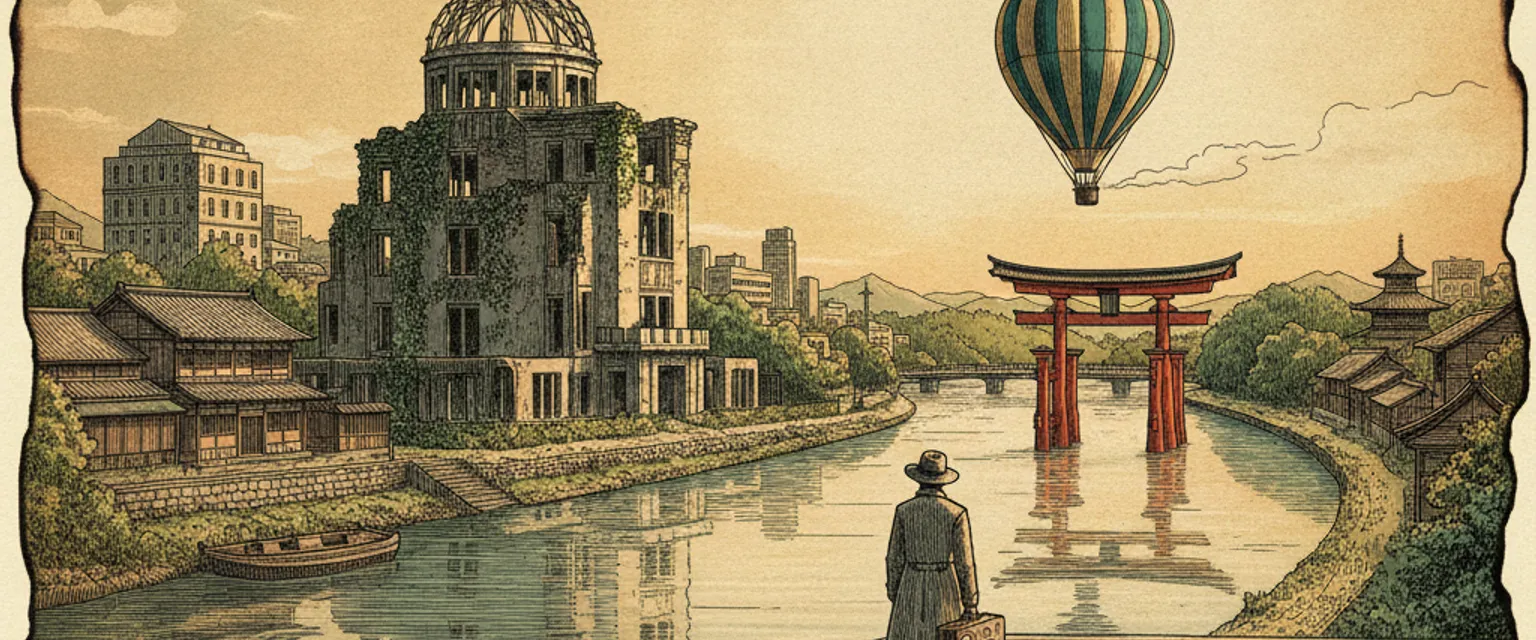
I expected Hiroshima to be a heavy, sombre stop — somewhere you visit out of duty, pay your respects, and move on. What I did not expect was how alive the place is. Yes, I stood in front of the skeletal A-Bomb Dome and felt the weight of August 6th, 1945 settle in my chest. The Peace Memorial Museum left me wordless. But then I walked out into a buzzing, green, river-laced city, ate the best okonomiyaki of my life off a hot griddle, and watched students laugh in the leafy streetcar windows. Hiroshima isn't a monument to death. It's a working, optimistic city that chose to rebuild itself
The Perfect Hiroshima Itinerary (2, 3, 4 & 7 Days)
Two days covers the two essentials: the deeply moving Peace Memorial Park and Museum, and the famous floating torii gate of Miyajima island just offshore. It's an emotionally full pair of days that pairs history with one of Japan's most beautiful sights, plus the city's legendary okonomiyaki.
Do one thing right: see the Miyajima torii at high tide near sunset, when it genuinely floats.
Deeper into the city's story and streets
A third day lets you slow down: Hiroshima Castle rebuilt, the serene Shukkeien garden, and the lively downtown food and shopping streets. You move beyond the memorial sites into the everyday, resilient city that grew back.
City, island, and the Inland Sea
Four days adds a day trip along the gorgeous Seto Inland Sea — the cat-and-temple hill town of Onomichi or the art-island detour toward Naoshima. You balance the heavy history with the soft, island-dotted seascape that defines this corner of Japan. My pick for a first visit.
Hiroshima as a base for western Japan
A week turns Hiroshima into a hub: the Shimanami Kaido cycling route across the islands, the temples of nearby Iwakuni and its famous bridge, and unhurried time in the city itself. Seven days is for travellers who want this whole quiet, scenic region, not just its famous landmarks.
Estimated budget:$250-$550
Estimated budget:$380-$850
Estimated budget:$520-$1150
Estimated budget:$950-$2200
Day 1
Peace Memorial Park
Confront the history, with care and time
Atomic Bomb Dome
The skeletal ruin left standing almost beneath the blast.
The former Industrial Promotion Hall sits almost directly under where the bomb detonated, its dome a stark skeleton deliberately preserved as it was. Standing before it in the morning quiet is the heart of any Hiroshima visit. It's a UNESCO World Heritage site and a wordless, powerful start. Take your time and read the surrounding markers.
Peace Memorial Museum
An unflinching, essential account of August 6th, 1945.
Renovated and superbly done, the museum tells the story of the bombing through survivors' belongings and testimony rather than statistics. It is harrowing and unmissable — give it at least two hours. Not for very young children. You leave changed, which is the entire point of coming to this city.
Okonomimura
Three floors of griddles cooking Hiroshima's signature dish.
Hiroshima-style okonomiyaki layers cabbage, noodles, pork and egg into a savoury pancake cooked in front of you, and Okonomimura packs dozens of tiny stalls into one building. Sit at the counter, watch the chef build it on the hot teppan, and eat it straight off the griddle. It's the city's comfort food and a perfect, grounding end to a heavy day.
Day 2
Miyajima Island
The floating torii and a sacred mountain
Itsukushima Shrine & Floating Torii
A vermilion shrine built over the water with its iconic gate.
A short train and ferry from the city, Miyajima's UNESCO shrine seems to float at high tide, its great red torii gate standing in the sea. Check the tide tables — high tide for the floating effect, low tide to walk out to the gate. Both are special. The wild deer wandering the village are tame but cheeky, so guard your maps and snacks.
Mount Misen
The island's sacred peak, by ropeway or by foot.
Take the ropeway most of the way up, then hike the final stretch to the 535-metre summit for sweeping views over the Inland Sea's scatter of islands. Near the top, the Reikado hall keeps a flame said to have burned for over 1,200 years. Allow a couple of hours and decent shoes for the final climb.
Miyajima Oysters & Momiji Manju
Grilled oysters and maple-leaf cakes on Omotesando street.
The island is famous for plump grilled oysters sold sizzling from street stalls, and for momiji manju, little maple-leaf-shaped cakes filled with red bean and other flavours. Eat them warm as you stroll the old shopping street back toward the ferry. A delicious, low-key counterpoint to all the grandeur.
Day 3
The City That Grew Back
Castle, garden, and downtown life
Hiroshima Castle
A faithfully rebuilt feudal castle in a moated park.
The original 16th-century castle was destroyed in the bombing; the 1958 reconstruction houses a good local history museum and offers city views from the top. The grounds, with their moat and surviving trees, are a calm green space. It's a quiet lesson in how thoroughly the city rebuilt itself from nothing.
Shukkeien Garden
A serene strolling garden of miniature landscapes.
Dating to 1620, this beautifully composed garden recreates valleys, mountains and forests in miniature around a central pond crossed by an arched bridge. It was rebuilt after the bombing and is loveliest in cherry-blossom or autumn-leaf season. A peaceful, contemplative hour and a perfect midday breather.
Hondori & Downtown
The covered shopping arcade and the city's lively core.
The Hondori arcade and the streets around it are where Hiroshima eats, drinks and shops, full of izakayas, bars and the rattling green streetcars that are a city icon. Ride a tram, browse the arcade, and pick a backstreet izakaya for dinner. This is the everyday Hiroshima that the memorial sites don't show you.
Day 4
The Inland Sea
Cats, temples and sea views at Onomichi
Onomichi Temple Walk
A hillside town of steep lanes, cats, and old temples.
About 90 minutes east, Onomichi is a hilly old port town threaded by a walking trail linking 25 temples up its slopes, with the Inland Sea glittering below. It's full of cats, cafes in old houses, and a slow, photogenic charm. Take the little ropeway up and walk down through the lanes. A complete change of pace from the city.
Onomichi Ramen
The town's famous soy-and-pork-fat ramen by the harbour.
Onomichi has its own celebrated ramen style: a clear soy-based broth enriched with flat pork-back fat, with springy noodles. Queue at one of the classic shops near the station — it's worth it. A warm, simple lunch with a view of the boats before you wander the temple slopes.
Day 5
Iwakuni and the Five Arches
A famous wooden bridge and a hilltop castle
Kintaikyo Bridge
An elegant five-arched wooden bridge from 1673.
Less than an hour west, Iwakuni's Kintaikyo is one of Japan's most beautiful bridges, its five wooden arches sweeping across the Nishiki River with no nails holding the spans. Walk across, then explore the samurai-era streets of the old castle town on the far bank. Cherry blossoms here in spring are spectacular.
Iwakuni Castle
A reconstructed mountaintop castle with Inland Sea views.
Ride the ropeway up the hill behind Kintaikyo to the rebuilt castle, where the panorama stretches over the river, the town and out to the Inland Sea. The grounds and the white-snake shrine nearby make a relaxed afternoon. A quietly rewarding half-day that few foreign visitors bother with.
Day 6
Island Cycling
The Shimanami Kaido across the Inland Sea
Shimanami Kaido
A 60km cycle route bridging six islands across the sea.
From Onomichi you can ride the world-famous Shimanami Kaido, a dedicated cycling route that hops island to island across soaring bridges over the Inland Sea. You needn't do the whole thing — rent a bike, cross to one or two islands, and turn back. The sea views from the bridge paths are some of the best in Japan.
Setoda, Ikuchijima
A lemon-growing island with a flamboyant temple.
A natural turnaround point on the cycle route, the island of Ikuchijima is known for its lemons and for Kosanji, an eccentric, gloriously over-the-top temple complex with a marble hilltop viewpoint. Stop for a fresh lemon gelato and a wander before riding or busing back. A sweet, surreal island interlude.
Day 7
Reflection and Farewell
One last quiet morning in the city
Peace Memorial Park Revisited
The Peace Bell, the cenotaph, and the children's monument.
Return to the park to see the corners you missed on a heavy first day: ring the Peace Bell, see the cenotaph framing the dome and eternal flame, and the Children's Peace Monument draped in thousands of paper cranes for Sadako. With less to absorb, it lands differently — calmer, more hopeful. A fitting close.
Mazda Museum
The car-maker's home plant and a peek at how Hiroshima works.
Hiroshima is Mazda's hometown, and the free factory museum (book ahead) walks you through the company's history and an actual assembly line. It's an unexpected, very local angle on the city's industrial rebirth. A fun, forward-looking final stop before you head to the station or airport.
People come to Hiroshima braced for grief, and there is grief here — the Peace Memorial Park and its museum will hollow you out, and they should. But what surprises almost everyone is how vital and hopeful the city itself feels. Flattened in an instant in 1945, Hiroshima chose to rebuild not as a memorial but as a living, green, river-laced city dedicated to peace, and the result is one of the most quietly moving places in Japan. You leave heavier and lighter at the same time.
How to use this plan
Two days covers the essentials: the Peace Memorial Park and Museum, and the floating torii shrine of Miyajima just offshore, which is one of the most beautiful sights in the country. Three days lets you slow down into the everyday city — the rebuilt castle, the serene Shukkeien garden, the rattling streetcars and downtown izakayas. Four — the length I’d suggest most first-timers take — adds a day along the gorgeous Seto Inland Sea, in the cat-and-temple hill town of Onomichi.
The 7-day plan uses Hiroshima as a base for western Japan: the famous five-arched bridge at Iwakuni, the island-hopping Shimanami Kaido cycle route, and a final reflective morning back in the Peace Park. With a week you get this whole soft, scenic, underrated region.
A few honest notes
Give the Peace Memorial Museum the time and emotional space it deserves, and don’t try to cram a cheerful sightseeing afternoon immediately after — a bowl of okonomiyaki and an early night suits the day far better. For Miyajima, check the tide tables before you go: high tide makes the torii float, low tide lets you walk out to it, and both are worth planning around. And eat the local okonomiyaki at least twice; the Hiroshima version, with its layer of noodles, is a genuinely different and superior thing, and it’s the taste of the city that came back.
This article contains affiliate links marked with rel="sponsored". We may earn a commission at no extra cost to you.