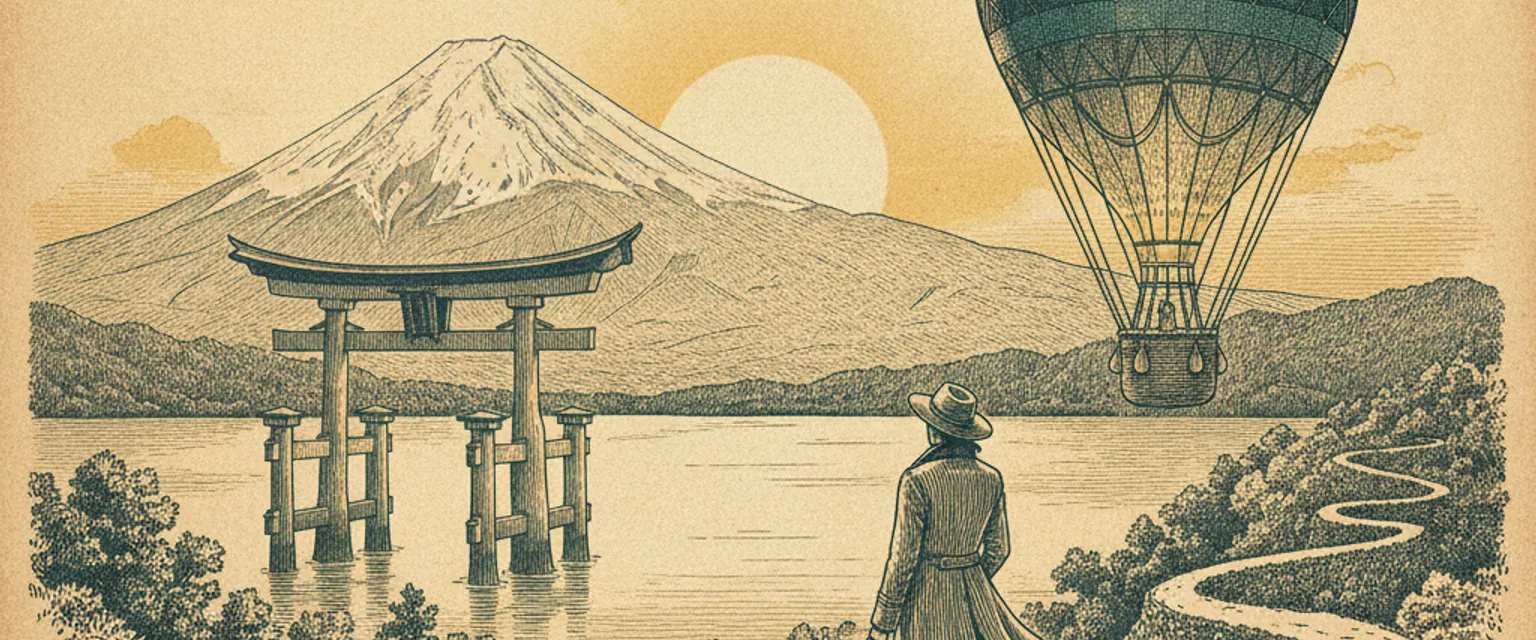
I came to Hakone for Mount Fuji and spent my first afternoon staring at a wall of grey cloud, convinced I had been robbed. Then the pirate ship cut across Lake Ashi, the mist peeled back for ninety honest seconds, and there it was, snow-capped and absurd. I have learned since that Hakone rewards the patient and punishes the rushed. Build in slack time, sit in the water, and let the mountain come to you instead of the other way around.
Two days is the honest minimum and the most popular way people do Hakone from Tokyo. You ride the full loop course one day, soak and slow down the next. It is tight but doable, and you will see Fuji if the weather cooperates.
If you only have one night, sleep in a ryokan with a private onsen. The bath is half the reason you came.
Loop, Soak, and One Real Hike
Three days lets the loop breathe. You add the Old Tokaido cedar avenue on foot, linger in the open-air museum, and bank a backup morning for Fuji in case day one is socked in.
Hakone Without the Stopwatch
Four days is the sweet spot. You get the loop, the art, a proper hike, and an unhurried onsen-hopping day where the only schedule is lunch. This is how Hakone is meant to feel.
Hakone as a Base for the Whole Region
A week turns Hakone into a regional base. Day-trip to Odawara Castle, Gotemba for the Fuji foothills, and Atami on the coast, then come home to your bath every night. Slow, indulgent, and the way I would do it again.
Estimated budget:$220-$420
Estimated budget:$330-$620
Estimated budget:$440-$820
Estimated budget:$760-$1450
Day 1
The Loop Course
Cable car, ropeway, pirate ship, repeat
Hakone Tozan Railway switchbacks
Japan's oldest mountain railway, zigzagging up the gorge
Start at Hakone-Yumoto and ride the switchback train uphill. The carriages reverse direction three times to climb the grade, which is more thrilling than it sounds. Get the Hakone Free Pass first at Odawara or Shinjuku; it pays for itself by lunch.
Owakudani volcanic valley
Sulphur vents, black eggs, and the smell of the earth working
The ropeway floats you over a steaming volcanic crater. Eat a kuro-tamago, an egg boiled black in the sulphur springs; local lore says each one adds seven years to your life. On a clear day Fuji sits right over the ridge.
Lake Ashi pirate ship cruise
A gaudy galleon across a caldera lake to the Hakone Shrine torii
Yes, it is a fibreglass pirate ship, and yes, you will love it. The cruise lands near the red lakeside torii of Hakone Shrine, the most photographed gate in the region. Queue early or expect a forty-minute wait for the shot.
Day 2
Soak and Slow Down
Onsen, gardens, and the bath you came for
Hakone Shrine and the lakeside torii
Cedar-shaded steps to a shrine founded in 757
Walk the mossy stone staircase under towering cryptomeria to the main shrine, then down to the famous Heiwa-no-Torii standing in the water. Mornings are calm and the light is better. Skip it midday when the cruise crowds arrive.
Tenzan Tohji-kyo onsen
A rambling local bathhouse in a wooded gorge
Forget the polished hotel spas; Tenzan is where people who live here actually soak. Multiple outdoor rotenburo pools step down a forested creek. No tattoos and no swimsuits, this is the real thing. Bring a small towel and surrender to it.
Hatsuhana soba
Hand-cut buckwheat noodles by the Sukumo River
Hakone's best-loved soba house serves seiro noodles you dip in a grated-yam broth that sounds odd and tastes addictive. There is often a line near Hakone-Yumoto station; it moves fast and is worth it.
Day 3
Art and the Old Road
Open-air sculpture and a cedar avenue on foot
Hakone Open-Air Museum
Henry Moore bronzes on a hillside, plus a Picasso pavilion
Seventy-odd large sculptures scattered across mountain lawns, anchored by a stained-glass tower you climb for valley views. The Picasso Pavilion alone justifies the ticket. Easily two hours, and there is a free foot-bath fed by hot spring water.
Old Tokaido cedar avenue
A 400-year-old corridor of giant cryptomeria
Walk a surviving stretch of the Edo-era Tokaido highway lined with cedars planted in the 1600s to shade travellers. It is cool, hushed, and almost empty. Pair it with the reconstructed Hakone Checkpoint nearby for context.
Day 4
Onsen-Hopping and Glass
A slow day with no train to catch
Hakone Venetian Glass Museum
A crystal-arch garden that sparkles even in fog
Unapologetically kitschy and genuinely lovely. The outdoor glass installations catch light in the mist for a strangely magical effect. Have a coffee in the cafe where staff sometimes sing live, then move on; ninety minutes is plenty.
Gora Park and pottery studio
A French-style hillside garden with a hands-on craft hall
A tidy terraced park with a tropical greenhouse and a craft house where you can throw a pot or blow glass. Low-key and uncrowded, it is the antidote to a hectic loop day. The cherry and azalea seasons are spectacular here.
Day 5
Day Trip to Odawara
Castle town and coast at the mountain's foot
Odawara Castle
A reconstructed feudal keep with bay views from the top
Twenty minutes downhill by train, Odawara was the seat of the Hojo clan. The keep is a 1960s rebuild but the museum inside is solid and the top floor frames Sagami Bay. The surrounding park is a riot of plum blossom in February.
Odawara fish market lunch
Same-day catch on rice near the working port
Odawara is a real fishing port, so the kaisendon here is fresher and cheaper than anything up the mountain. Wander the stalls, then sit down for a bowl piled with whatever came in that morning. Cash helps at the smaller counters.
Day 6
Gotemba and the Fuji Foothills
Outlet shopping if you must, foothills if you are wise
Gotemba foothill viewpoints
The closest Fuji feels without actually climbing it
Gotemba sits right at Fuji's eastern base, and on a clear morning the mountain fills the windscreen. Skip the famous outlet mall unless you need the bus connection, and instead chase the rural viewpoints and shrine approaches the buses pass.
Local curry house in Gotemba
Gotemba is quietly obsessed with rich Japanese curry
The town has a low-key reputation for hearty curry rice, a perfect refuel before heading back up the mountain. Pick any small counter with a queue of locals and order the katsu curry. You will not regret the carbs.
Day 7
Atami by the Sea
A seaside onsen finale before you head home
Atami seaside promenade
Palm-lined coast and a retro resort buzz
A short hop south, Atami is a faded-glamour beach town getting its second wind. Walk the promenade, ride the funicular up to the bizarre and wonderful MOA art museum, and feel the air turn from mountain to sea. A fitting bookend.
Atami day-use seaside onsen
One last soak, this time with an ocean horizon
Plenty of Atami baths open to day visitors with views straight out to the Pacific. Trade your forest rotenburo for a salt-air one, then catch the Shinkansen straight back to Tokyo. The fastest trains do it in under an hour.
I have done Hakone as a frantic day trip from Tokyo and I have done it as a four-day onsen wallow, and I am here to tell you the second way is the only way that makes sense. Hakone is built for slowness. It is a volcanic resort town wedged into the mountains southwest of Tokyo, famous for its hot springs, its view of Mount Fuji across Lake Ashi, and a tourist circuit so well-oiled that a single transit pass moves you by mountain train, cable car, ropeway and a frankly ridiculous pirate ship.
That circuit, the loop course, is the spine of any visit. The genius of it is that you never backtrack: you ride up one way and come down another, ticking off the volcanic valley, the caldera lake and the lakeside shrine in a single satisfying arc. Buy the Hakone Free Pass before you start. It covers nearly every conveyance in this guide and removes the small misery of fumbling for change at every gate.
How to use this plan
Pick your duration and the plan trims itself. Two days is the popular minimum and covers the loop plus one good soak. Three adds the art museum and the old cedar highway. Four is my recommendation, with a whole day reserved for doing nothing in particular. Seven turns Hakone into a base for the wider region, with day trips down to Odawara Castle, out to the Fuji foothills at Gotemba, and over to the seaside onsen town of Atami.
One honest warning: Fuji is shy. It hides behind cloud more often than the postcards admit, and it shows most reliably on crisp mornings in late autumn and winter. Build in a backup morning, soak while you wait, and treat a clear view as the gift it is rather than a guarantee.
This article contains affiliate links marked with rel="sponsored". We may earn a commission at no extra cost to you.