I once had a gelato so good in Florence that I stood outside the gelateria for ten minutes trying to decide whether to go back in and order a second one. I did. The man behind the counter nodded, which I interpreted as respect. This is the city's effect: it makes you stop, recalibrate, and decide that the only correct response is more.
Two days is the minimum for Florence's non-negotiables: the Uffizi (one room only — the Botticelli hall), Michelangelo's David (pre-book, arrive early), and Piazzale Michelangelo at sunset. One bistecca. At least three gelatos.
Book Uffizi and Accademia tickets at least 2 weeks ahead. Both sell out.
72 Hours: Oltrarno and the Artisans
Three days means crossing the Arno. The Oltrarno — Florence's less touristed south bank — has the city's best artisan workshops, the Boboli Gardens, and the Brancacci Chapel (Masaccio's frescoes, which influenced every Renaissance painter who came after him).
4 Days: Chianti Day Trip + San Miniato
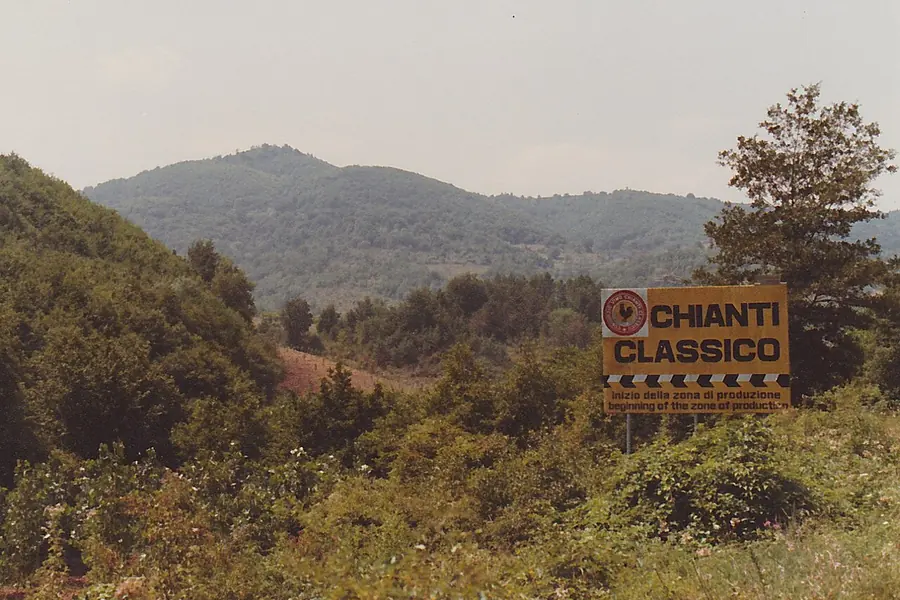
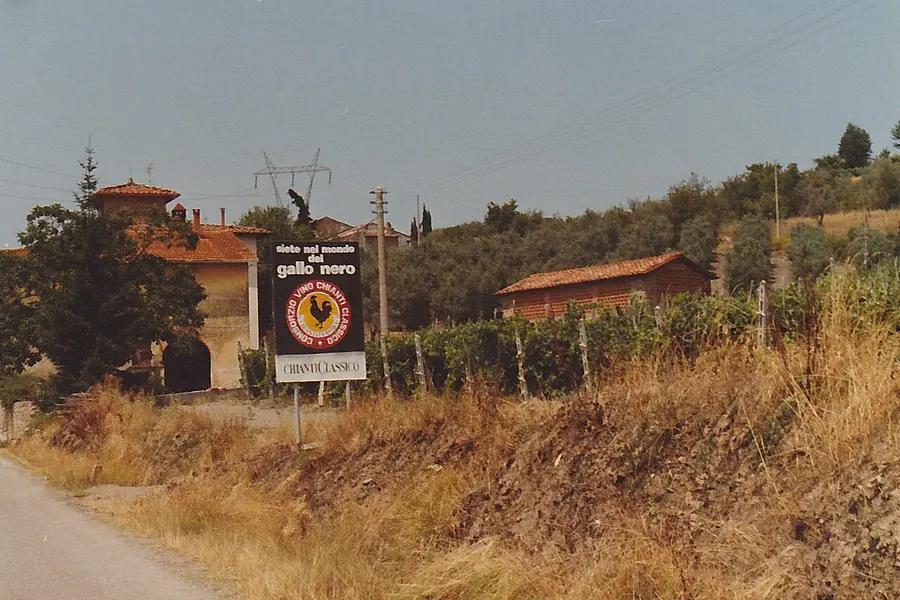
Four days earns you a half-day in Chianti: a drive through the wine country that produced 80% of everything you've ever drunk while ordering 'the house red, Italian.' And San Miniato al Monte, the Romanesque church above the Piazzale that most tourists can't see from where they stop.
7 Days: Siena, Cinque Terre, and the Slow Florence
A week means a day in Siena (the medieval city that Florence rivals in beauty and surpasses in architectural completeness), a day in Cinque Terre by train, and enough time in Florence to find your own restaurant, your own market stall, and the street you'll describe to people who haven't been yet.
Estimated budget:$420–$640 est. (1 hotel night, budget–mid)
Estimated budget:$620–$960 est. (2 nights + Oltrarno half-day)
Estimated budget:$820–$1,280 est. (Chianti day + 3 nights)
Estimated budget:$1,500–$2,400 est. (full week, Siena + Cinque Terre)
[ THE DISPATCH · FIELD MAP ]
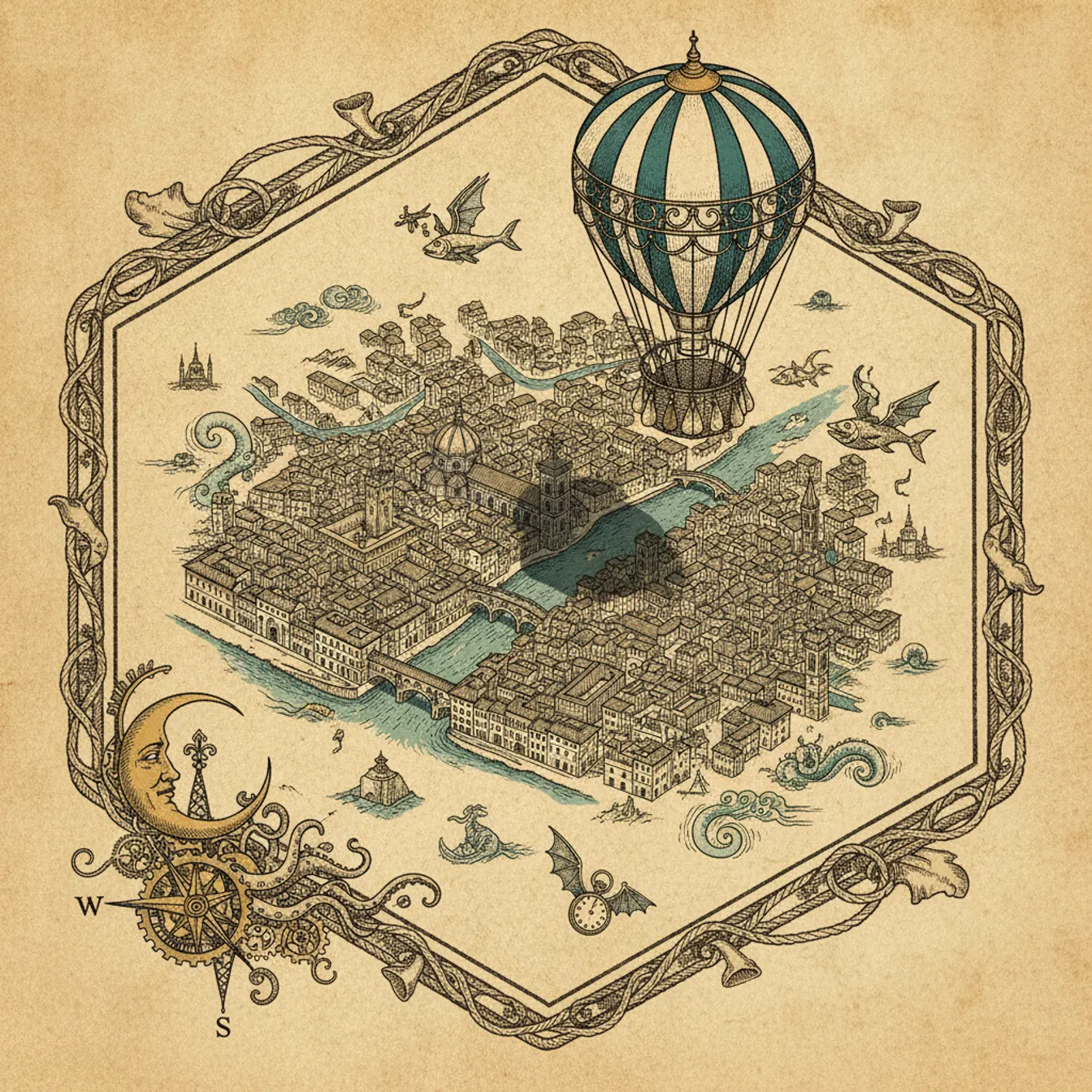
A tilted, hand-drawn dispatch of Florence. Click a quarter to explode it open.
0 / 6 quarters explored
Legend · tap to highlight
[ DUOMO & PIAZZA DELLA SIGNORIA ]
Old stones, older stories.
Uffizi Gallery — Botticelli RoomsThe Birth of Venus in the room it was made for.
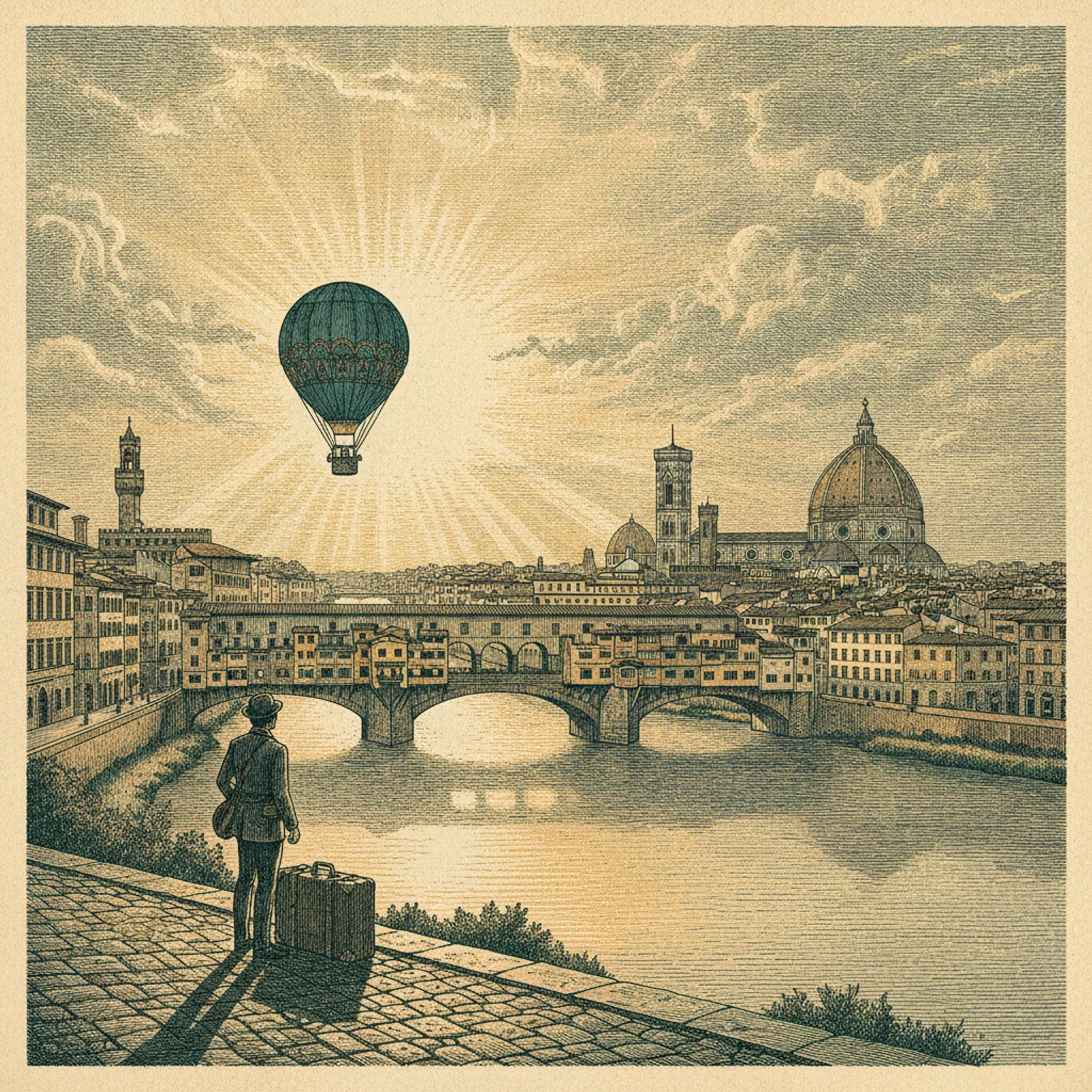
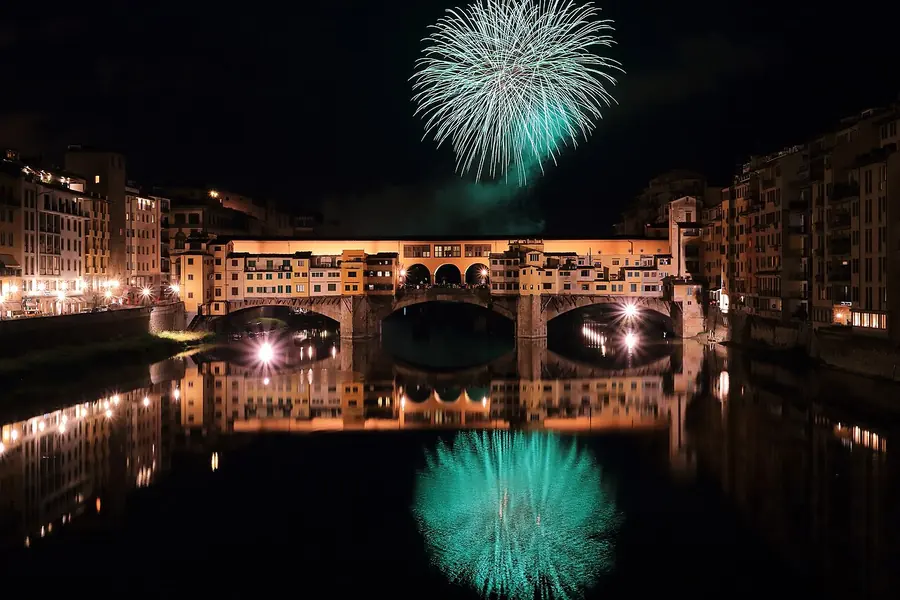
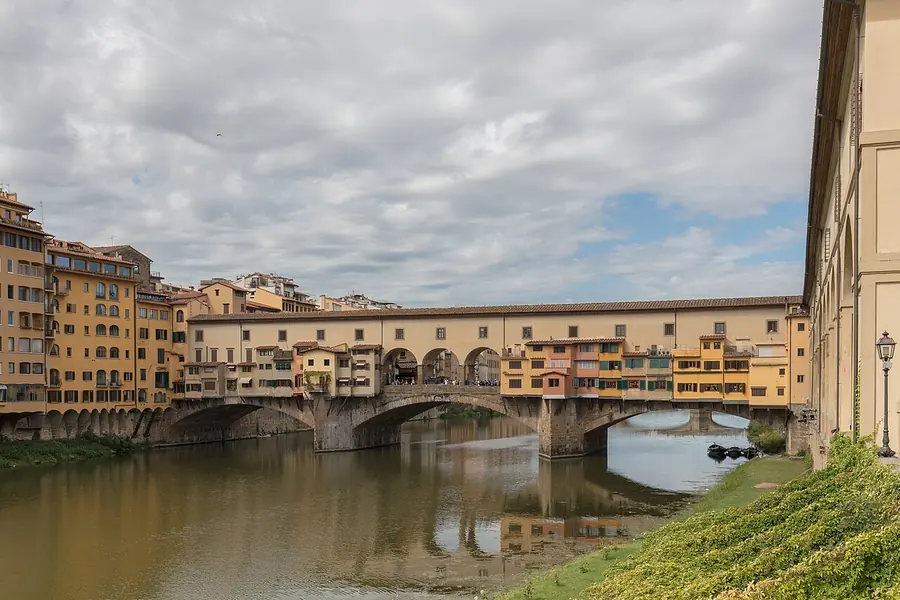
Ponte Vecchio + the ArnoThe only bridge in Florence that Hitler ordered spared, because even he couldn't bring himself to destroy it.
[ ACCADEMIA & SAN MARCO ]
Old stones, older stories.
Galleria dell'Accademia — Michelangelo's DYou've seen the reproductions. The original is nothing like them.
Mercato Centrale — ground floor market + uFlorence's covered market: butchers and greengrocers below, artisan food stalls above.
[ OLTRARNO ]
Old stones, older stories.
Brancacci Chapel (Masaccio's Frescoes)The frescoes that Michelangelo studied as a student, and never stopped learning from.
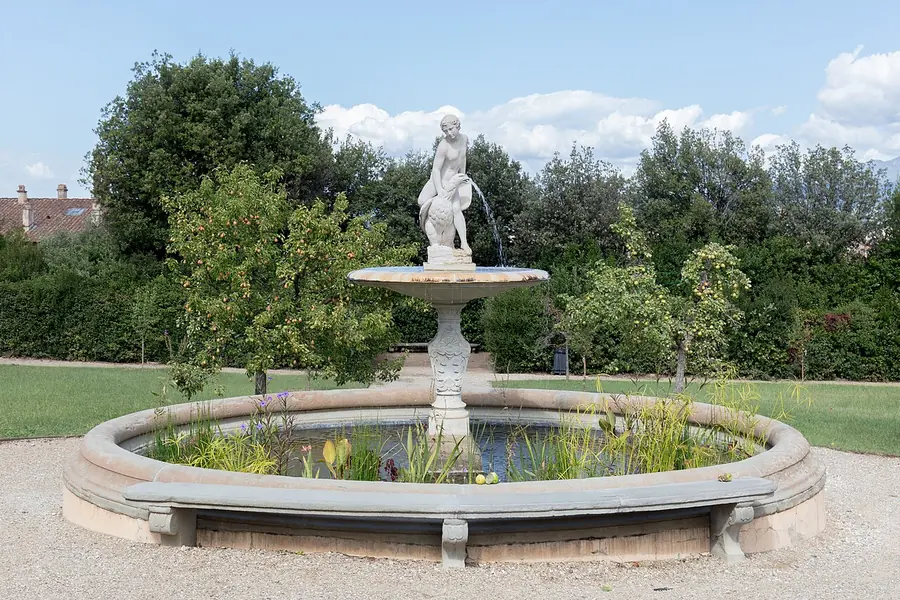
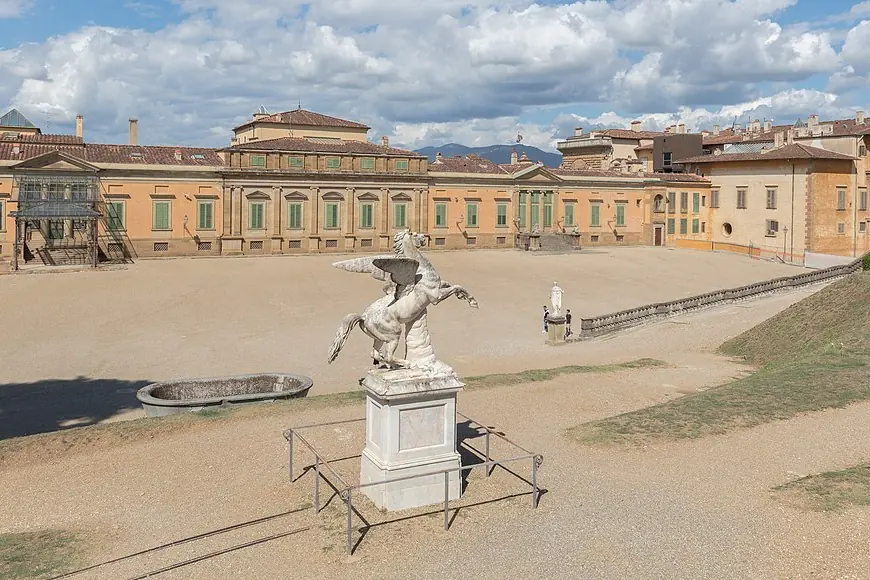
Boboli GardensThe Medici's backyard. Bigger than it looks. Worth the climb.
[ SAN MINIATO AL MONTE ]
Green breathing room.
Greve in Chianti — market square + wine taThe wine region's main town, with a market square shaped like a medieval triangle.
San Miniato al MonteThe Romanesque church above the postcard view. Better than the postcard view.
[ CHIANTI ]
Green breathing room.
Enoteca dinner — Oltrarno or Santa Croce aThe Tuscany wine list deserves more than a glass. Tonight is the night.
[ SANTA CROCE ]
Old stones, older stories.
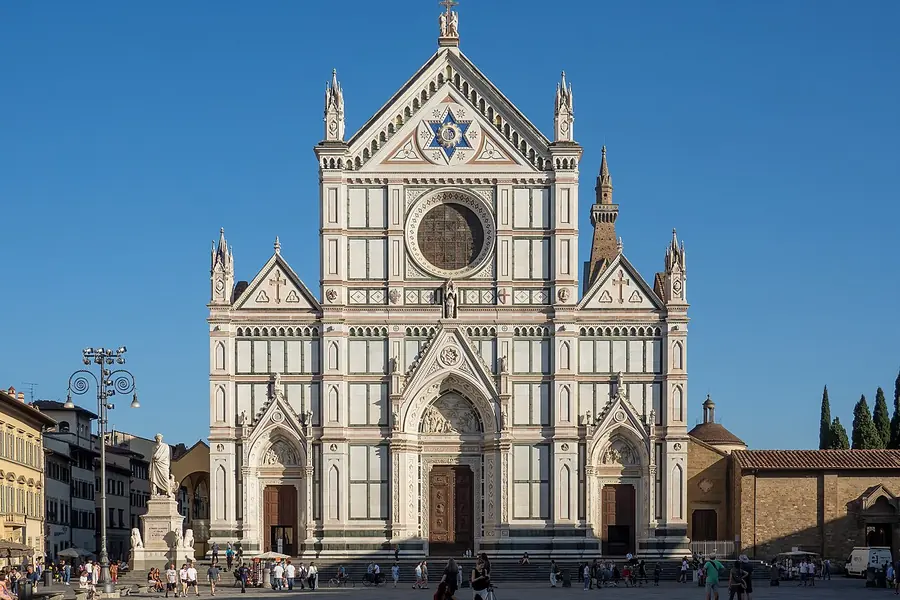
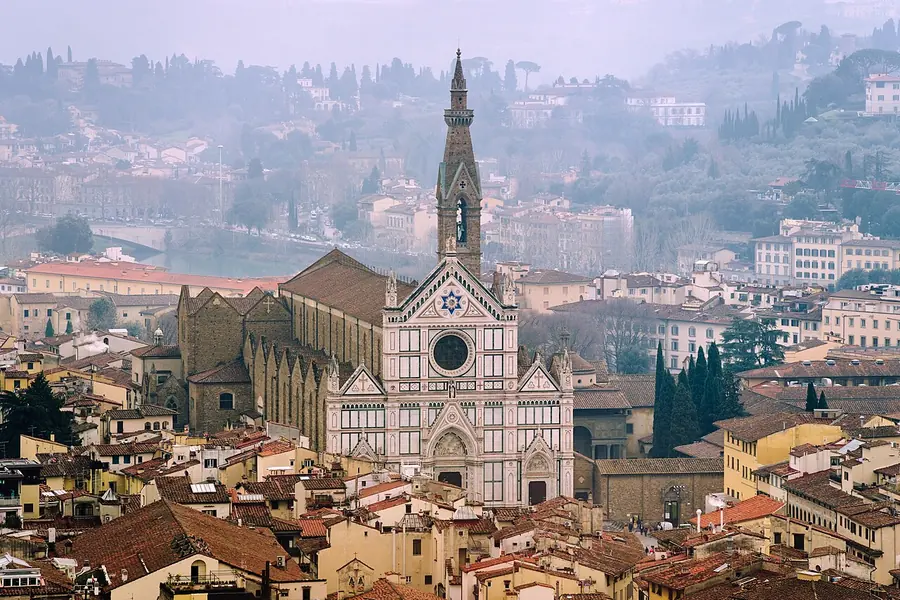
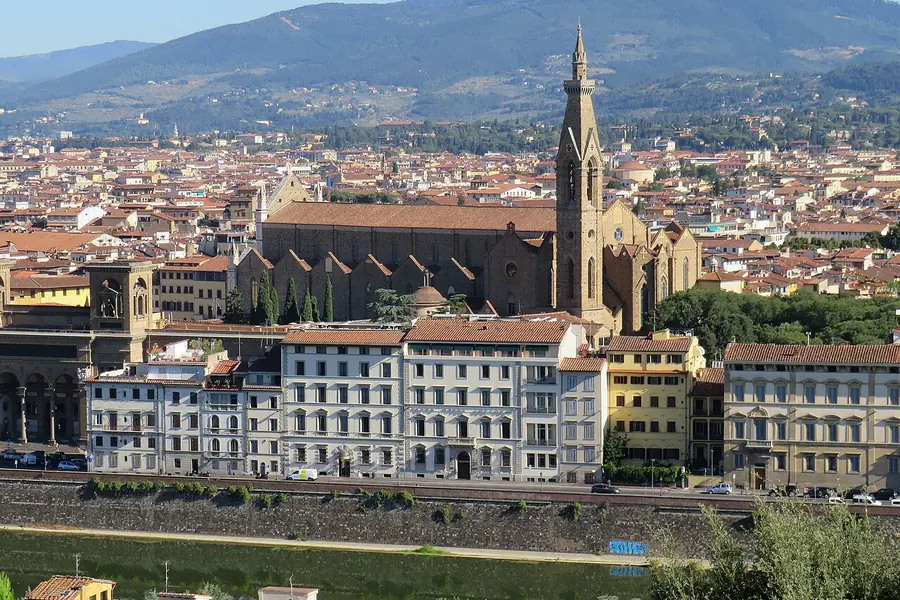
Basilica di Santa CroceMore great Italians per square metre than anywhere outside of Rome.
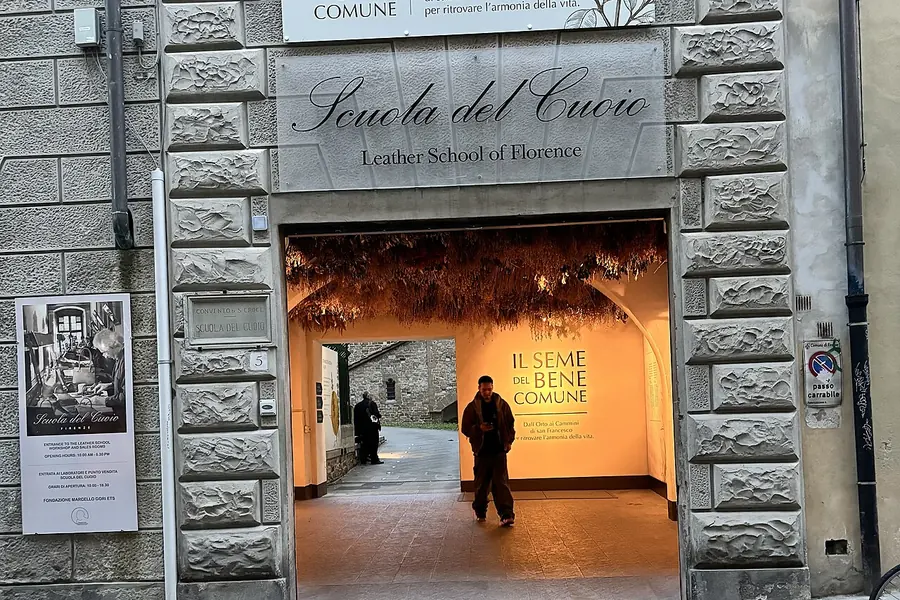
Scuola del Cuoio — leather workshopLeather goods made by hand in the same rooms where monks once lived.
Day 1
The Uffizi + Ponte Vecchio + Piazzale Michelangelo
The Florence that earned every postcard — and then some
Ruthless sequencing: Uffizi opens at 8 AM, be there. One room (the Botticelli hall — rooms 10-14 — do not let yourself wander into Raphael territory until the second visit that isn't happening). Lunch near Piazza della Signoria. Ponte Vecchio mid-afternoon. Piazzale at sunset. Bistecca for dinner.
The same day but without the sprint. Let the Uffizi take three hours. Have a proper lunch. The Piazzale at golden hour is always worth it, regardless of which day you go.
Uffizi Gallery — Botticelli Rooms
The Birth of Venus in the room it was made for.
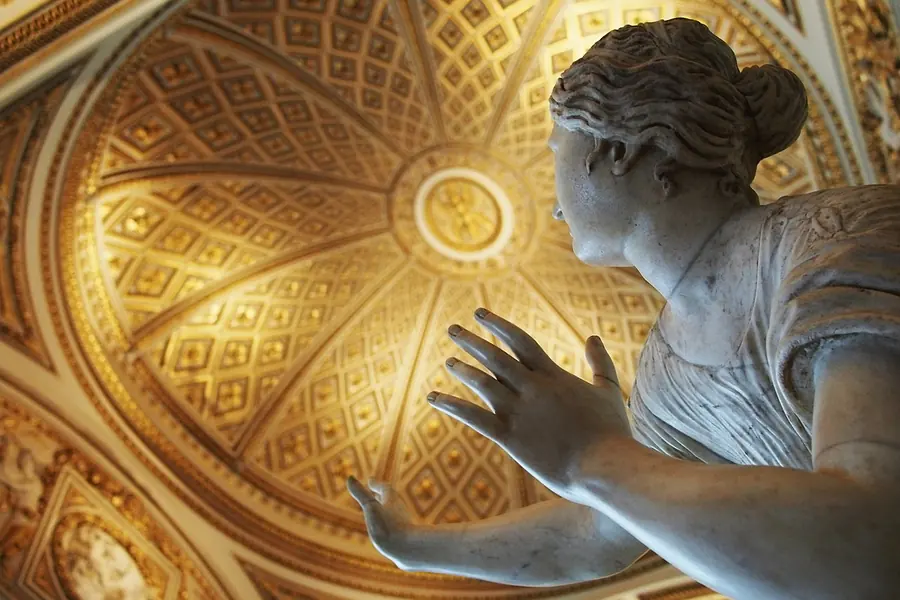
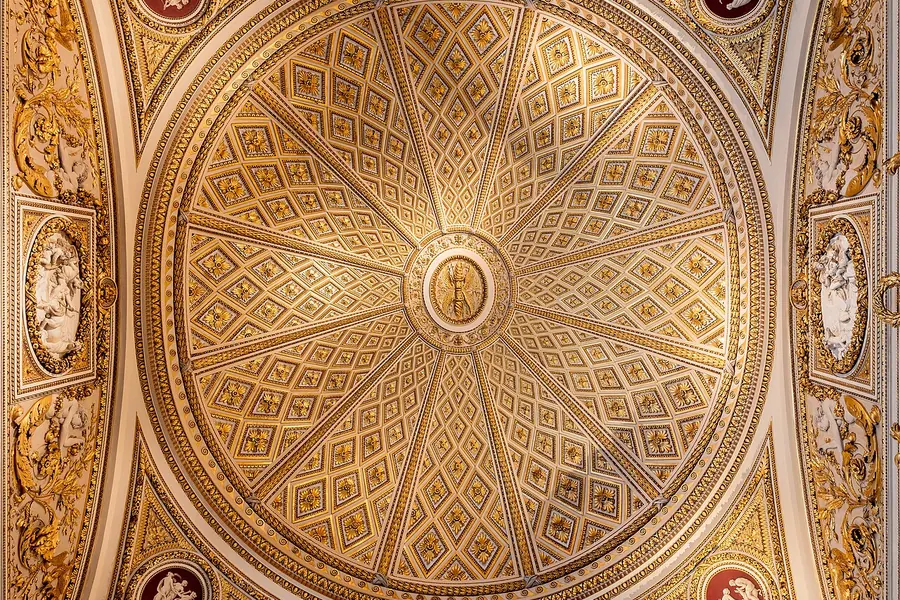
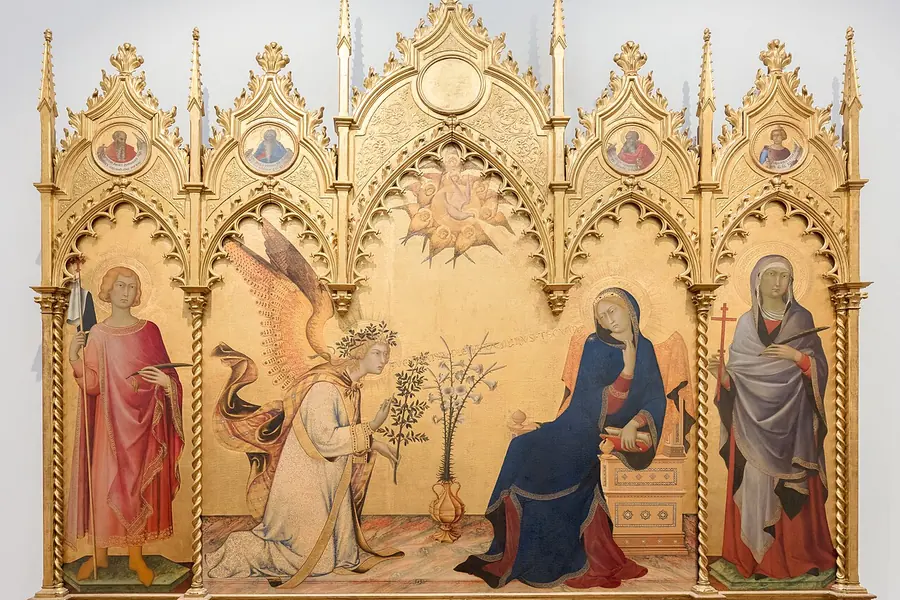
The Uffizi is overwhelming — 45 rooms of Renaissance art, including the two most famous paintings in Italy (Botticelli's Birth of Venus and Primavera). The strategy: head straight to Rooms 10-14 for Botticelli, see the Caravaggio rooms on the way out, and resist the Raphael rooms unless you have a full morning. Pre-booking a timed entry is non-negotiable.
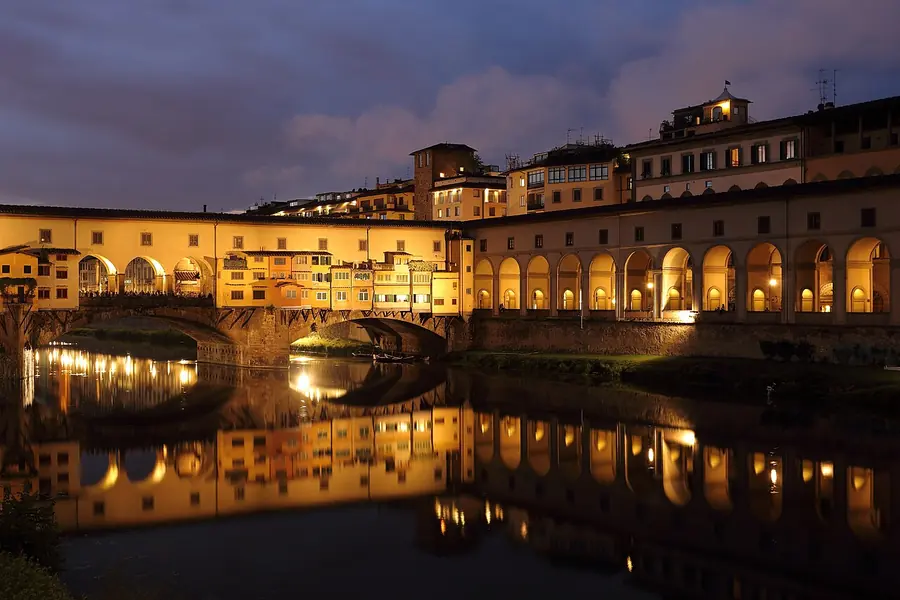
The only bridge in Florence that Hitler ordered spared, because even he couldn't bring himself to destroy it.
The Ponte Vecchio has had shops on it since the 14th century — originally butchers (the smell bothered the Medici on their Vasari Corridor crossings, so they were replaced by goldsmiths in 1593). The goldsmiths are still there. Stand in the middle at any time of day and look east and west along the Arno. This is the view.
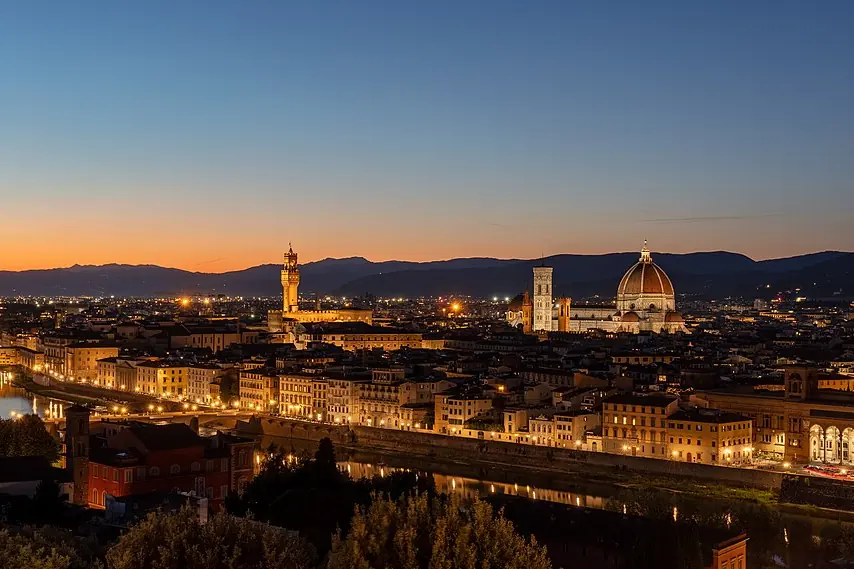
The view of Florence that you will describe, inadequately, for the rest of your life.
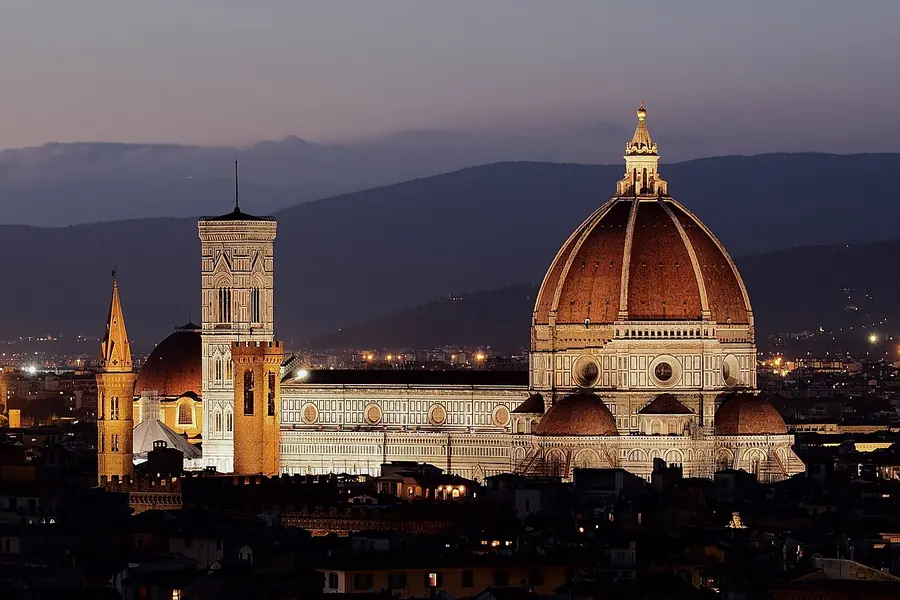
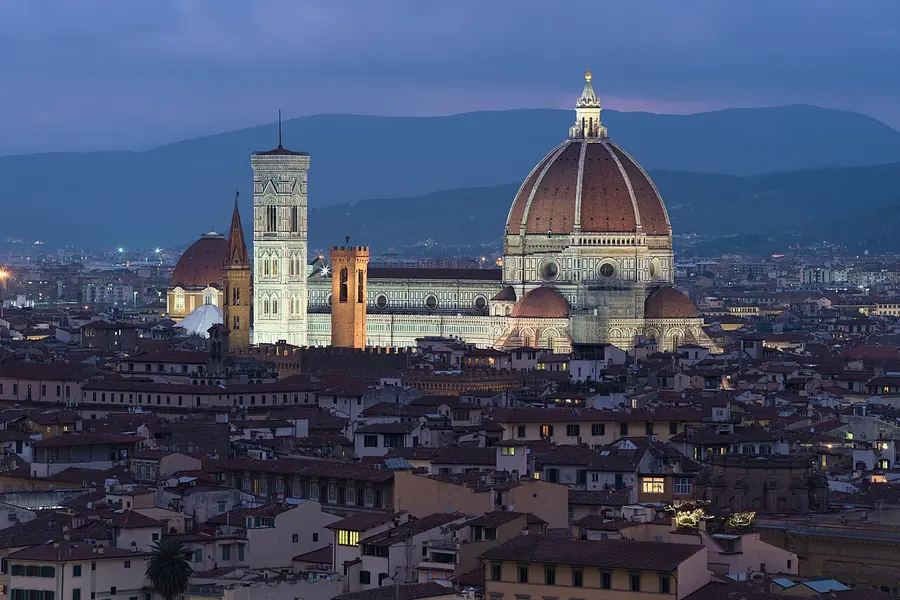
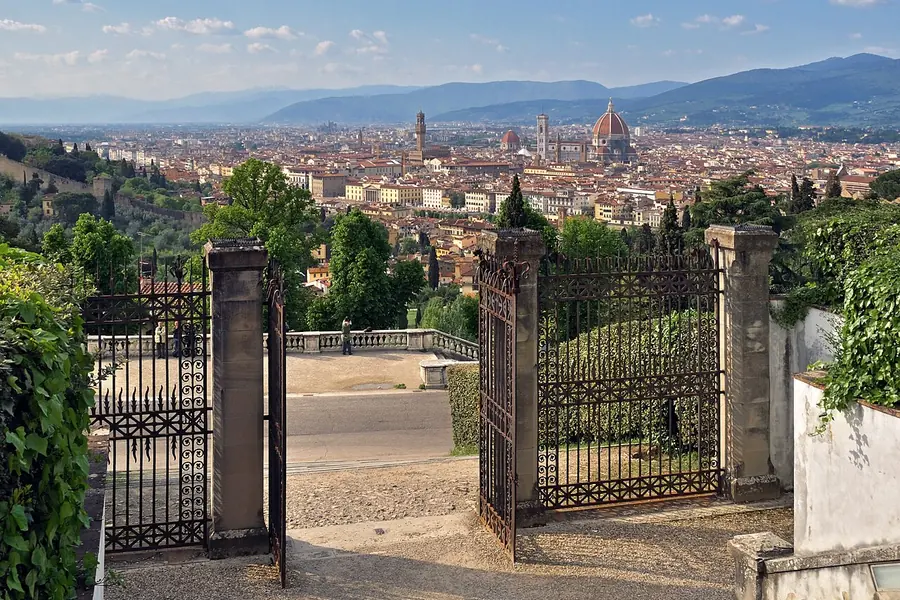
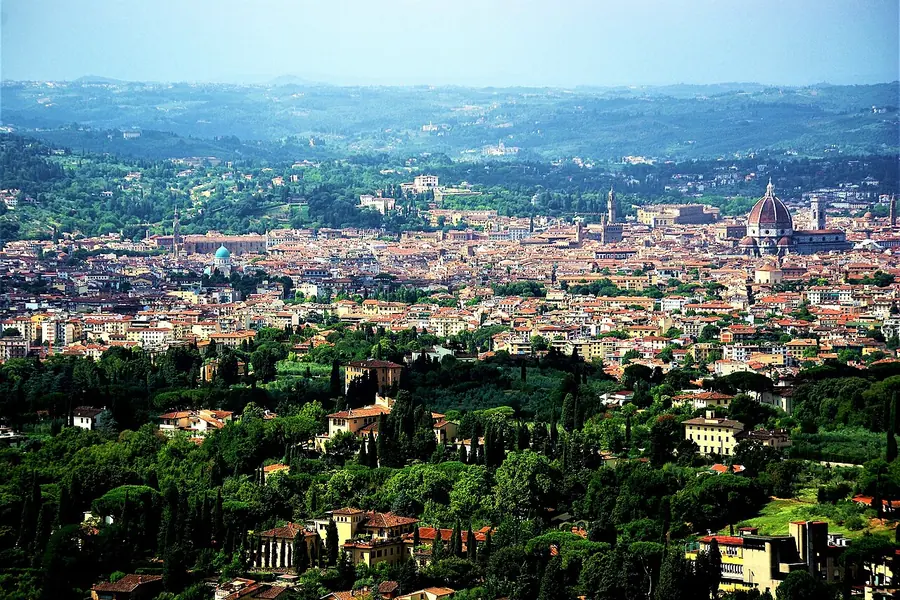
The piazzale is reached by a 15-minute uphill walk from the Ponte Vecchio or by bus 12 from the centre. The view — the Arno winding through the red-roofed city, the Duomo rising at the centre, the hills beyond — is the single best view in Florence and one of the best in Italy. Arrive 45 minutes before sunset. Bring wine from the Enoteca across the road.
The T-bone steak that weighs at least a kilogram and is cooked exactly as rare as it should be.
Bistecca Fiorentina is a Chianina beef T-bone, minimum 1kg, cooked over wood coals to rare (the Florentines will give you a look if you order it medium — and they are right to). Buca Mario (the oldest restaurant in Florence, 1886) and Il Latini are the traditional options. Osteria dell'Enoteca for the refined version.
Michelangelo's David + Mercato Centrale + Duomo Climb
The statue that makes you reassess what marble can do
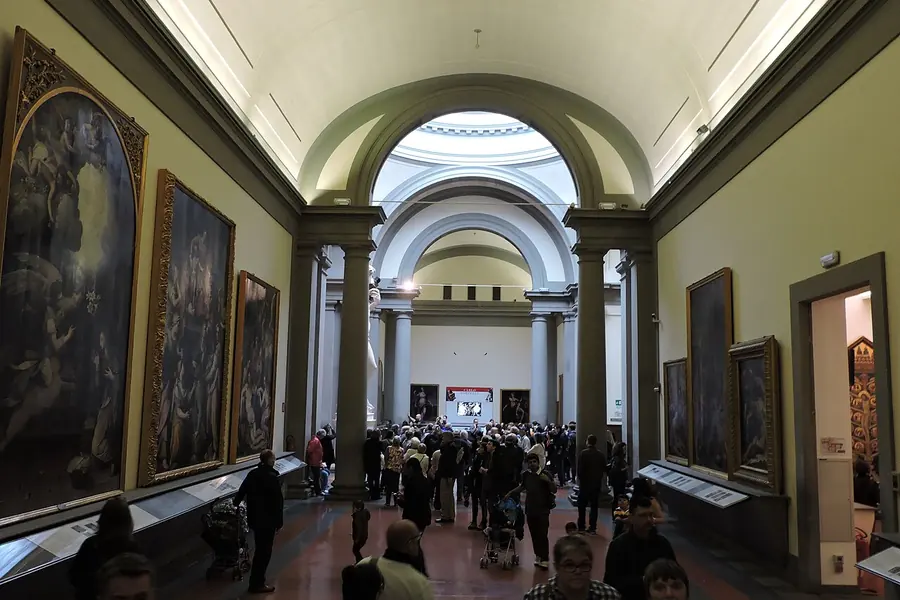
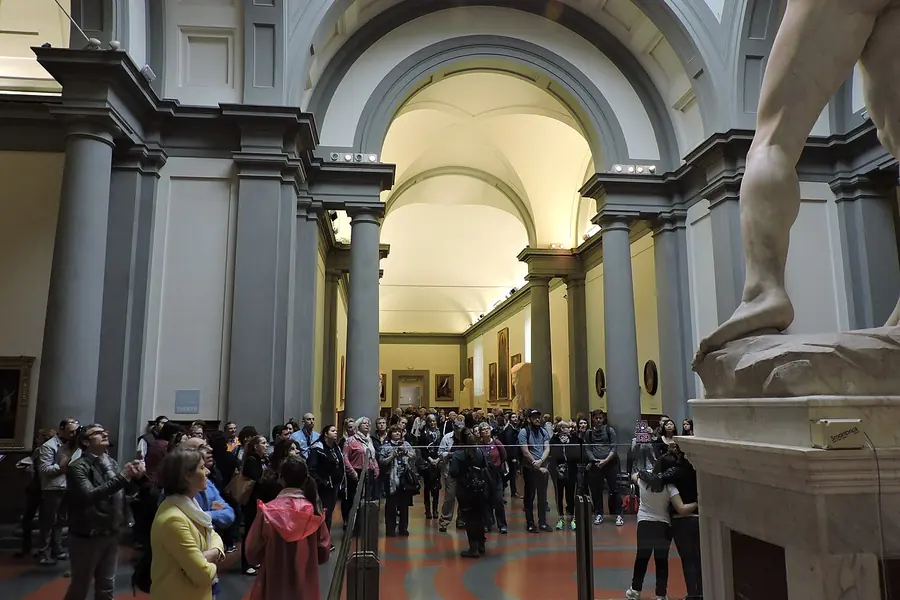
Final day. David first — be at the Accademia when it opens. The statue is in its own hall and you'll have the first 30 minutes before the group tours arrive. Mercato Centrale for lunch. Duomo exterior walk in the afternoon. Home via gelato from Gelateria dei Neri.
David in the morning, San Marco monastery before lunch (Fra Angelico's frescoes are on every monk's cell door — more quietly moving than the Uffizi), Mercato Centrale after.
Galleria dell'Accademia — Michelangelo's David
You've seen the reproductions. The original is nothing like them.
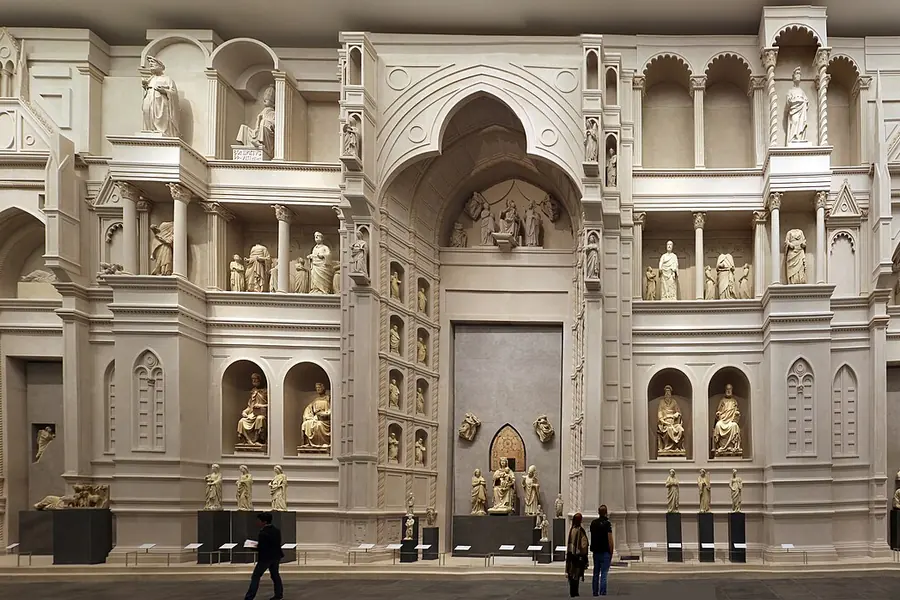
The David is 5.17 metres of Carrara marble and was carved by Michelangelo between 1501 and 1504 when he was 26 years old. The reproductions in the Piazzale Michelangelo and Piazza della Signoria prepare you to be unimpressed; the original does not allow this. The detail of the hands (deliberately outsized), the tension in the neck, the veins on the forearms — none of it is visible in photographs. Pre-book. Arrive at opening.
The ground floor of Mercato Centrale is a working food market that has supplied Florentine kitchens since 1874: whole lambs hanging beside truffle vendors, porcini mushrooms the size of your hand, trippa alla Fiorentina (tripe sandwich) from the cart near the entrance that has been there since the 1970s. Upstairs, the food hall has artisan pasta, pizza al taglio, and the best lampredotto (boiled offal sandwich — a Florentine street food classic) outside of the street carts.
Florence Cathedral (Duomo) — dome climb
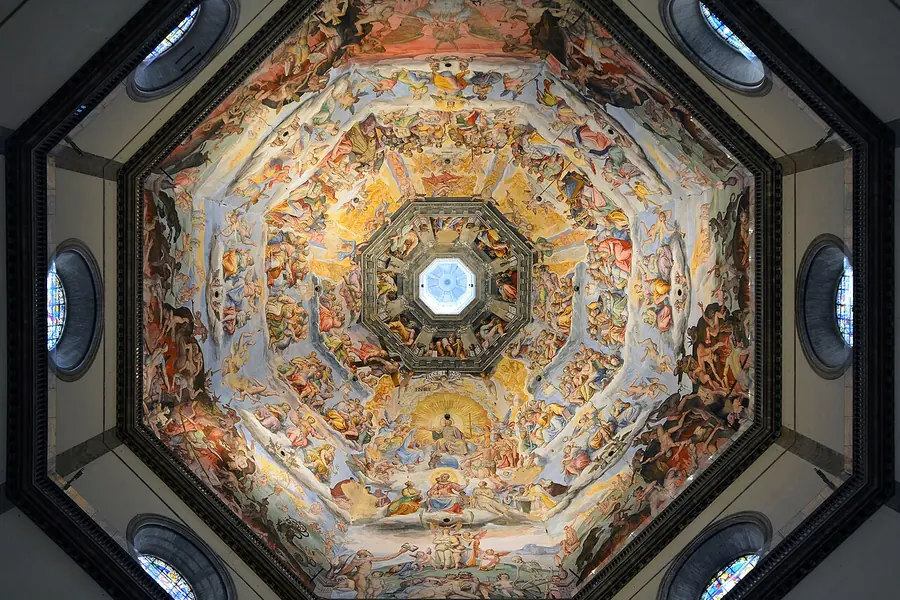
463 steps. No lift. Brunelleschi's double-shell dome from the inside.
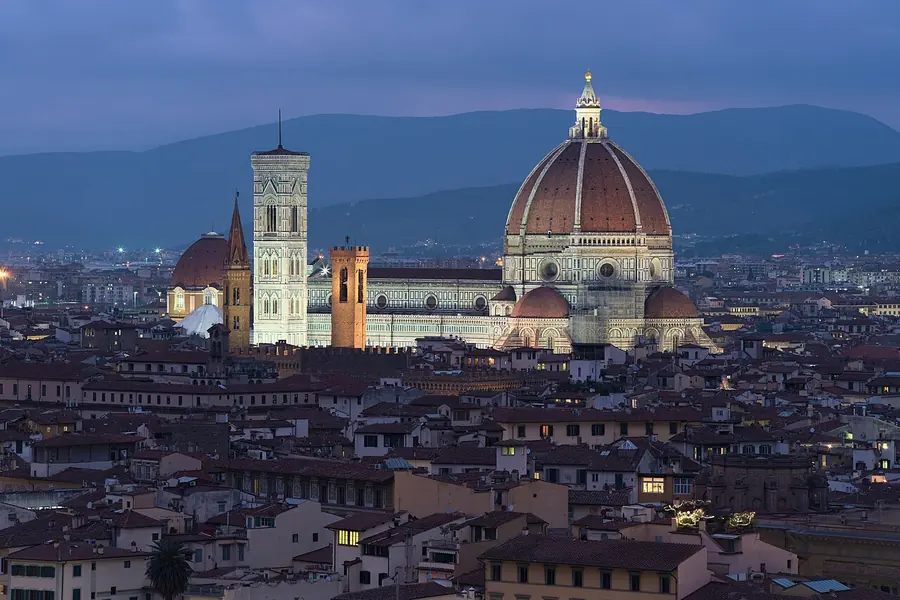
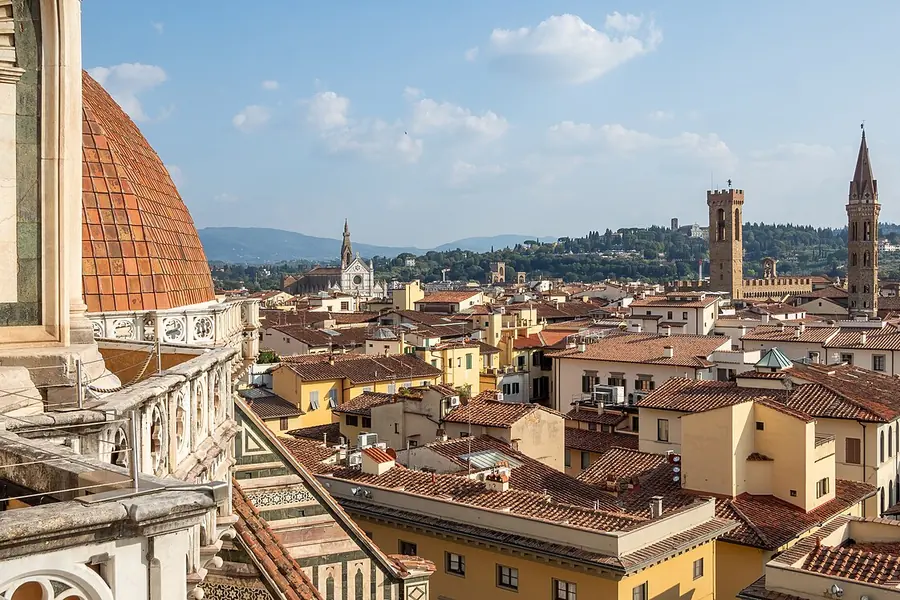
The Florence Cathedral's dome was the largest dome in the world when Brunelleschi built it (1420-1436) and is still the largest brick dome ever constructed. The climb takes you between the inner and outer shells — you can touch the structural ribs — and emerges at the lantern with a 360-degree view of the city. Pre-book timed entry.
Gelateria dei Neri (or Gelateria Vivoli) — gelato research
The day's most important decision is not architectural.
The Florence gelato debate is serious and ongoing. Gelateria dei Neri (Via dei Neri) does the fig and walnut combination that converts people. Vivoli (Via dell'Isola delle Stinche) has been operating since 1930 and is the establishment choice. Either way: pistachio (should be grey-brown, not green — if it's bright green it's not real pistachio), ricotta and honey, and whatever the seasonal fruit option is.
Day 3
Oltrarno — Boboli, Brancacci, Artisan Workshops
Crossing the Arno for the Florence that tourists find last
Cross the Ponte Vecchio first thing and don't come back until evening. The Oltrarno (literally 'beyond the Arno') is Florence's artisan and creative neighbourhood: leather workshops, bookbinders, goldsmiths, and the Brancacci Chapel — the 15th-century frescoes that Michelangelo and Leonardo da Vinci both copied as apprentices.
Same plan but add the Bardini Gardens as an alternative to Boboli if you prefer to avoid crowds. The Bardini has the best view of the city from the south side of the Arno and is half as visited.
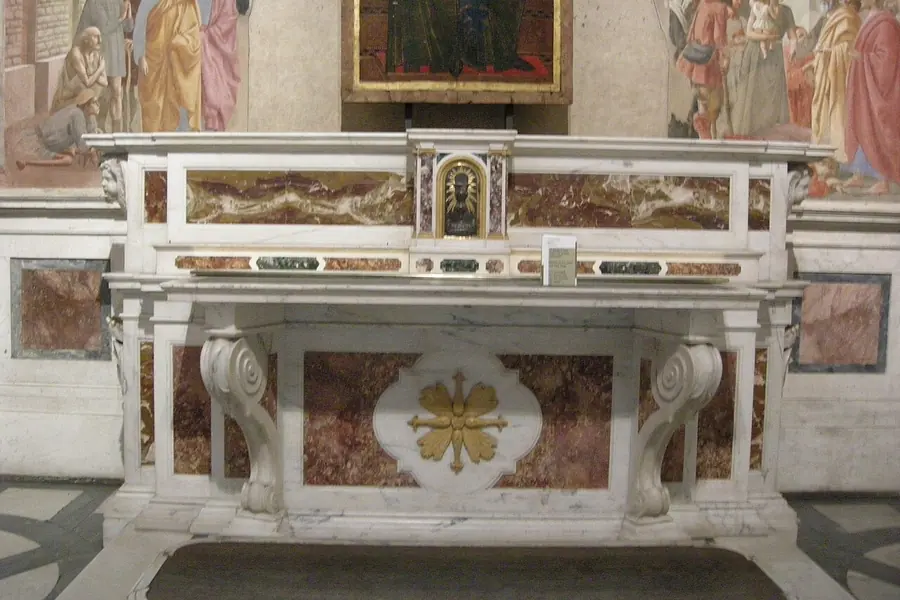
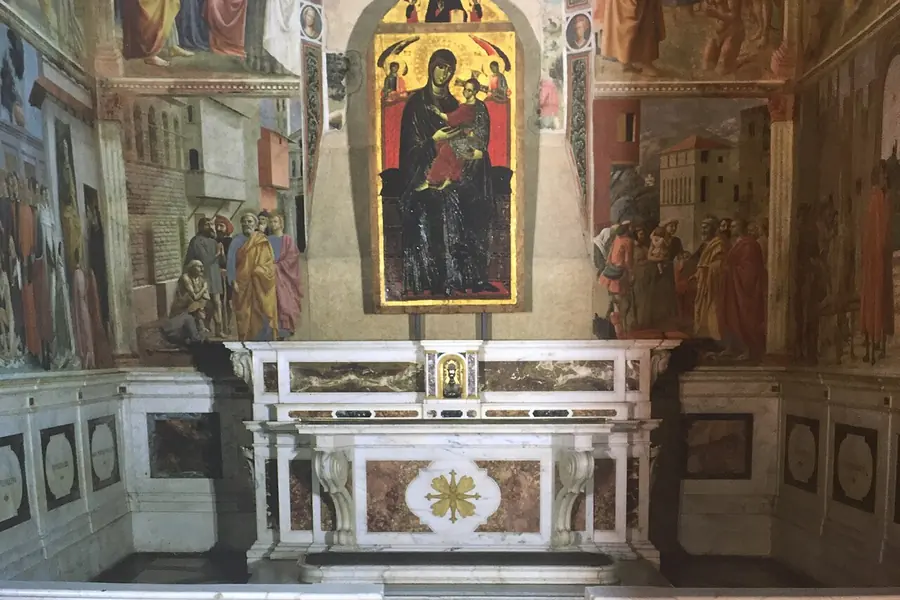
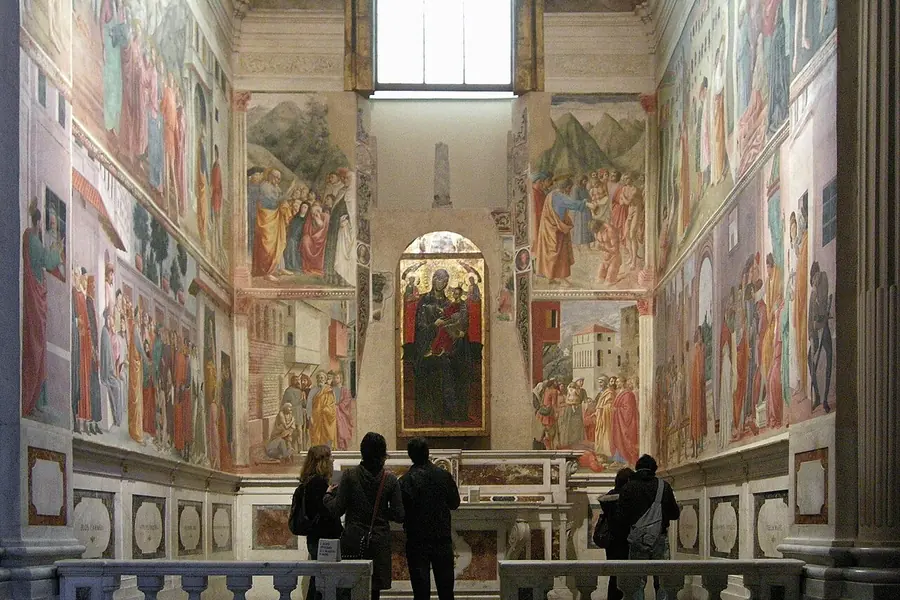
Brancacci Chapel (Masaccio's Frescoes)
The frescoes that Michelangelo studied as a student, and never stopped learning from.
The Brancacci Chapel in Santa Maria del Carmine has frescoes by Masaccio (painted 1424-28) that are the foundation of Western painting's tradition of depicting weight, space, and human emotion. Every Renaissance painter studied them. The chapel holds a maximum of 30 visitors at a time. Pre-book the timed slot — there is no meaningful queue alternative.
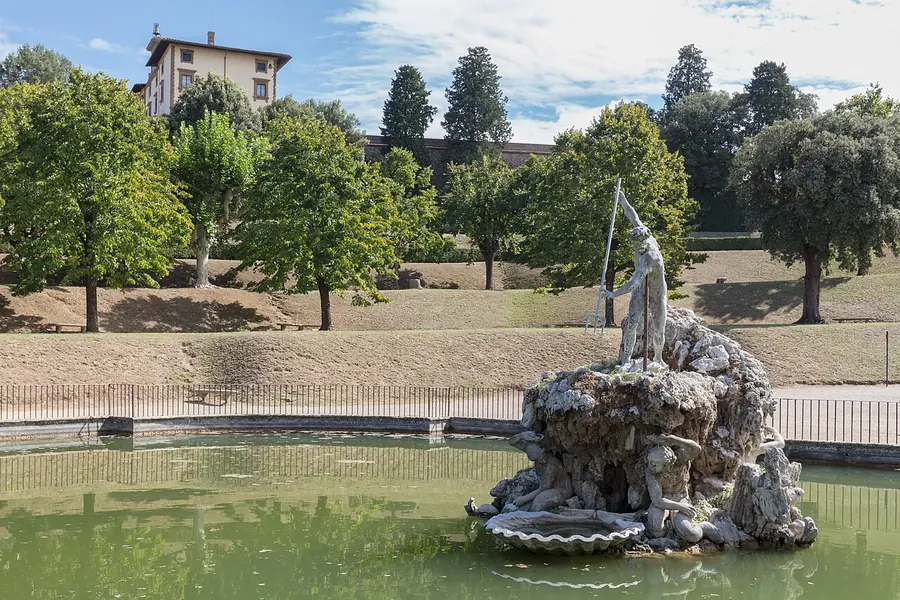
The Medici's backyard. Bigger than it looks. Worth the climb.
The Boboli Gardens behind Palazzo Pitti are 111 acres of terraced Renaissance garden with grottos, fountains, and a view of Florence from the amphitheatre at the top that rivals the Piazzale. The garden is also less crowded than the city below — especially on weekday mornings. The combo ticket with Palazzo Pitti is the correct choice.
Oltrarno Artisan Workshops — Piazza del Carmine area
The leather workers, bookbinders, and frame-gilder who make things that will last.
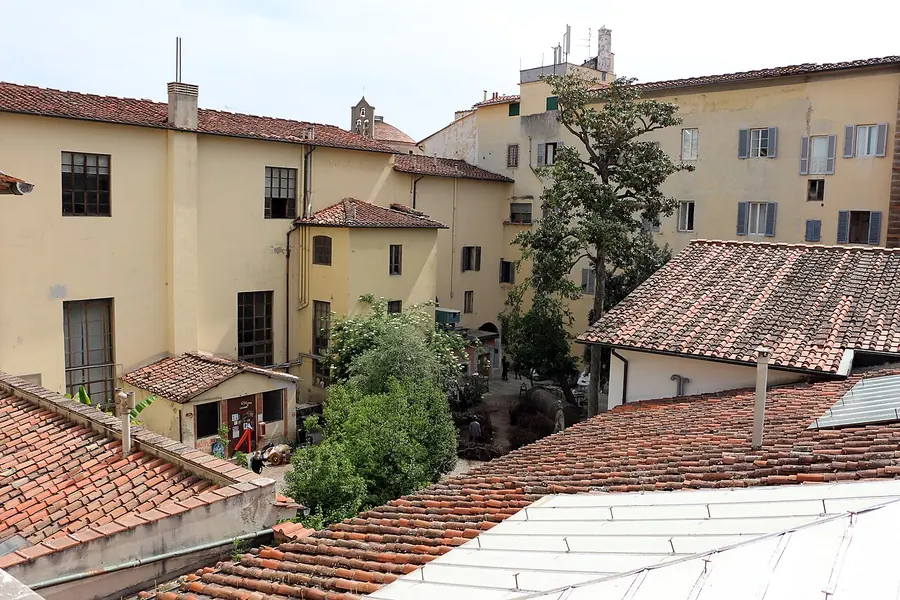
The streets around Piazza del Carmine and Via Maggio have Florence's best concentration of working artisan workshops — not showrooms, actual workshops where you can watch. Scuola del Cuoio (the leather school inside Santa Croce) is technically in the other half of the city but worth mentioning here. In the Oltrarno: Berto Scarpellini (picture framer, Via Maggio) and the bookbinders on Via de' Bardi.
Oltrarno dinner — Buca Mario or Buca dell'Orafo
Dinner on the wrong side of the Arno where the right things happen.
The Oltrarno has Florence's best restaurant-to-tourist ratio. Buca dell'Orafo (near Ponte Vecchio) is the classic Florentine trattoria — tablecloths, ribollita (Tuscan bean soup), pappardelle with wild boar. Il Santino (wine bar attached to Il Santo Bevitore) is the natural wine option. Book either ahead.
Day 4
Chianti Day Trip + San Miniato al Monte
Wine country on a Tuesday morning and the church above the church
Drive or join a guided Chianti tour south from Florence into the hills. Greve in Chianti for a wine tasting (the market square is one of the best in Tuscany). Return to Florence mid-afternoon for San Miniato al Monte — the Romanesque church above the Piazzale that the view-seekers below never quite make it to.
Same Chianti drive but extend to Radda or Gaiole for lunch at a proper Tuscan farmhouse restaurant (agriturismo). Back in Florence by 4 PM for San Miniato and the early evening Oltrarno bar circuit.
Greve in Chianti — market square + wine tasting
The wine region's main town, with a market square shaped like a medieval triangle.
Greve is the main town of the Chianti Classico zone, 27 km south of Florence on the SS222 (the 'Chiantigiana' road). The triangular Piazza Matteotti has covered arcades and the Enoteca del Chianti Classico, which does tasting flights of local Sangiovese. This is the best introduction to Chianti wine that doesn't require booking a winery tour three weeks ahead.
The Romanesque church above the postcard view. Better than the postcard view.
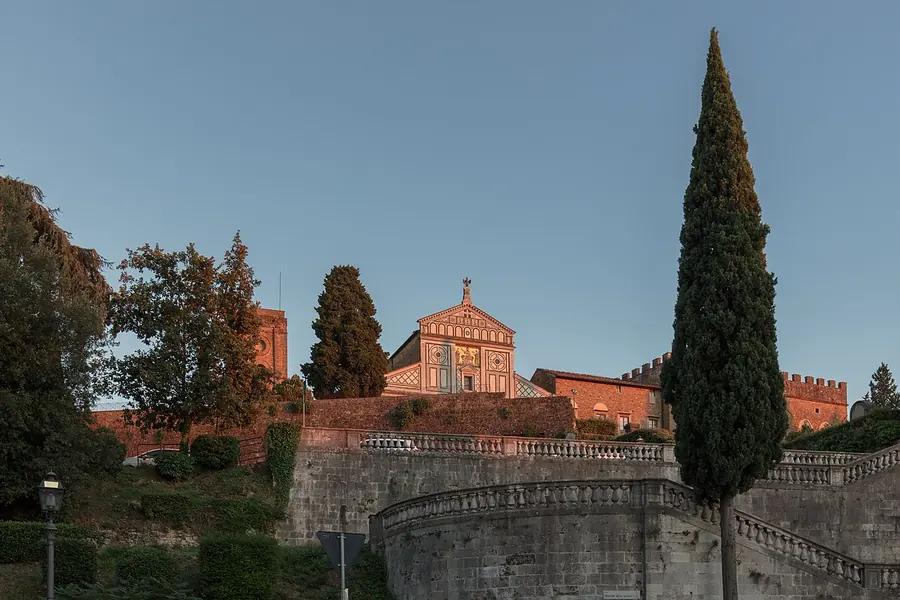
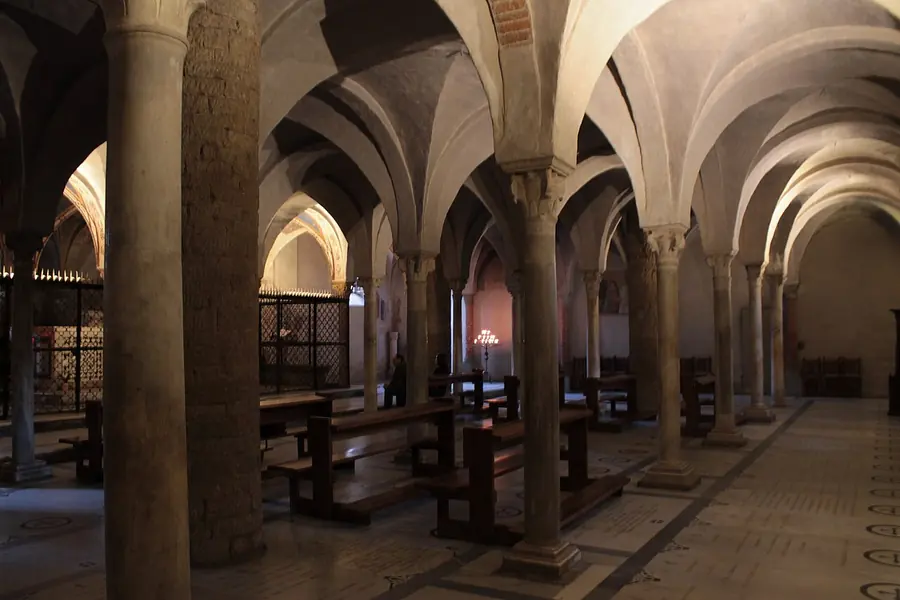
San Miniato al Monte sits above the Piazzale Michelangelo — a 10-minute walk further up the hill — and rewards the extra steps with a 12th-century Romanesque façade in white and green marble, an interior that predates the Renaissance, and a view of the city that the Piazzale crowd below is blocking from itself. The monks sing Gregorian chant at Sunday vespers (5:30 PM).
The Tuscany wine list deserves more than a glass. Tonight is the night.
After a day in Chianti, dinner at a Florence enoteca with a Tuscan wine focus. Il Santino (Via di Santo Spirito) is the Oltrarno option: natural wines, cheese and charcuterie, small plates that are better than they need to be. L'Enoteca di Borghese (Santa Croce) for a fuller wine list and a sit-down dinner.
Day 5
Santa Croce + Leather School + Lampredotto
The Florentine Pantheon, artisan leather, and the most authentic street food in the city
Santa Croce is Florence's Pantheon — Michelangelo is buried here, as are Galileo, Machiavelli, and Dante (cenotaph only; he's in Ravenna, which still bothers Florence). The Scuola del Cuoio behind the basilica is a working leather school founded after World War II to employ war orphans — it's now one of the best artisan leather workshops in Italy. Afternoon: lampredotto cart near the Mercato Centrale.
Basilica di Santa Croce
More great Italians per square metre than anywhere outside of Rome.
Santa Croce's floor is made of memorial slabs; the walls have frescoes by Giotto; Michelangelo's tomb is on the right nave, Galileo's on the left. The Pazzi Chapel in the first cloister is Brunelleschi's most restrained work and arguably his finest. The leather market surrounding the basilica is tourist-focused; the Scuola del Cuoio inside is not.
Leather goods made by hand in the same rooms where monks once lived.
The Scuola del Cuoio occupies the former dormitory of the Franciscan friars at Santa Croce and was set up in 1950 to teach leatherworking to war orphans. Today it's a working school-atelier where you can watch craftsmen making wallets, bags, and belts by hand. The prices are fair. The quality is exceptional. The alternative to buying something off a cart outside.
Boiled cow stomach in a roll, bathed in green sauce. You will either love this immediately or never.
Lampredotto (the fourth stomach of a cow, boiled in broth with vegetables) is Florence's authentic street food — the working-class lunch that has been eaten at market carts since the medieval period. Nerbone inside Mercato Centrale has been serving it since 1872. The sandwich (panino con lampredotto) is soaked in broth and topped with salsa verde. Order it. Trust the process.
Day 6
Siena Day Trip
The city that has been perfect since the 13th century
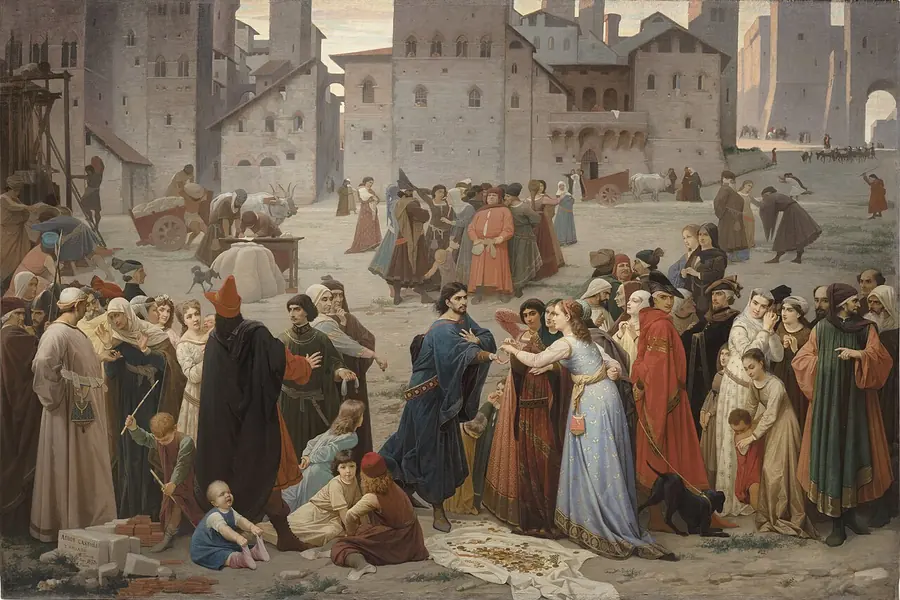
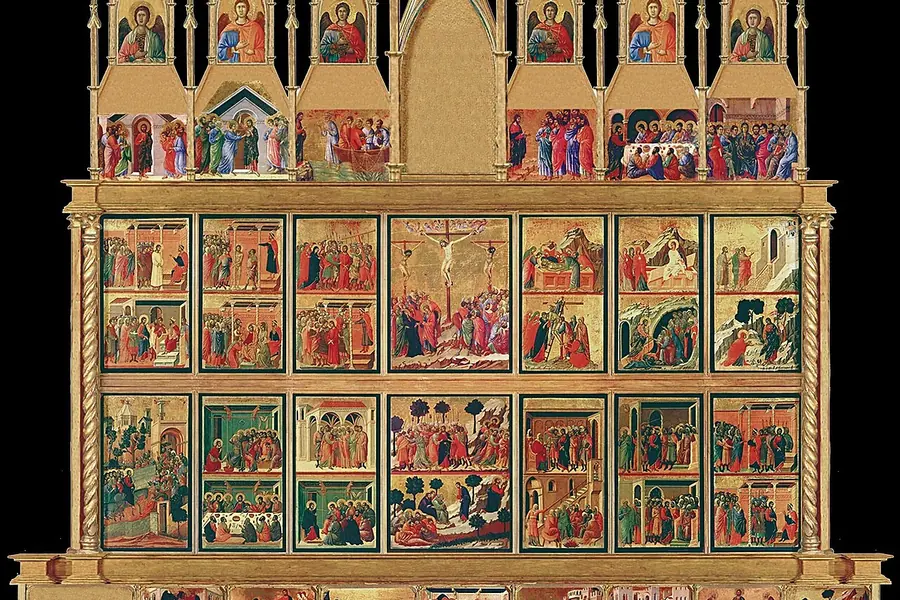
Siena is 75 km from Florence — 90 minutes by bus (rapide coach from Santa Maria Novella, no train connection that doesn't require a change). The city's medieval centre has been almost perfectly preserved since the Black Death of 1348 eliminated 60% of its population and stopped its development in time. The Piazza del Campo, the Duomo, and the Museo dell'Opera del Duomo (which has Duccio's Maestà) together constitute one of the best day trips in Italy.
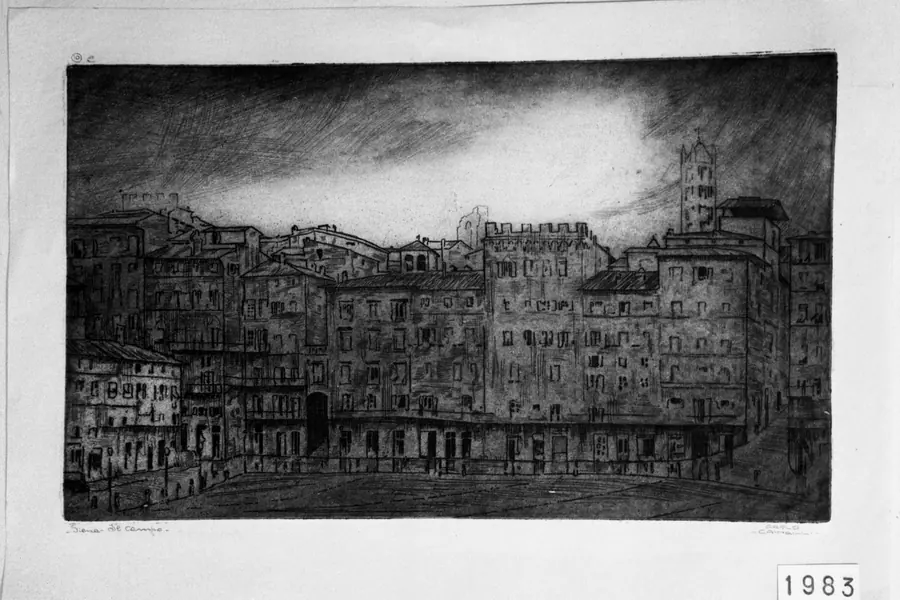
Piazza del Campo, Siena
The most beautiful medieval public square in Europe. Not a close competition.
Siena's Campo is a shell-shaped piazza that slopes gently toward the Palazzo Pubblico and is paved in herringbone brick in nine segments representing the nine-member government of medieval Siena. The Palio horse race is run twice yearly in July and August, and the dirt track is still visible on the brick. The Torre del Mangia (the Gothic bell tower) can be climbed for a view of the surrounding hill country.
The Duomo that tried to be bigger than Florence's and ran out of plague-free citizens.
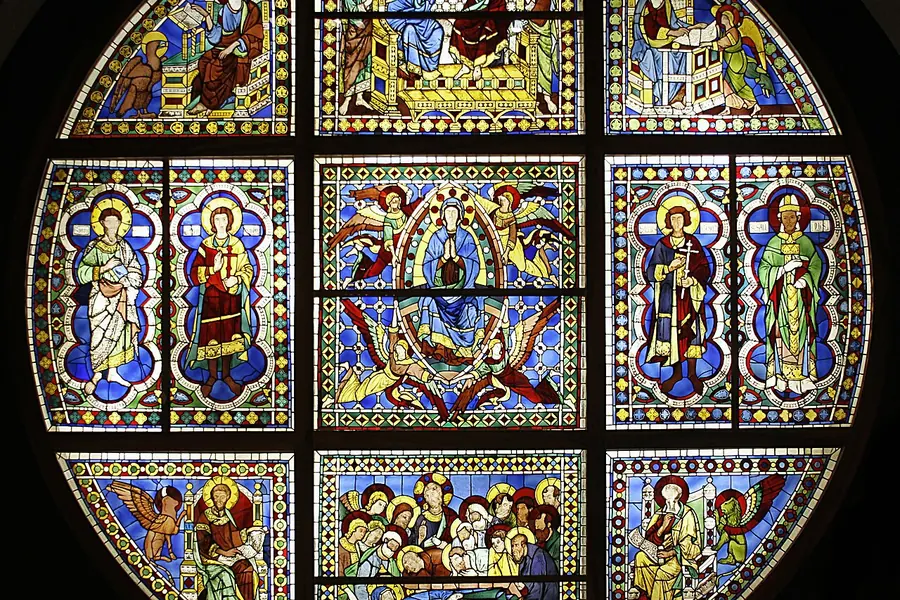
Siena's cathedral (begun 1215) is in black and white marble striped horizontally — a pattern that continues into the interior, making the nave one of the most visually striking Gothic interiors in Italy. The unfinished 'New Cathedral' extension (construction halted by the 1348 plague) is visible on the south side and is now used as a museum. The Museo dell'Opera has Duccio's Maestà altarpiece — the founding work of Sienese painting.
Lunch in Siena — Osteria Il Carroccio or Trattoria Papei
Pici pasta (thick, hand-rolled, no egg) with wild boar ragu. Eat it here; it's not the same elsewhere.
Pici is Siena's pasta: thick, hand-rolled, slightly chewy, and made without egg. The correct sauce is either wild boar (cinghiale) ragu or cacio e pepe. Trattoria Papei on Piazza del Mercato is the old-school option; Osteria Il Carroccio on Via del Casato di Sotto is smaller and slightly more refined. Book whichever you choose.
Day 7
Fiesole + San Frediano + Farewell Gelato
Above Florence in the morning, below the Arno one last time in the evening
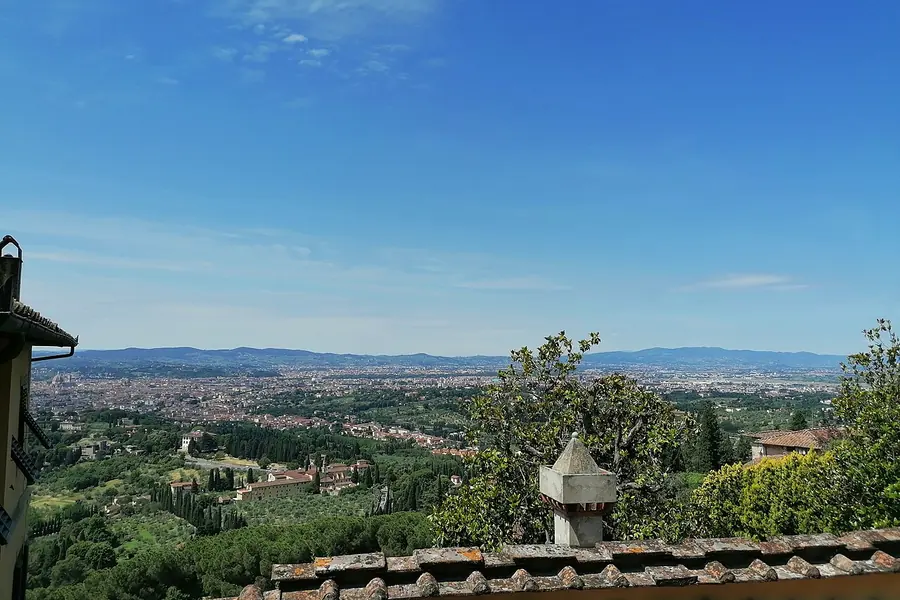
Fiesole is a hilltop Etruscan and Roman town 8 km from Florence — bus 7 from the centre, 25 minutes. The Roman theatre is still used for summer concerts; the view down to Florence from the main piazza is the best aerial view of the city. Back for San Frediano in the Oltrarno (Florence's best neighbourhood for an evening walk), then farewell gelato at your choice of established by now.
Fiesole — Roman Theatre + Piazza Mino
The Etruscan town above Florence that predates Florence by 2,000 years.
Fiesole was an Etruscan settlement before Florence existed. The Roman theatre (1st century BC) is still intact and still used — it seats 1,500 and has summer performances. The Piazza Mino da Fiesole has a café with a view down the Arno valley to Florence that clarifies the city's geography more than any map.
San Frediano neighbourhood — Piazza del Carmine walk
The Oltrarno neighbourhood where the locals actually live.
San Frediano is the working-class Oltrarno neighbourhood that gentrification hasn't fully reached yet, which means it still has a butcher, a hardware shop, and an osteria where the daily special is written on a chalkboard. Piazza del Carmine on a weekday afternoon has children playing football and grandmothers on benches. This is the Florence that exists behind the tourist city.
Farewell dinner — Il Santo Bevitore or Enoteca Pitti Gola e Cantina
The meal you'll try to replicate at home and almost get right.
Il Santo Bevitore is the Oltrarno restaurant with the right balance of creative Italian cooking, excellent Tuscan wine list, and atmosphere that doesn't feel engineered. Enoteca Pitti Gola e Cantina (a wine bar with serious food) is quieter and perhaps more in keeping with a final evening in Florence. Book either weeks ahead.
Florence is a city that will make you feel genuinely stupid in the best possible way. You will stand in front of Botticelli’s Birth of Venus and understand, suddenly, why people gave their lives to painting. You will look at Brunelleschi’s dome and try to understand how it was built without cranes, without steel, without computers — just Brunelleschi’s brain and 16 years of construction.
This is a city built over 300 years of competitive patronage: the Medici, the church, and the city’s merchant guilds all funding art as power, beauty as politics. The result is the highest concentration of significant Renaissance art in a single walkable city on the planet.
The 2-day version gets you the highlights; the 7-day version gets you the Florence that exists around and beneath the highlights — the Oltrarno artisans, the lampredotto carts, the Siena day trip that shows you what Florence’s rival was building at the same time, and the Fiesole hilltop that shows you what came before.
Trip length
Must-see museums
Essential meal
Day trip
2 days
Uffizi (Botticelli rooms), Accademia (David)
Bistecca Fiorentina
—
3 days
+ Brancacci Chapel, San Marco
Lampredotto cart + Oltrarno osteria
—
4 days
+ Boboli Gardens, Palazzo Pitti
Chianti winery lunch
Chianti (Greve)
7 days
All above + Opera del Duomo (Siena)
Il Santo Bevitore farewell
Siena + Fiesole
This article contains affiliate links marked with rel="sponsored". We may earn a commission at no extra cost to you.