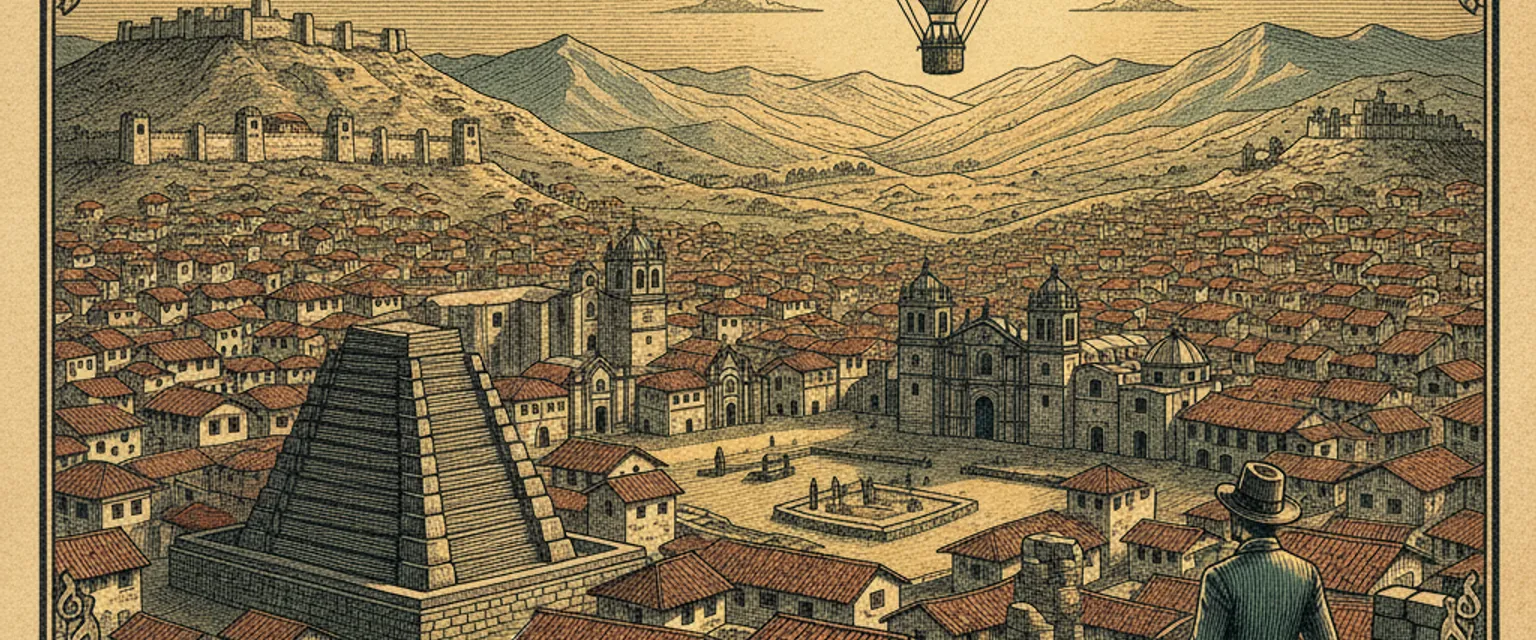
I walked one block uphill from the Plaza de Armas on my first afternoon and had to stop, hands on knees, lungs filing a formal complaint. Cusco sits at 3,400 metres and it does not care about your gym membership. A woman selling coca tea outside a church watched me wheeze, poured a cup, and said "despacio" - slowly. It became the whole trip's instruction. Cusco rewards the people who slow down, drink the tea, and let a city that's been the centre of an empire teach them how to breathe.
The Perfect Cusco Itinerary (2, 3, 4 & 7 Days)
📅 Planning your dates? See the best time to visit Cusco — season-by-season weather, crowds, and prices.
Two days in Cusco should be gentle: this is altitude, and pushing hard on day one is how trips get ruined. Walk the Plaza de Armas, the Qorikancha sun temple, and the San Blas artisan quarter. Drink coca tea. Eat well. Treat these two days as both sightseeing and acclimatisation for whatever comes next.
Do not drink alcohol or hike hard on your first day at altitude. Hydrate, rest, and go despacio.
72 Hours: Add Sacsayhuaman and the Ruin Circuit
Three days lets you climb (slowly) to Sacsayhuaman, the colossal Inca fortress above the city, and tour the nearby ruins of Q'enqo, Puca Pucara, and Tambomachay. Day 3 is when you start to grasp the scale of Inca engineering and earn a proper plate of lomo saltado.
4 Days: The Sacred Valley
Four days adds a full Sacred Valley day: Pisac's hilltop ruins and market, the agricultural terraces of Moray, the salt pans of Maras, and the fortress town of Ollantaytambo. This is the warm-up act that would headline anywhere else, and the gateway to Machu Picchu.
7 Days: Machu Picchu and Rainbow Mountain
A week is what Cusco actually deserves: the Sacred Valley, an overnight in Aguas Calientes for a sunrise at Machu Picchu, and a day for Rainbow Mountain or the Humantay Lake trek. By Day 7 you'll have acclimatised, seen the wonder, and understood why people never quite leave.
Estimated budget:$160-$340
Estimated budget:$260-$500
Estimated budget:$420-$760
Estimated budget:$900-$1,700
Day 1
Plaza de Armas + Qorikancha + San Blas (Easy)
A gentle first day to let the altitude settle
Plaza de Armas + Cusco Cathedral
The empire's old centre, now a baroque square ringed by colonnades and a vast cathedral.
The Plaza de Armas was the ceremonial heart of the Inca empire and is now the colonial centre of Cusco, framed by the Cathedral and the Iglesia de la Compania. Inside the Cathedral, look for the famous Last Supper painting where the apostles dine on cuy (guinea pig). Take it slow; you're at altitude. Find a balcony cafe, order coca tea, and watch the square.
Qorikancha (Temple of the Sun)
The Inca's most sacred temple, once sheathed in gold, with the Santo Domingo convent built on top.
Qorikancha was the Inca empire's holiest site, its walls once covered in sheets of gold. The Spanish built the Santo Domingo convent directly on top of it, and the result is the clearest possible illustration of the conquest: perfect Inca masonry, earthquake-proof and seamless, supporting colonial arches that have repeatedly cracked. The contrast says everything. Allow an hour.
Barrio de San Blas
The steep artisan quarter, all whitewashed walls, blue balconies, and the best views down over town.
San Blas is the bohemian artisan neighbourhood, a steep cobblestone climb above the centre lined with galleries, workshops, and cafes. The tiny San Blas church has an astonishing carved pulpit. Climb to the mirador (viewpoint) for the classic shot over the red rooftops to the mountains. Go slowly on the stairs; this is a workout at 3,400 metres.
Day 2
Twelve-Angled Stone + San Pedro Market + Andean Food
Inca masonry, market chaos, and a deep dive into Peruvian food
Hatun Rumiyoc + the Twelve-Angled Stone
An Inca wall so precise a single famous stone has twelve perfectly cut angles and no mortar.
Calle Hatun Rumiyoc is an alley of original Inca wall, and embedded in it is the famous Twelve-Angled Stone, a single block cut with twelve angles to lock into its neighbours so tightly a knife blade won't fit between them, all without mortar. It's a small thing that explains why Inca buildings survive the earthquakes that drop Spanish ones. Walk the whole alley.
Mercado de San Pedro
The working market: juice stalls, mountains of potatoes, and lunch counters locals actually use.
San Pedro is Cusco's central market and a sensory crash course in Andean food: dozens of potato varieties, fresh juice stalls where you point and they blend, cheese and bread aisles, and the comedor lunch counters where a hearty caldo or menu del dia costs a few soles. It's lively and real, not staged. Get a juice; watch your bag; eat where the locals queue.
Andean dinner (Pachapapa or Cicciolina)
Novoandina cooking and the cuy, alpaca, and quinoa that built these mountains.
Cusco's food scene is excellent. For traditional, Pachapapa in San Blas does wood-oven cuy and Andean dishes in a courtyard; for refined novoandina, Cicciolina near the plaza is a long-standing favourite. Order alpaca (lean and delicious), quinoa soup, and aji de gallina. If you're brave, the cuy (roast guinea pig) is the genuine ceremonial dish. Pair with a pisco sour.
Day 3
Sacsayhuaman + the Ruin Circuit
The fortress of megalithic stones above the city
Sacsayhuaman
Zigzag walls of stones the size of trucks, fitted so tightly nobody fully agrees how they did it.
Sacsayhuaman, on the hill above Cusco, is the most jaw-dropping Inca site near the city: enormous zigzagging walls built from limestone blocks, some weighing over 100 tonnes, cut and fitted with impossible precision. It was both fortress and ceremonial complex. Walk up slowly or take a short taxi; the altitude here is higher than the centre. The scale only registers in person.
Q'enqo, Puca Pucara + Tambomachay
The ruin circuit above town: a carved ritual cave, a checkpoint fort, and the Inca water shrine.
The three smaller sites above Sacsayhuaman complete the classic Cusco ruin circuit. Q'enqo is a carved limestone outcrop with a ritual cave and altar; Puca Pucara is a small fort or waystation with valley views; Tambomachay, the "Inca baths," is a beautifully engineered set of water channels and fountains still running today. A boleto turistico covers them. A half-day round trip by taxi or tour.
Day 4
Sacred Valley — Pisac, Moray, Maras, Ollantaytambo
The valley of terraces, salt pans, and fortress towns
Pisac ruins + market
Hillside Inca terraces above a famous craft market, the best single combo in the valley.
Pisac, an hour from Cusco, pairs a dramatic hilltop Inca site, sweeping agricultural terraces and a cliffside cemetery, with a colourful artisan market in the town below. Do the ruins first thing while it's cool and quiet, then drop to the market for textiles and silver. The terraces here show how the Inca farmed impossibly steep land. Allow most of the morning.
Moray terraces + Maras salt pans
Concentric Inca agricultural rings and 5,000 pre-Inca salt pools terraced down a mountainside.
Moray is a set of vast concentric circular terraces the Inca used as an agricultural laboratory, each ring a different microclimate. A short drive away, the Salineras de Maras are thousands of small salt pans fed by a mineral spring, worked by hand since before the Inca and still producing pink salt today. Together they're the most photogenic stop in the valley. Buy the salt.
Ollantaytambo
A living Inca town and a fortress of giant terraces, plus the train station for Machu Picchu.
Ollantaytambo is the best-preserved living Inca town, its grid of streets and water channels still in daily use, beneath a steep fortress of monumental terraces where the Inca won a rare battle against the Spanish. It's also where the Machu Picchu trains depart, so it's the natural place to overnight before the big day. Climb the terraces late afternoon when the crowds thin.
Day 5
Machu Picchu
The lost city, finally, at the end of the line
Train to Aguas Calientes
The scenic rail line down the Urubamba gorge to the town below the citadel.
The train from Ollantaytambo to Aguas Calientes (Machu Picchu Pueblo) follows the Urubamba River down through a dramatic narrowing gorge, the landscape shifting from highland to cloud forest. PeruRail and Inca Rail both run it; the Vistadome cars have glass roofs. Book everything, trains and entry tickets, well in advance, as both sell out. Aguas Calientes is the launch pad for the citadel.
Machu Picchu citadel
The reason you came. A 15th-century Inca city perched on a saddle between two peaks.
Machu Picchu needs little introduction: the 15th-century Inca citadel of terraces, temples, and stone houses set on a ridge between Huayna Picchu and Machu Picchu mountains, ringed by cloud forest and sheer drops. Take the bus up the switchbacks from Aguas Calientes, hire a guide at the gate, and follow your timed-entry circuit. If you booked Huayna Picchu, the climb is steep and unforgettable. Go early to beat both crowds and afternoon cloud.
Day 6
Rainbow Mountain (Vinicunca)
A high-altitude trek to the striped mountain everyone's chasing
Vinicunca (Rainbow Mountain)
An early start and a tough hike to 5,000 metres for the mineral-striped ridge.
Rainbow Mountain, Vinicunca, is a long day trip: a pre-dawn departure, a three-hour drive, and a steep hike to over 5,000 metres where mineral deposits stripe the ridge in red, gold, and turquoise. It is genuinely high and genuinely hard; only attempt it well-acclimatised, and consider the quieter Palccoyo alternative or the Humantay Lake trek if crowds and extreme altitude worry you. Horses are available for the final push.
Recovery evening in Cusco
Back to the city, a hot soak, and a low-key dinner after a brutal altitude day.
After Rainbow Mountain you'll be wrecked and elated. Get back to Cusco, warm up, and keep dinner gentle, a hearty quinoa soup and a pisco sour go a long way. The lanes around the Plaza de Armas and San Blas have plenty of cosy spots. Hydrate hard; high-altitude days dehydrate you more than you realise. Early night recommended.
Day 7
Slow Cusco — Museums, Chocolate, and Farewell
A gentle final day to absorb the city you've been too breathless to notice
Museo de Arte Precolombino (MAP)
A beautifully curated set of pre-Columbian gold, ceramics, and silver in a colonial mansion.
The Museo de Arte Precolombino, in a colonial mansion on a quiet plaza, is the city's best museum: a tightly curated collection of pre-Columbian ceramics, gold, silver, and woodwork displayed as the art it is. It's calm, manageable, and gives context to everything you've seen in the ruins. The courtyard cafe is a lovely place to pause.
ChocoMuseo + last market wander
Andean cacao, a hot chocolate, and a final loop through the artisan stalls for gifts.
Round off the week with a cacao workshop or just a thick Peruvian hot chocolate at the ChocoMuseo, then a final wander through the artisan markets and San Blas workshops for alpaca knits, silver, and textiles. This is the day to buy the gifts you've been eyeing all week. Cusco's highland crafts are genuinely good; spend a little here rather than at the airport.
Cusco is two cities stacked on top of each other. Underneath is the Inca capital, the navel of an empire that ran from Colombia to Chile, built from stones so precisely cut they’ve survived every earthquake for 600 years. On top is the Spanish colonial city, the churches and mansions the conquistadors raised on Inca foundations, which keep cracking while the Inca walls beneath them hold. You can read the whole history of the conquest just by looking down at the bottom of a wall.
It also sits at 3,400 metres, and this is the single most important thing to plan around. Altitude sickness is real and it does not respect fitness. The first rule of Cusco is despacio: slowly. Build in easy days at the start, drink the coca tea, and save the hard hikes for when your body has caught up.
How to use this plan
The 2/3/4/7-day versions are deliberately back-loaded to respect the altitude. Two days is gentle acclimatisation in the city itself. Three days adds the ruin circuit above town. Four days opens up the Sacred Valley, which would be a destination in its own right anywhere else. A full week is what you need to do it properly: the valley, an overnight for sunrise at Machu Picchu, and a high-altitude day at Rainbow Mountain.
Book your Machu Picchu entry and trains as far ahead as you can; both have hard daily caps and sell out in high season. Use the duration filter above to see your version of Cusco, and remember the woman with the coca tea: slowly.
This article contains affiliate links marked with rel="sponsored". We may earn a commission at no extra cost to you.