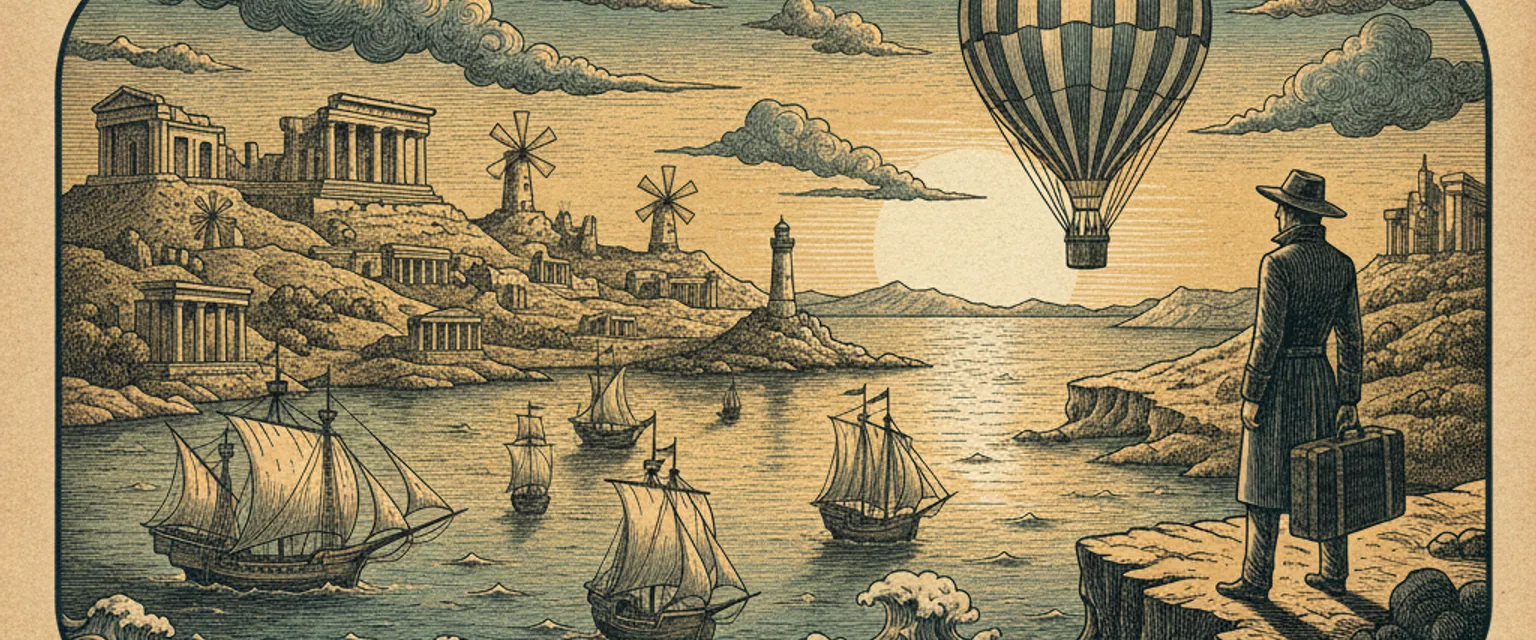
I rented a battered Fiat in Heraklion intending to do Crete in three days, and somewhere on the road to Chania a taverna owner named Manolis put a carafe of his own raki in front of me, refused payment, and told me I was doing it wrong. He was right. Crete is not an island you tick off; it is a small country pretending to be a beach holiday. The food, the gorges, the 4,000-year-old palace, the fact that nobody is in a hurry. I stayed a week and still left things undone.
The Perfect Crete Itinerary (2, 3, 4 & 7 Days)
📅 Planning your dates? See the best time to visit Crete — season-by-season weather, crowds, and prices.
48 Hours: Knossos, Heraklion, and a First Taste of the West
Two days means the east: the Minoan palace of Knossos, the superb archaeological museum in Heraklion, and a first sunset on a Cretan beach. It is a teaser, not a tour, but it covers the single most important ancient site in Greece and the food is non-negotiable.
Rent a car at the airport. Crete's public buses are decent but the island only truly opens up on its own roads.
72 Hours: Add Chania and the Venetian Harbour
Three days lets you drive west to Chania, whose Venetian harbour is the prettiest town on the island. Wander the old town lanes, eat at the harbour as the lighthouse glows, and base yourself here for everything that comes next.
4 Days: Add the Beaches of the Southwest
Four days earns you Crete's jaw-dropping beaches: the pink sands of Elafonisi or the lagoon at Balos, reached by a rough road or a boat and worth every jolt. This is the day your camera roll fills up and your idea of a beach is permanently recalibrated.
7 Days: The Gorge, the South Coast, and the Real Crete
A full week is what Crete actually wants. You hike the Samaria Gorge, reach the roadless village of Loutro by boat, drive the wild south coast, and spend a final slow day realising that the raki, the hospitality, and the unhurried pace were the whole point.
Estimated budget:$240-$420
Estimated budget:$370-$640
Estimated budget:$520-$880
Estimated budget:$980-$1700
Day 1
Knossos & Heraklion
Europe's oldest city and the myth of the Minotaur
Start at Knossos at opening, before the cruise crowds and the heat. Then cool off inside Heraklion's archaeological museum, where the palace's real treasures actually live.
Palace of Knossos
The 4,000-year-old Minoan palace where the labyrinth legend was born.
Knossos is the largest Bronze Age site in Crete and the seat of Europe's first advanced civilisation. The partial reconstructions by Arthur Evans are controversial among archaeologists but help you read the throne room and the famous dolphin frescoes. Go at opening; by 11 AM the cruise buses arrive and the heat is fierce. A guide or audio guide turns rubble into a story.
Heraklion Archaeological Museum
The frescoes and the snake goddesses that Knossos is missing, all under one roof.
What you do not see at the palace, you see here: the original Minoan frescoes, the faience snake goddess figurines, and the undeciphered Phaistos Disc. It is one of the best museums in Greece and the perfect air-conditioned antidote to a hot morning at the site. Allow two hours; the Minoan galleries alone deserve it.
Heraklion old town & Koules Fortress
Venetian walls, a harbour fortress, and the city's best evening volta.
As the heat drops, walk Heraklion's Venetian sea walls out to the Koules Fortress guarding the old port, then join the evening stroll along 25 Avgoustou street. Dinner at a back-lane taverna: order the dakos (rusk salad), grilled lamb, and a carafe of house raki that will arrive whether you order it or not.
Day 2
Drive West to Chania
The most beautiful harbour town in Greece
On a two-day trip, make today a half-day west: it is a scenic two-hour drive, and even an afternoon in Chania beats another beach near Heraklion.
Rethymno old town (en route)
A perfectly preserved Venetian-Ottoman town that makes the ideal coffee stop.
Break the drive west in Rethymno, whose old town is a maze of Venetian mansions, Ottoman minarets, and a fortress (the Fortezza) on the headland. Park outside the walls, get lost in the lanes for an hour, and have a frappe by the little Venetian harbour before continuing on to Chania.
Chania Venetian Harbour
A crescent of pastel houses around a harbour crowned by an Egyptian-built lighthouse.
Chania's old Venetian harbour is the postcard image of Crete: a curved waterfront of faded Venetian houses, a 16th-century lighthouse, and lanes behind it full of leather workshops and tavernas. Walk out along the breakwater to the lighthouse at sunset, then eat in the back streets rather than the (pricier, touristier) harbour front itself.
Dinner in the Splantzia quarter
Chania's old Turkish quarter, where the locals actually eat.
Behind the harbour, the Splantzia quarter is where Chania eats away from the tourist crush: shaded squares, a converted mosque, and tavernas doing boureki (zucchini and cheese pie) and slow-cooked goat. Tamam, in a former Turkish bathhouse, is a local institution. Book ahead in summer.
Day 3
Western Beaches & Old Town
Pink sand, turquoise water, and a slow Chania evening
A beach day with Chania as your base. Choose Elafonisi for pink sand or Falassarna for sunset; both are about a 90-minute drive west.
Elafonisi Beach
A pink-tinged lagoon you can wade across to a protected islet.
Elafonisi is a shallow lagoon where crushed shells tint the sand pink and you can wade across knee-deep water to a protected nature reserve on the far side. It is gorgeous and, by midday in August, very busy: go early, bring shade and water (facilities are minimal), and the drive itself through the gorge-like interior is half the reward.
Chania Municipal Market & old town lanes
A cross-shaped 1913 market hall and the best browsing in the old town.
Back in Chania, the cross-shaped Agora (municipal market) sells Cretan cheeses, honey, raki, and herbs; it is the place to buy edible souvenirs. Then wander the old town lanes (Skrydlof, the leather street) for sandals and worry beads before the evening crowds thicken.
Sunset drinks on the breakwater
A glass of Cretan white where the harbour meets the open sea.
Time a drink at one of the bars along the eastern breakwater for the moment the sun drops behind the lighthouse. Order an Assyrtiko or a local Vidiano white. It is touristy, yes, and also genuinely one of the loveliest sunset settings in the Mediterranean.
Day 4
Balos Lagoon Day Trip
The most photographed beach in Greece, earned the hard way
Balos is the showstopper. Either brave the rough dirt road and the clifftop hike down, or take the boat from Kissamos. Both are worth it.
Balos Lagoon
A shallow white-and-turquoise lagoon at the wild northwest tip of Crete.
Balos is the lagoon that fills every Crete postcard: blinding white sand, water in three shades of turquoise, and the islet of Gramvousa offshore. The dirt access road is rough on a small car and the walk down is steep; many people take the cruise boat from Kissamos instead, which also stops at the Venetian fortress island. Either way, go early.
Gramvousa Island & Venetian fortress
A clifftop fort and a shipwreck in clear water, usually paired with Balos by boat.
The Balos cruise boats typically stop at Imeri Gramvousa, where a steep climb leads to a ruined Venetian fortress with island views, and a rusting shipwreck sits in the shallows below. Bring sturdy shoes for the climb and snorkel gear for the swim. It pairs naturally with a half-day at Balos.
Seafood dinner in Kissamos
A working fishing town where the catch is genuinely local.
Kissamos is unglamorous and all the better for it: a real fishing town where the harbour tavernas serve whatever came in that morning. Order grilled fish by the kilo, a Greek salad with Cretan rusks, and let the owner pour the raki. This is the unpolished Crete the guidebooks under-sell.
Day 5
Samaria Gorge Hike
Europe's longest gorge, top to bottom on foot
A full, demanding day. Take the early bus to the Omalos plateau, hike the 16 kilometres down through the gorge, and catch the boat out from Agia Roumeli. Start very early and carry water.
Samaria Gorge
16 km down a UNESCO gorge, from alpine forest to the Libyan Sea.
The Samaria Gorge is one of Europe's great day hikes: 16 km descending from the Omalos plateau through pine forest and past the famous Iron Gates, where the walls narrow to a few metres. It takes five to seven hours, the footing is rocky, and there is no exit halfway, so go fit and start at dawn. It ends at the coast, where a boat carries you on.
Agia Roumeli & the Libyan Sea
A roadless seaside village reachable only on foot or by boat, with a black-pebble beach.
The gorge spits you out at Agia Roumeli, a tiny coast village with no road access at all. After the hike, the cold swim off its black-pebble beach is transcendent. Have a cold drink and a plate of food at a taverna while you wait for the ferry; you have earned both.
Ferry to Chora Sfakion
The proud, fiercely independent capital of Crete's wildest region.
The ferry from Agia Roumeli lands in Chora Sfakion, gateway to the rugged Sfakia region, famous for fierce mountain pride and Sfakian pie (a thin cheese pancake with honey). It is a short stop before the bus back, but order the pie and a coffee on the waterfront before you go.
Day 6
South Coast & Loutro
The roadless village and the wild south
A slower recovery day after the gorge. Boat out to Loutro, a village with no cars and no road, and do almost nothing on purpose.
Loutro
A whitewashed bay village reachable only by boat or footpath, with not a single car.
Loutro is a crescent of white-and-blue buildings around a sheltered bay, with no road in: you arrive by boat from Chora Sfakion or on foot. There is nothing to do but swim from the rocks, eat at a waterside taverna, and watch the boats. After the gorge, that is exactly the right amount of nothing.
Sweetwater Beach swim
A remote pebble cove where fresh springs bubble up through the seabed.
A short boat or coastal walk from Loutro, Sweetwater Beach (Glyka Nera) is named for the cold freshwater springs that seep up through the pebbles into the sea. It is wild, beautiful, and minimally developed, with a single seasonal canteen. Bring water and a hat; there is almost no shade.
Dinner in a mountain village
Inland tavernas where the meat is the village's own and the menu is whatever's ready.
On the way back toward Chania, stop in a hill village like Vamos or Gavalochori for dinner. The inland tavernas serve antikristo (lamb slow-roasted over coals), local cheeses, and wine from the barrel. This is where Cretan cooking is at its most honest, far from any harbour view.
Day 7
Lasithi Plateau or a Slow Last Day
Windmills, a cave of myth, and a final unhurried meal
Your last day, your choice: drive up to the Lasithi plateau for windmills and the birthplace of Zeus, or just stay put by the water and let Crete say goodbye slowly.
Lasithi Plateau & Dikteon Cave
A high green plateau ringed with white windmills and the cave where Zeus was born.
The Lasithi plateau is a fertile high basin ringed by mountains and dotted with the remains of thousands of cloth-sailed windmills. Its headline sight is the Dikteon Cave, mythological birthplace of Zeus, a dramatic descent past stalactites. The drive up through mountain villages is as memorable as the destination.
Agios Nikolaos & Lake Voulismeni
A pretty resort town built around a bottomless inland lagoon.
Agios Nikolaos wraps around Lake Voulismeni, a small round lake once believed bottomless, connected to the sea by a narrow channel. The cafes around its rim are the place for a long lunch and a frappe. It is the most cosmopolitan of Crete's eastern towns without losing the island pace.
Farewell taverna & raki
The Cretan goodbye: a long table, a carafe of raki, and no one rushing you out.
End the week the way Crete prefers: at a taverna table, with a carafe of raki and mezedes appearing unbidden, the owner sitting down to talk before you have finished. The hospitality you felt all week was not performance; it is just how the island is. Eat slowly. You will already be planning the return.
Crete is not really an island in the holiday sense. It is the size of a small country, with mountains that hold snow into May, a 4,000-year-old civilisation buried under olive groves, and a south coast so wild that some of its best villages have no roads at all. Treating it as a beach week is a mistake almost everyone makes, and one this itinerary is built to fix.
The honest truth about Crete is that you need a car. The buses are fine for the main towns, but the island only really opens up on its own roads: the gorge approaches, the southwest beaches, the mountain villages where dinner is whatever the family cooked that day. Pick the car up at the airport and accept that some of the best drives are also the roughest.
The 2, 3, 4 and 7-day versions move west and then south, from the Minoan palaces around Heraklion to the Venetian beauty of Chania, the postcard beaches of Balos and Elafonisi, and finally the demanding Samaria Gorge and the roadless coast beyond it. Two days is the ancient core. A full week is the whole arc, and it is the version Crete actually rewards.
One thing no itinerary can schedule but every visitor remembers: the hospitality. The raki that arrives without being ordered, the taverna owner who refuses payment, the village table that turns into a long evening. It is not for tourists; it is simply how Cretans are. Lean into it, slow down, and let the island set the pace.
Use the duration filter above to see your version of Crete.
This article contains affiliate links marked with rel="sponsored". We may earn a commission at no extra cost to you.