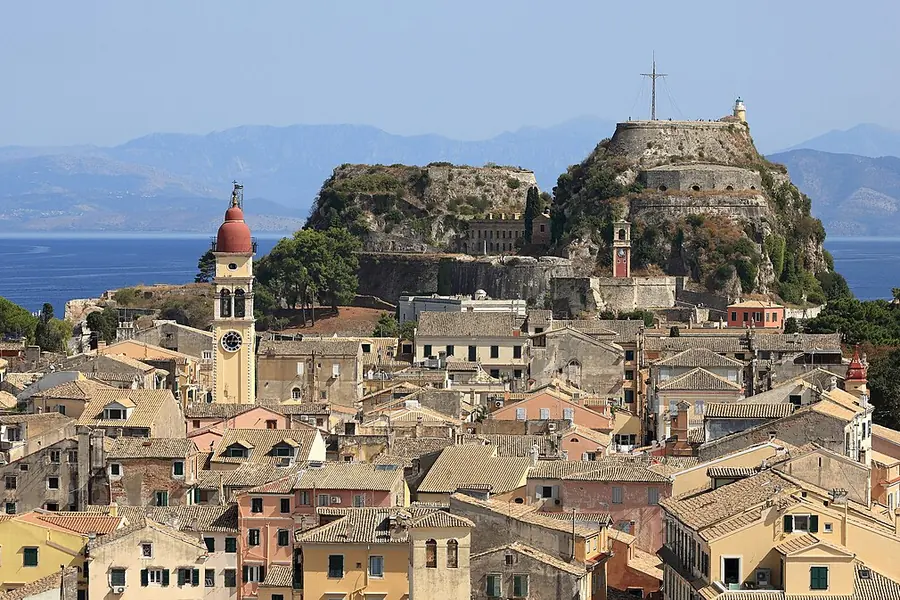
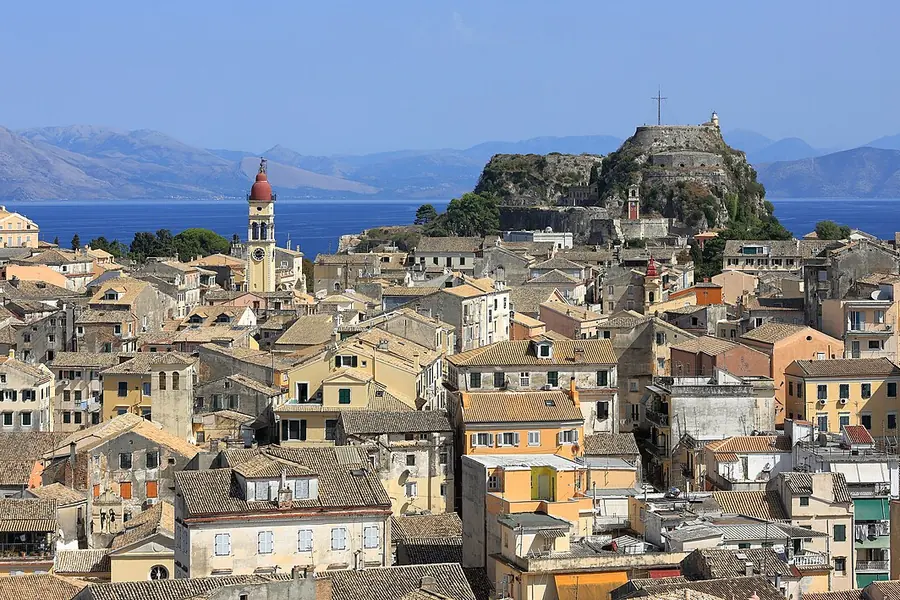
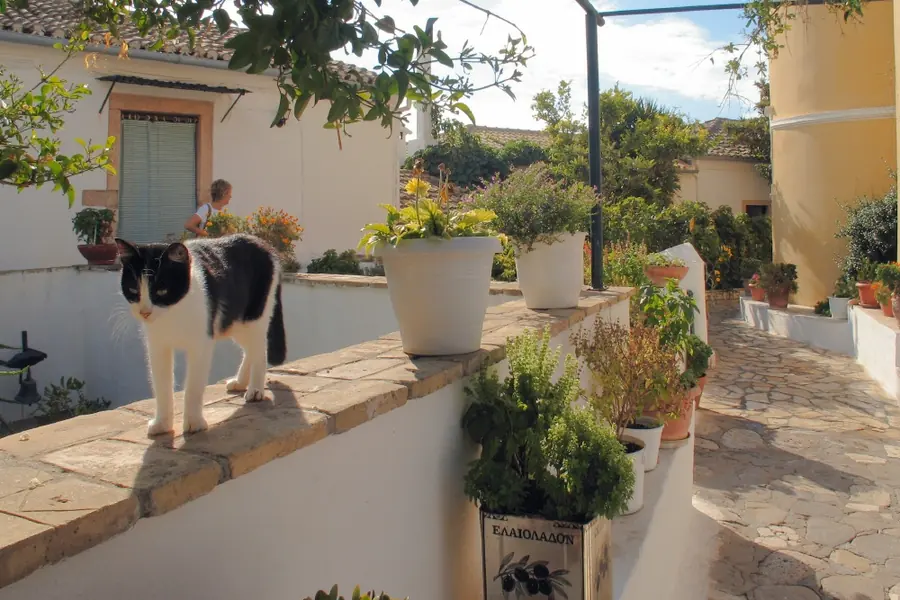
My first night in Corfu I got hopelessly lost in the Old Town's alleys — the Venetians called them kantounia, and they were built deliberately confusing to baffle pirates. They baffled me too. I gave up, sat down at a taverna I'd passed three times, and ate the best pastitsada of my life while a man at the next table explained, unprompted, why Corfu is the only Greek island the Ottomans never took. By dessert I'd stopped trying to leave the island at all.
The Perfect Corfu Itinerary (2, 3, 4 & 7 Days)
📅 Planning your dates? See the best time to visit Corfu — season-by-season weather, crowds, and prices.
Two days is all about Corfu Town — the UNESCO Old Town, two Venetian fortresses, the arcaded Liston, and the genuinely strange Achilleion palace a short drive south. Cap it with an afternoon at Paleokastritsa's coves. It's not the whole island, but it's the soul of it, and it's plenty.
Have your sundowner on the Liston, the arcade the French built to mimic Paris's Rue de Rivoli. A spritz costs more here; the people-watching is worth it.
72 Hours: North Coast Coves and Hilltop Villages
Three days adds the dramatic northwest — Paleokastritsa's monastery and sea caves, the cliff-top viewpoint at Bella Vista, and the old hill village of Lakones. You'll start to grasp why Corfu is the green island: cypress and olive everywhere, and water in a colour that looks Photoshopped but isn't.
4 Days: Mountains, Mouse Island, and the South
Four days buys altitude and breadth — the drive up Mount Pantokrator, the island's highest peak, plus the postcard view at Kanoni over Mouse Island, and the long sandy beaches of the south. A boat trip to a hidden cove or two slots in nicely. This is the version that feels like a proper holiday.
7 Days: The Whole Island, Slowly
A week lets you do Corfu the way it wants to be done — a day boating to the Diapontia islets, a day in the unspoilt northeast around Kassiopi and the Durrells' Kalami, a long lunch in a mountain village, an afternoon doing nothing on a beach you had to earn. You'll leave planning your return.
Estimated budget:EUR 220-450 (1 hotel night, car day, fortress entries, tavernas)
Estimated budget:EUR 520-980 (3 nights, Pantokrator, a boat trip)
Estimated budget:EUR 1,000-1,900 (full week, multiple boat days, car hire throughout)
[ THE DISPATCH · FIELD MAP ]
A tilted, hand-drawn dispatch of Corfu. Click a quarter to explode it open.
0 / 6 quarters explored
Legend · tap to highlight
[ CORFU OLD TOWN ]
Old stones, older stories.
Old Fortress (Palaio Frourio)A Venetian citadel on a rocky promontory. Climb to the lighthouse for the whole town laid out below.
The Liston & Spianada SquareAn arcaded promenade the French modelled on the Rue de Rivoli, facing Greece's largest square. Spritz territory.
[ KANONI & ACHILLEION ]
Grand squares and big ideas.
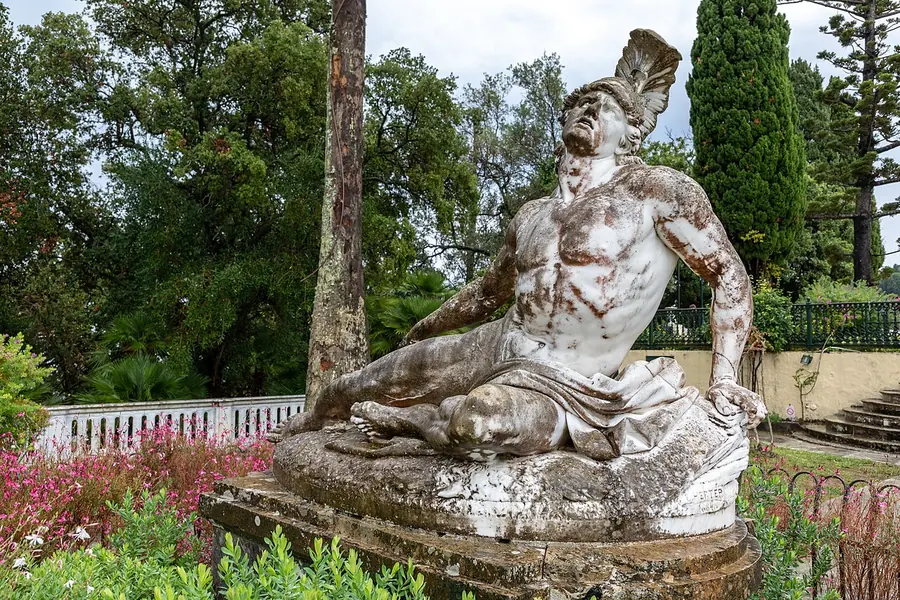
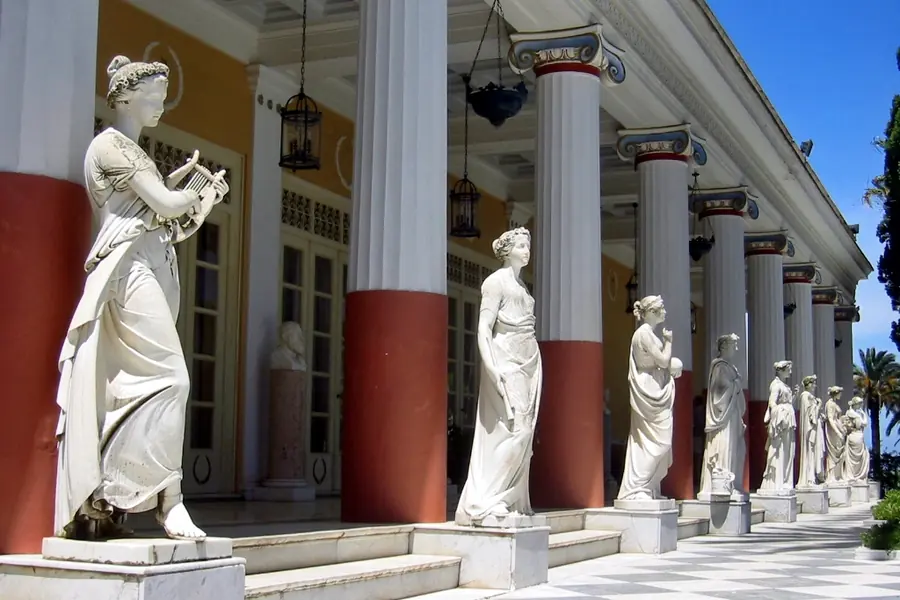
Achilleion PalaceEmpress Sisi's neoclassical villa, stuffed with statues of Achilles. Gloriously over the top.
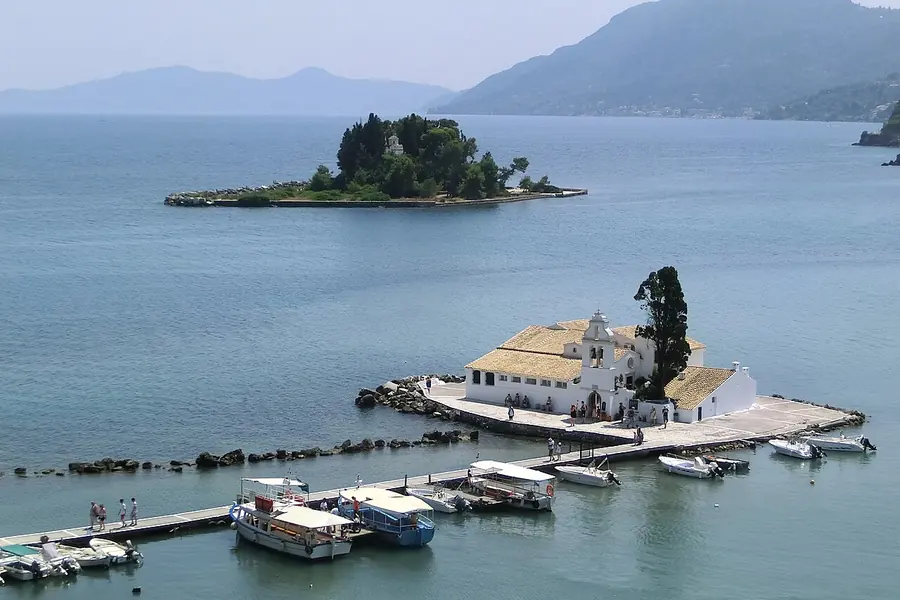
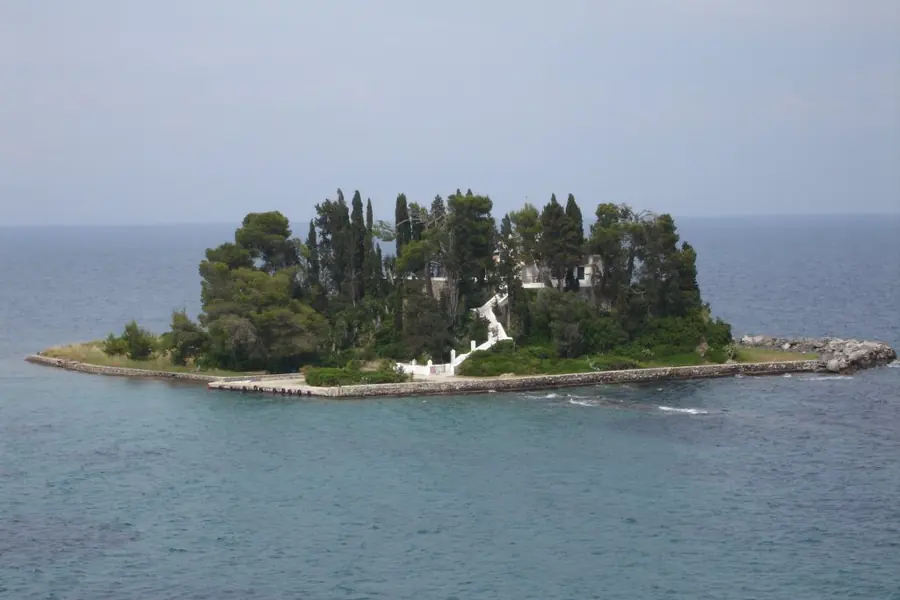
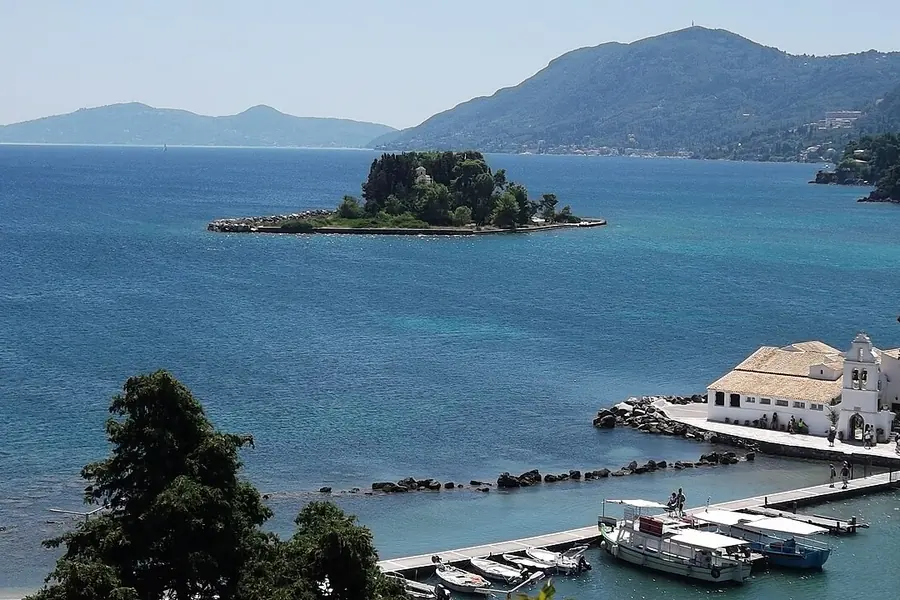
Kanoni & Mouse Island (Pontikonisi)The view on a thousand postcards: a tiny chapel-topped islet and a causeway monastery, planes skimming over.
[ PALEOKASTRITSA ]
Where the city meets the water.
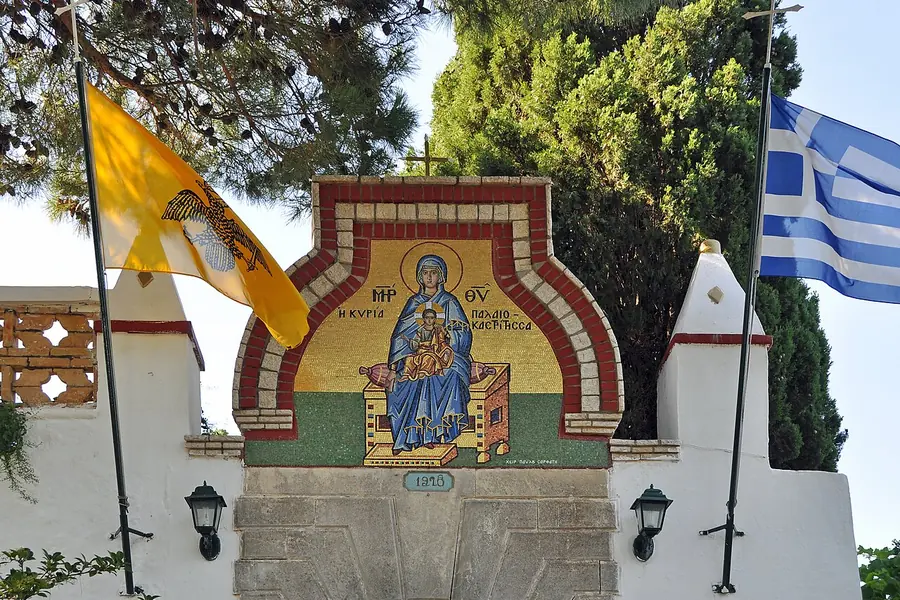
Paleokastritsa Monastery (Theotokos)A whitewashed 13th-century monastery on a headland over impossible blue. Cats, bougainvillea, an olive press.
Paleokastritsa Coves & Boat TripSix little bays of turquoise water and a short boat to the sea caves. Snorkel; the visibility is absurd.
[ MOUNT PANTOKRATOR & NORTH ]
Green breathing room.
Mount PantokratorCorfu's highest point at 906m, a monastery on top, and on a clear day, the coast of Albania and Italy.
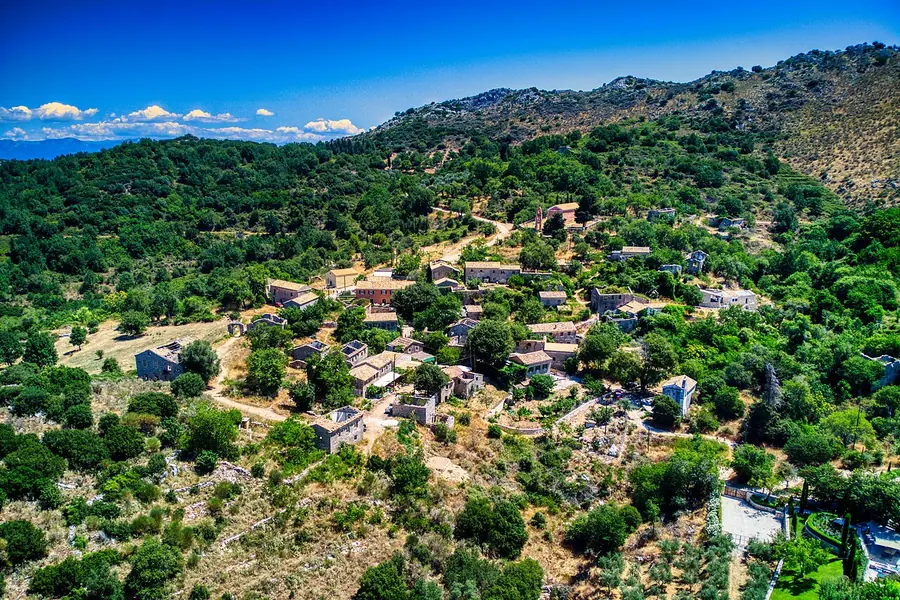
Old PerithiaA near-abandoned Venetian-era village on the mountain's flank, with stone houses and a couple of tavernas hanging on.
[ NORTHEAST COAST (KASSIOPI) ]
Boats, bridges and reflections.
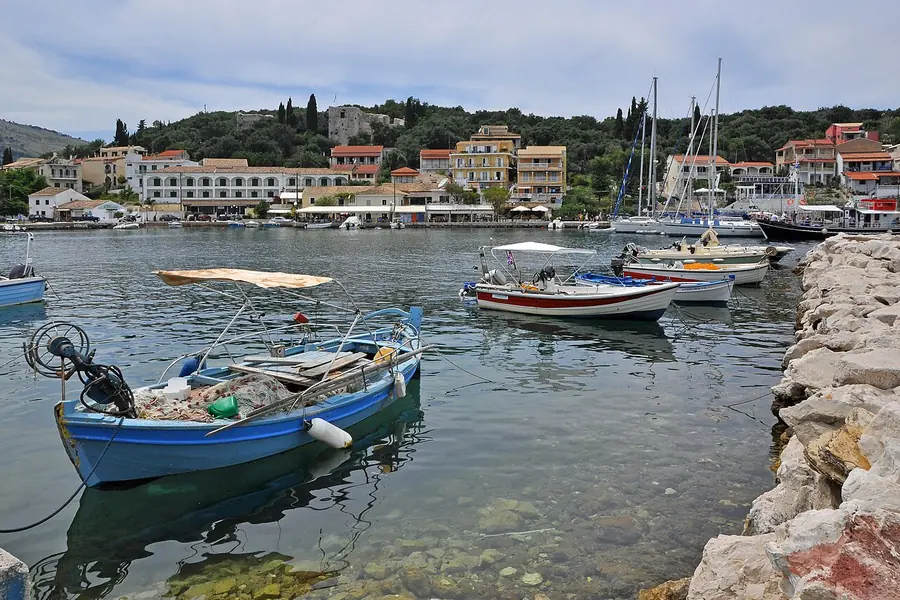
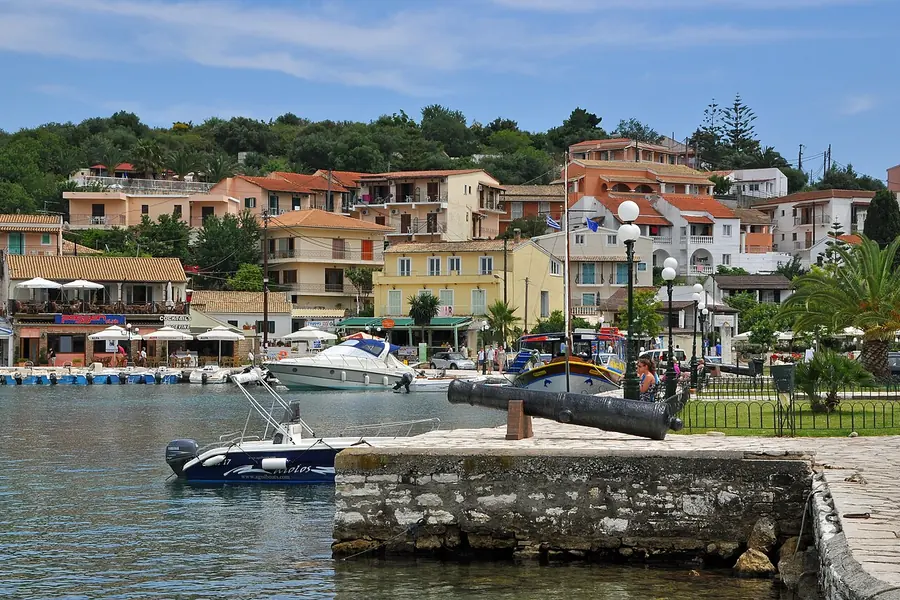
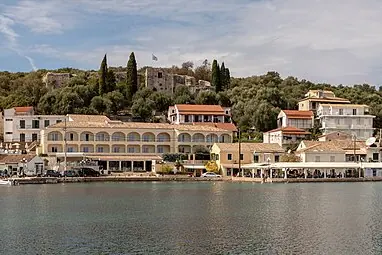
KassiopiA pretty fishing harbour turned low-key resort, with a ruined Byzantine castle on the headland above.
Kalami & the White HouseThe bay where Lawrence Durrell wrote Prospero's Cell. Lunch on the terrace of the actual house.
[ SOUTHERN BEACHES ]
Where the city meets the water.
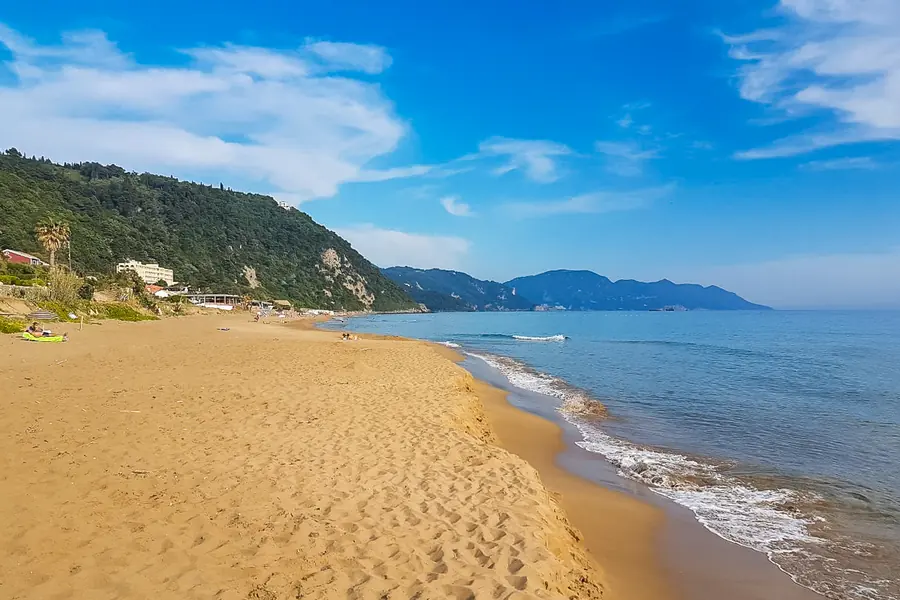
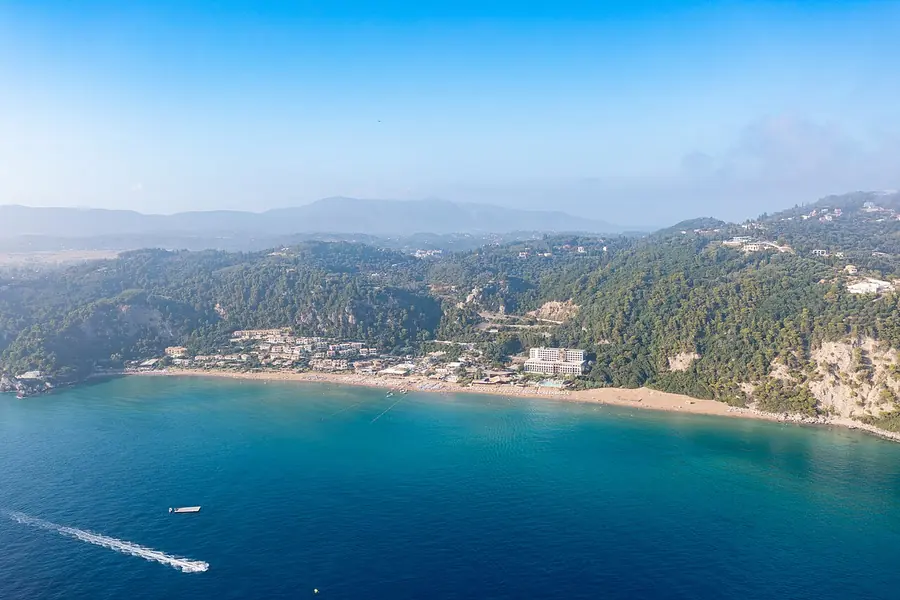
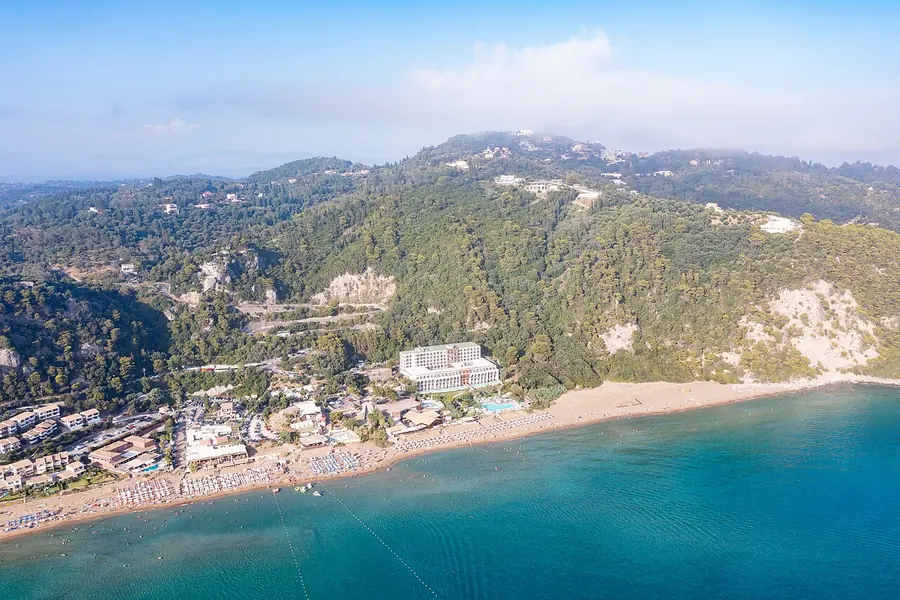
Glyfada BeachA long sweep of golden sand on the west coast, backed by cliffs. Proper beach-day territory with real waves.
Korission Lagoon & Issos DunesA protected lagoon, sand dunes, and flamingoes, separated from the sea by a wild empty beach.
Day 1
Corfu Old Town & the Achilleion
Venetian fortresses, a Parisian arcade, and an empress's marble palace
Old Fortress (Palaio Frourio)
A Venetian citadel on a rocky promontory. Climb to the lighthouse for the whole town laid out below.
Built by the Venetians on twin rocky peaks jutting into the sea, the Old Fortress is where Corfu held off the Ottomans through repeated sieges — the reason this is the only major Greek island they never conquered. Cross the moat (the Contrafossa), climb past the British-built St George's Church to the lighthouse on the summit, and the views over the town, harbour, and mainland mountains are the best on the island. Entry around EUR 6.
An arcaded promenade the French modelled on the Rue de Rivoli, facing Greece's largest square. Spritz territory.
The Liston is a graceful colonnaded terrace of cafés built under Napoleonic French rule, deliberately echoing Paris — you sip an overpriced coffee under the arches looking out over the Spianada, the biggest square in Greece, where they sometimes still play cricket, a British colonial leftover. Wander the Old Town's pedestrian kantounia from here; getting lost is the intended experience. Lunch at a back-alley taverna.
Achilleion Palace
Empress Sisi's neoclassical villa, stuffed with statues of Achilles. Gloriously over the top.
About 10km south in Gastouri, the Achilleion was built in the 1890s for Empress Elisabeth of Austria (Sisi), who was obsessed with the hero Achilles — hence the gardens full of his statues, including a colossal "Achilles Triumphant" gazing out to sea. Later a Kaiser's residence and a James Bond film location, it's a slightly mad mix of mythology and royal melodrama, with terraced gardens and grand sea views. Entry around EUR 10.
A clifftop monastery, sea caves, and the greenest, bluest corner of the island
Paleokastritsa Monastery (Theotokos)
A whitewashed 13th-century monastery on a headland over impossible blue. Cats, bougainvillea, an olive press.
Perched on a wooded promontory above Paleokastritsa's coves, the Theotokos Monastery dates from the 13th century, its courtyard draped in bougainvillea and patrolled by cats, with a tiny museum, an old olive press, and a terrace looking straight down into water so clear it's faintly ridiculous. Entry is free (donation; modest dress required). Go before the coaches and you'll have the view nearly to yourself.
Six little bays of turquoise water and a short boat to the sea caves. Snorkel; the visibility is absurd.
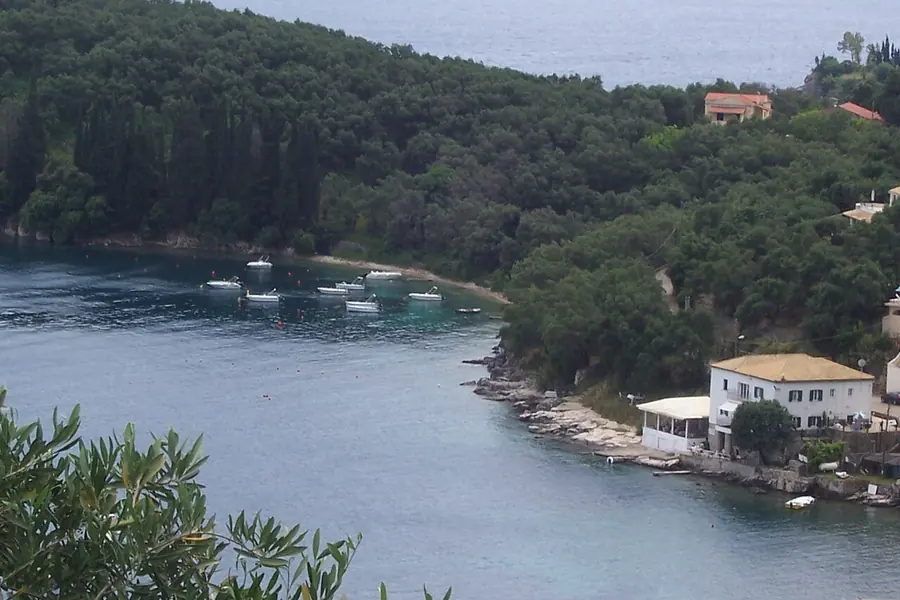
Paleokastritsa is a cluster of six small coves backed by green cliffs, and the water is the headline — clear enough to see your shadow on the seabed. Hire a small self-drive motorboat or join a EUR 10-15 caique trip to the blue sea caves and otherwise inaccessible beaches around the headland. Pack a snorkel. Then a long, lazy fish lunch at a waterside taverna. The northwest at its best.
Bella Vista Viewpoint & Lakones
The clifftop cafe with the most-photographed view on Corfu, above the old hill village of Lakones.
The hairpin road up to Lakones village rewards you with the Bella Vista terrace — a café perched high above Paleokastritsa with a panorama down over the green headlands and bays that is, genuinely, the island's signature view. Have a frappé, take the photo everyone takes, then wander Lakones' steep old lanes. Sunset here is spectacular if you can time it. A perfect end to a coast day.
Day 3
Mount Pantokrator & the Ghost Village
The island's highest peak, a deserted Venetian hill village, and big northern views
Mount Pantokrator
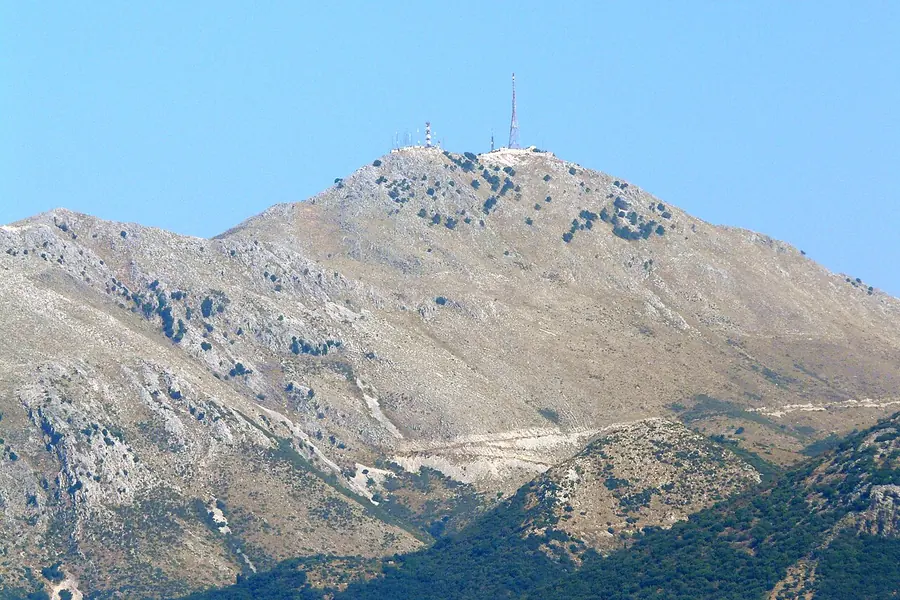
Corfu's highest point at 906m, a monastery on top, and on a clear day, the coast of Albania and Italy.
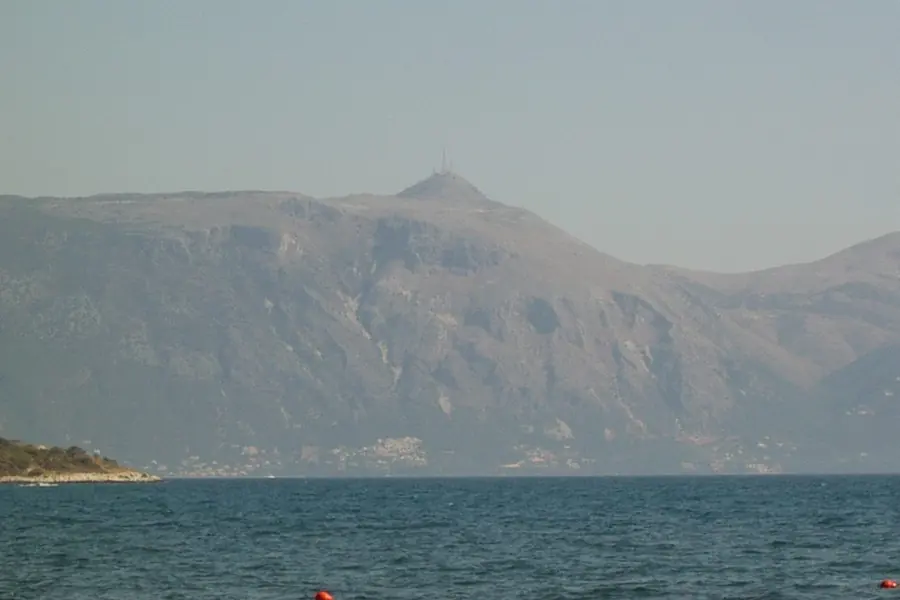
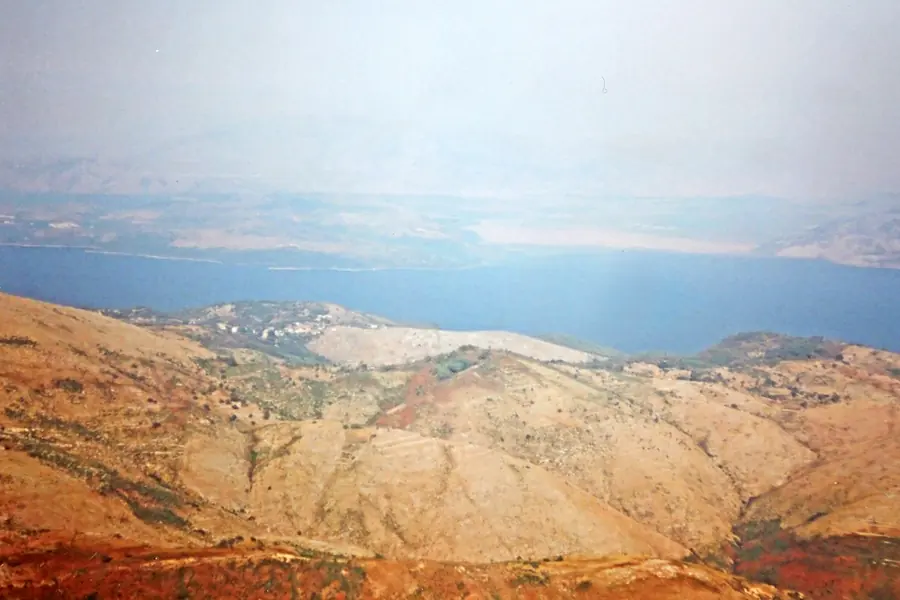
A winding drive (or a serious hike) takes you up Corfu's highest mountain, crowned by the 14th-century Pantokrator Monastery and, less romantically, a cluster of radio masts. On a clear morning the view stretches across the whole island, the Albanian mainland a couple of miles east, and sometimes the heel of Italy to the west. Go early before the haze builds. Bring a layer; it's notably cooler up top.
A near-abandoned Venetian-era village on the mountain's flank, with stone houses and a couple of tavernas hanging on.
On Pantokrator's northern slopes, Old Perithia is Corfu's oldest village and a designated heritage site — a cluster of crumbling Venetian-era stone houses around eight churches, mostly abandoned when islanders moved to the coast for tourism. A handful of tavernas have reopened, serving slow-cooked mountain food in courtyards under walnut trees. Wonderfully atmospheric, and the lunch is some of the most authentic on the island.
The classic postcard view, then long sand and a wild lagoon down south
Kanoni & Mouse Island (Pontikonisi)
The view on a thousand postcards: a tiny chapel-topped islet and a causeway monastery, planes skimming over.
The Kanoni peninsula, just south of town, gives you Corfu's most famous panorama — the little white Vlacherna Monastery on its causeway, and beyond it Pontikonisi (Mouse Island), a green dot crowned by a Byzantine chapel. Planes from the airport next door skim low over the lagoon, which is either charming or alarming depending on your nerves. A short boat shuttles across to Mouse Island in summer. Worth a quick morning stop.
A long sweep of golden sand on the west coast, backed by cliffs. Proper beach-day territory with real waves.
For an actual beach day, the west coast delivers — Glyfada is a broad arc of golden sand below green cliffs, with sunbeds, a couple of beach bars, and enough Ionian swell to make swimming fun rather than bathtub-flat. Nearby Myrtiotissa, harder to reach down a steep track, is wilder and quieter (and partly clothing-optional). Either way, this is the afternoon to do nothing productive whatsoever.
Pebbly coves, an old harbour, and the bay where a famous family fell in love with the island
Kassiopi
A pretty fishing harbour turned low-key resort, with a ruined Byzantine castle on the headland above.
On the northeast tip, Kassiopi is an old fishing village wrapped around a horseshoe harbour, with tavernas at the water's edge and a ruined Angevin/Byzantine castle on the hill behind for a free clamber and a view across to Albania, barely a couple of miles offshore. The little pebble coves nearby (Bataria, Kanoni) are great for a swim. A relaxed, scenic base for exploring the green northeast.
The bay where Lawrence Durrell wrote Prospero's Cell. Lunch on the terrace of the actual house.
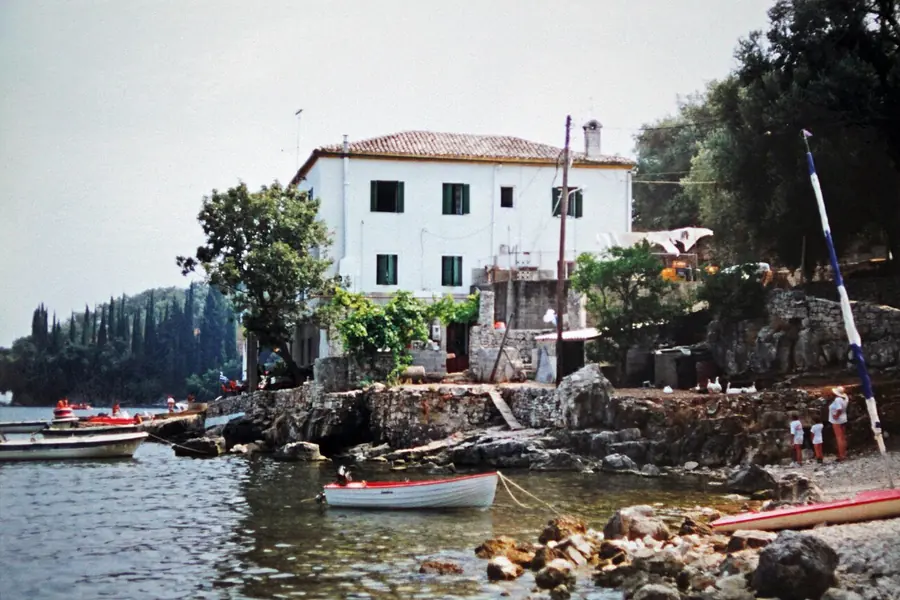
The sheltered bay of Kalami is where the writer Lawrence Durrell lived in the 1930s — his "White House" still stands at the water's edge and is now a taverna where you can eat lunch on the very terrace he wrote about. The whole northeast coast is the Corfu of the Durrell family's books (and the TV series), all cypress, olive, and impossibly clear coves. Swim off the rocks, then a long Greek lunch. Pure, slow island pleasure.
Out on the water to islets and hidden coves you can only reach by sea
Diapontia Islands (Erikousa / Mathraki)
Tiny green islets off the northwest tip, with white-sand beaches and almost no one on them.
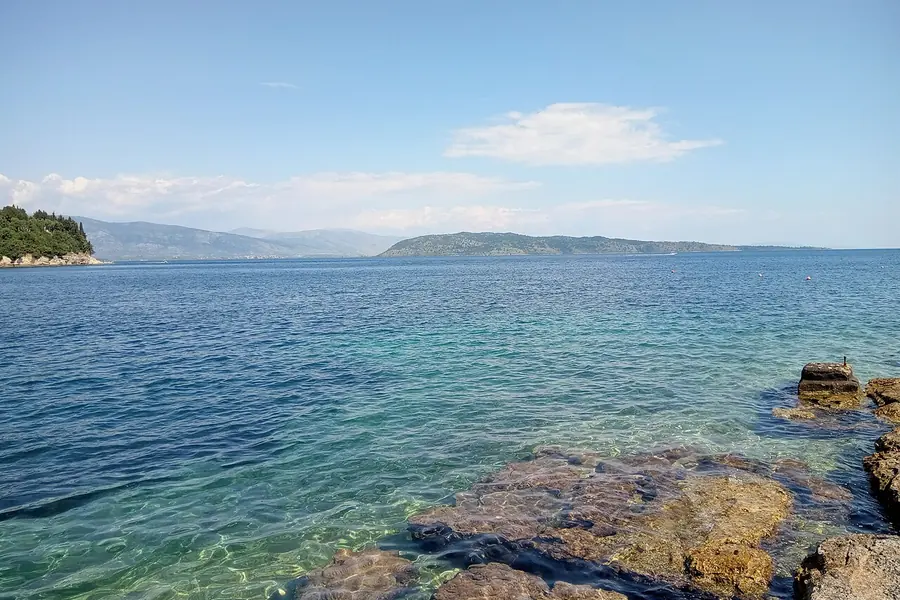
The Diapontia islands — Erikousa, Othonoi, Mathraki — sit off Corfu's northwest tip and feel a world away: a handful of residents, white-sand beaches lapped by glass-clear water, and one or two tavernas. Day boats run from the northwest in summer (Sidari/Agios Stefanos). Othonoi even claims a cave linked to Homer's Calypso. If you want the most untouched beach day of the trip, this is it. Check the seas; it's open water.
Day 7
Korission Lagoon & a Last Southern Sunset
A wild lagoon and dunes, then a final long lunch and goodbye to the island
Korission Lagoon & Issos Dunes
A protected lagoon, sand dunes, and flamingoes, separated from the sea by a wild empty beach.
On the southwest coast, the Korission Lagoon is a Natura 2000 wetland where you can spot flamingoes and migrating birds, fringed by juniper dunes and the long, near-empty Issos beach beyond. It's the wild, unbuilt face of Corfu — no sunbeds, no bars, just dunes and dazzling shallows (and one famous beach bar at Halikounas for a drink). Walk the sand spit between lagoon and sea. A serene, end-of-trip kind of place.
Farewell Dinner in the Old Town
Back to Corfu Town for the dish you have to leave the island having eaten: pastitsada or sofrito.
End where you started, in the lamp-lit alleys of the Old Town. Corfiot food is its own thing, shaped by Venetian rule — order pastitsada (rooster or beef in a spiced tomato sauce over thick pasta), sofrito (veal in garlic and wine), or bourdeto (fish in red pepper). Find a back-street taverna with no English menu and a grandmother in the kitchen, order the house wine, and toast the only Greek island the Ottomans never took.
Corfu is the Greek island that doesn’t quite play by the Greek-island rules. It’s green where you expect bare and white — three million olive trees, cypress hills, and a wetness to the air that makes everything grow. It’s also the one major island the Ottomans never took, which is why the Old Town is a maze of tall Venetian apartment blocks and two enormous fortresses rather than the usual whitewashed cubes.
Layer on centuries of Venetian, French, and British rule and you get something unique in Greece: a town with a cricket pitch, a Parisian-style arcade, ginger beer, and a cuisine full of Venetian spiced stews. It feels Mediterranean and slightly Italian and entirely itself.
How to use this plan
Two days is really Corfu Town plus one perfect cove — the fortresses, the Liston, the mad Achilleion palace, and an afternoon at Paleokastritsa. Three adds the dramatic northwest coast and hill villages. Four reaches the mountains and the southern beaches. Seven lets you do it slowly, the way the island rewards: boat days, the unspoilt northeast of Durrell fame, and long mountain-village lunches.
Hire a car for anything past two days — the bus network is fine for the town but hopeless for the coves and villages where the real Corfu hides. And learn one phrase: order whatever the taverna owner recommends, then order it again.
This article contains affiliate links marked with rel="sponsored". We may earn a commission at no extra cost to you.