
[ DISCOVERY · THE DISPATCH ]
You're Visiting Copenhagen Wrong If You're Not Here During Darkness
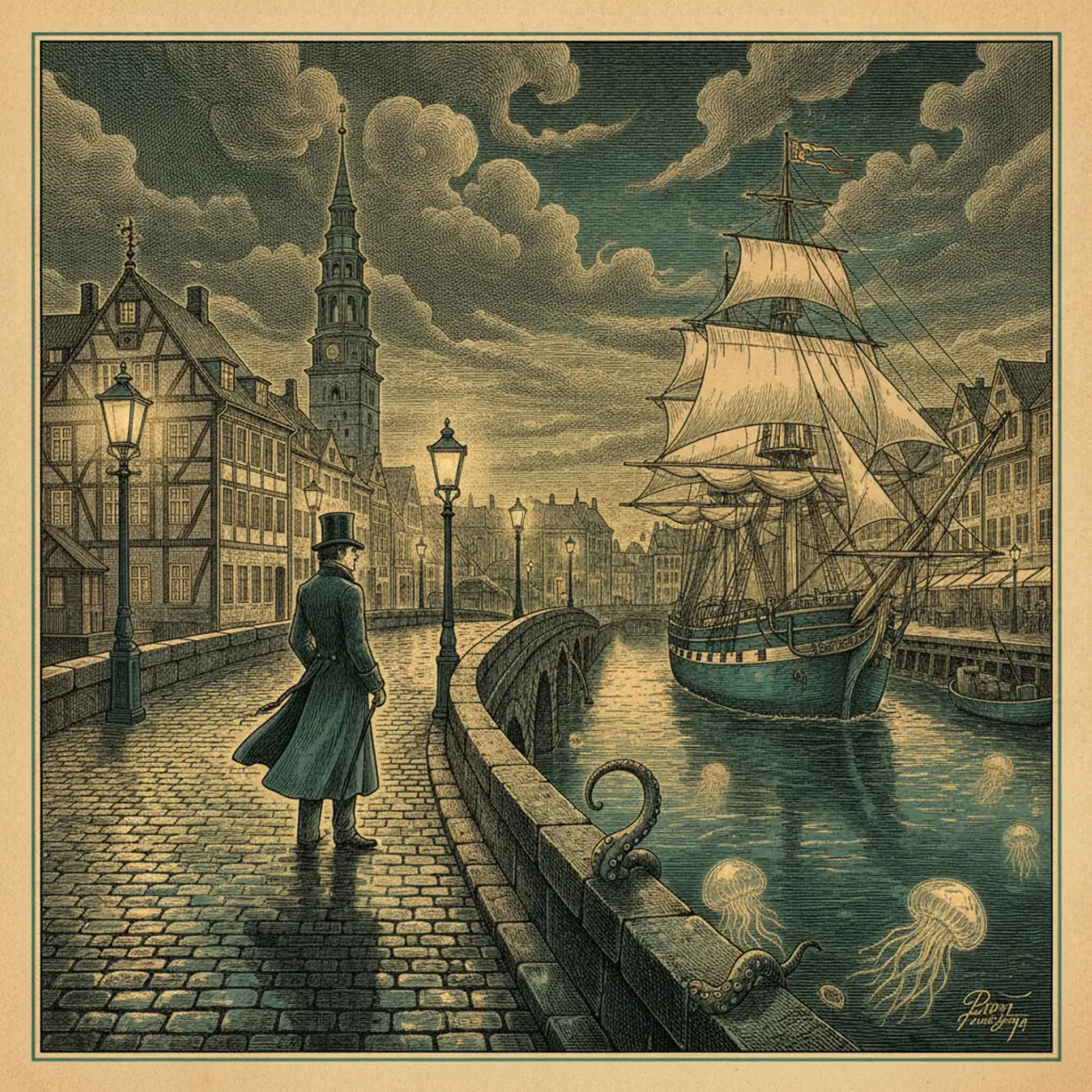
Everyone warns you off Copenhagen in winter. They're wrong. The dark season is exactly when the city becomes itself — candles, warmth, and zero tourist crowds.
For the full day-by-day version of everything below, read the Copenhagen itinerary with an interactive map.
Let me tell you what I did wrong the first time I went to Copenhagen: I went in July.
The weather was fine. The canals were pretty. Nyhavn was exactly as photogenic as the travel influencers promised, and also packed so tightly with tourists holding ice cream cones that I had to queue to take a photo of myself looking relaxed. I came home feeling like I’d seen a city’s highlight reel — competent, clean, a bit hollow.
I went back in January. Different planet.

Why Dark Season Flips the Whole Script
Copenhagen gets about seven hours of daylight in December and January. Sunset is around 3:45 PM. This sounds, on paper, like a reason to go somewhere else.
It’s actually the reason to come.
The Danes have spent centuries engineering a culture specifically designed to make darkness bearable, even pleasurable. Hygge — that word that got so aggressively co-opted by Anthropologie candle collections — is a genuine behavioral response to a real environmental problem. In winter Copenhagen, it’s not aesthetic. It’s survival infrastructure.
Every café has wool blankets. Every bar has candles on the table even at noon. Every smørrebrød lunch turns into a two-hour event because nobody is in a hurry to go back outside. The entire social culture pivots inward, and if you’re a visitor who has ever wanted to feel like you’re inside a city rather than just photographing its exterior, this is your season.
If you’re planning a broader Scandinavian or continental trip, the Europe itinerary hub is a good place to map your routing. But Copenhagen specifically rewards a dedicated winter visit — not a quick stopover.
What It Actually Looks Like Day-to-Day
The light that does exist in winter Copenhagen is extraordinary. Flat, soft, golden even at midday — the kind of light photographers pay to fake in post. The Frederiksberg Gardens in January, with frozen ponds and bare tree silhouettes, look like a painting. The Rosenborg Castle garden is empty. You walk straight in.
The rhythm shifts. You’re not trying to fit ten neighborhoods into a day of sunshine. You wake up around 8, grab breakfast at one of the corner bakeries (Hart Bageri on Gammel Kongevej does a cardamom knot that’ll rearrange your priorities), and then anchor your morning around one thing.
The Designmuseum Danmark is worth a full morning in winter specifically because it’s not rushed. In July it’s a tourist trap with groups clogging the ceramics rooms. In January it’s calm enough that you actually stop and read the exhibit cards, which it turns out are really good. Admission is around 130 DKK (roughly 18 USD).
The National Museum of Denmark is free. The Glyptotek — housed in a gorgeous 19th-century building with a glass-roofed winter garden — charges 115 DKK. Both reward slow, unhurried afternoons, which is exactly what you have in December when it gets dark before the dinner hour.
For a sense of how I structure my days in this city, the full Copenhagen itinerary maps out timing across a multi-day visit in a way that works just as well in winter as in summer — arguably better.

Nørrebro Is Where You Actually Want to Be
Tourists in summer gravitate to the Latin Quarter and the meatpacking district. Fine choices. But in winter, Nørrebro is where the city breathes.
Jægersborggade — the pedestrian lane that’s become one of the most interesting streets in northern Europe — is lined with small independent shops and cafés. Coffee Collective has a location here. Grød, the porridge restaurant (better than it sounds, genuinely), is around the corner on Jægersborggade and serves a rotating menu of Nordic grains that hits differently when it’s 2°C outside.
The street has an easy, local energy in winter. Kids cycling home from school, residents picking up bread, a queue of three people rather than thirty outside the good spots.
Evening in Nørrebro means bars where the candles outnumber the overhead lights. Brus, the microbrewery on Guldbergsgade, does a beer hall that feels exactly like the kind of place you’d make up if you were inventing Copenhagen. Draft beers from 70–80 DKK. Sausage plate. Low lighting. No Instagram-worthy queue out the door.

The Cold Is Not the Problem You Think
I’m going to be honest: January in Copenhagen is cold. Average highs around 3°C, sometimes lower, occasionally wet. But it’s maritime cold — damp rather than brutal — and because you’re not trying to eat every meal outdoors or wander the beach, it becomes irrelevant quickly.
The trick is dressing in actual layers rather than just a heavier jacket. Thermal base layer, mid-layer, wind-proof outer. If you’re flying in from somewhere like London or New York, you probably already own what you need. Add waterproof boots (the cobblestones get icy in January) and you’re fine.
The practical upside: hotel prices drop meaningfully. I booked a well-reviewed design hotel near Kongens Nytorv in January for under 150 USD a night — the same room runs 250–350 in peak summer. Flights from major hubs are 30–40% cheaper. You’re not fighting for restaurant reservations. The whole city has a bit more space in it.
This is how I approach every city I revisit — sometimes getting to a place in its off-peak season is like getting to know a friend’s actual personality rather than their party version. It’s the same logic I applied when I did a winter design trip through Marrakech that skipped the obvious tourist circuit entirely, and it worked there too.

One Practical Note on Getting There
If you’re flying into Copenhagen Airport (CPH), the Metro connection into the city center is four stops, about 15 minutes, costs 36 DKK. It runs 24 hours. Skip the taxi unless you’re carrying something unwieldy.
Also: if you’re a credit card holder who hasn’t figured out airport lounge access yet, the airport lounge trick for credit card holders is actually useful here — CPH’s SAS Lounge is accessible via certain cards, and if your connection is routed through a hub, you might be eligible without knowing it.

What You Actually Miss by Going in Summer
The summer version of Copenhagen is a wonderful city that has temporarily paused being itself to accommodate several million visitors who want to eat a hotdog at Tivoli.
The winter version is a city that has been perfecting indoor living since the Vikings. You get the design culture — and Denmark is one of the most design-literate nations on earth — in full expression. You get the food scene without the tourist menu. You get the social warmth that hygge is supposed to describe, actually in operation, not as a marketing word on a throw pillow.
You also, and I say this as someone who spent an entire January afternoon in it, get the Louisiana Museum of Modern Art in near-solitude. It’s 45 minutes north of the city by train (about 100 DKK round trip), perched above the Øresund strait. The permanent collection includes Giacometti sculptures in a room with floor-to-ceiling glass looking out at gray winter water. On a quiet Tuesday in January, I was alone in that room for twenty minutes.
That doesn’t happen in July.
The comparison trips that changed how I think about off-season travel: navigating Bali’s logistics in a way that actually works taught me that constraints — no scooter, no tourist rush hour — often force you toward the better experience. Copenhagen in winter operates the same way. The short days are the constraint that hands you the city.
Go in the dark. That’s when Copenhagen turns the lights on.
This article contains affiliate links marked rel="sponsored". We may earn a commission at no extra cost to you.