
[ GUIDE · THE DISPATCH ]
Where to Stay in Kyoto: Arashiyama Quiet vs. Gion's Geisha Streets
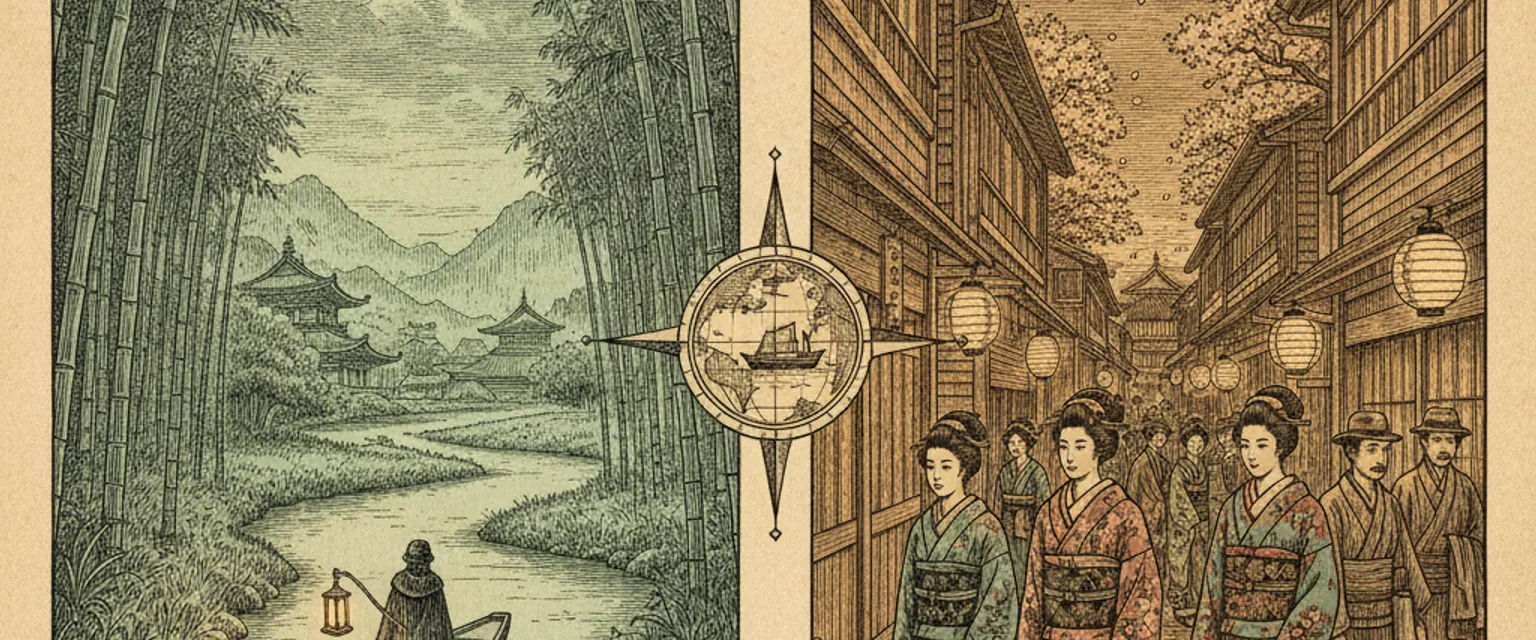
Two ways to sleep in Kyoto: out west among Arashiyama's bamboo and temples where the mornings are silent, or smack in Gion's old wooden geisha streets where the city's history walks past your window. Here's how to choose.
If you want the whole thing mapped out, see the our full Kyoto itinerary, with maps.
Where to Stay in Kyoto: Arashiyama’s Hush or Gion’s Old Streets?
If you’ve been agonising over where to stay Kyoto Arashiyama Gion style, let me make it simpler than the guidebooks do. These two neighbourhoods represent the two completely different Kyoto trips you can have. One is quiet and green and a little remote. The other puts you inside a living museum of wooden houses and lantern light. Both are wonderful. They are not the same holiday.
I’ve done both, on different trips, and I have opinions.

Gion: sleeping inside the postcard
Gion is the famous one. It’s Kyoto’s historic geisha district — though the correct local word is geiko, and the apprentices are maiko, and you’ll feel slightly foolish saying “geisha” once you know that. The streets here, especially Hanamikoji and the little canal-side lane of Shirakawa, are lined with preserved wooden machiya townhouses, ochaya teahouses, and the kind of lantern-lit alleys that look unreal at dusk.
Staying in or right beside Gion means you’re central. You can walk to the eastern temple district — Kiyomizu-dera, the Higashiyama lanes, Yasaka Shrine — and the city’s best dining and bars are on your doorstep. The Kamo River runs nearby, and on summer evenings the restaurants put out riverside platforms (kawayuka) where you eat over the water. It’s magic.
The catch: it’s busy, and getting busier, and it can be pricey. There’s also been real friction with over-tourism — some of the private maiko-walking lanes are now off limits to gawping visitors with cameras, and rightly so. Be respectful. Don’t chase or photograph maiko on their way to work; they’re commuting, not performing.
Arashiyama: the quiet green west
Arashiyama is out on the western edge, against the hills, and it has a completely different rhythm. This is bamboo-grove Kyoto — the famous towering bamboo path is here, plus the lovely Tenryu-ji temple and its garden, the Togetsukyo bridge over the Hozu river, and a hillside full of smaller temples and a monkey park if that’s your thing.
What you get by staying here is mornings. The day-trippers pour into Arashiyama from about 10am and the bamboo path becomes a slow shuffle of selfie sticks. But if you sleep here, you can walk that same path at 7am in near silence, and it’s a genuinely different, almost spiritual experience. The evenings empty out too. It’s calm, it’s green, the air’s cooler, and it feels like the countryside even though you’re twenty minutes from downtown by train.
The trade-off is convenience. You’re further from the central sights and the nightlife. Getting to, say, Fushimi Inari or the eastern temples means a train ride. For some people that’s a dealbreaker; for me, on my second visit, it was the whole point.

Ryokan, and why where you stay is also how you stay
Both areas do traditional ryokan inns, but Arashiyama is where I’d splash out on one. A proper ryokan with tatami floors, a futon laid out while you’re at dinner, a multi-course kaiseki meal, and ideally a private onsen bath — that experience lands harder in the quiet of Arashiyama than in busy central Gion. It’s not cheap, but one night of it is worth two nights of a normal hotel, in memory terms.
In Gion and central Kyoto you’ll find more boutique hotels and machiya rentals — restored townhouses you get to yourself, which are honestly fantastic and let you live like a local for a few nights.

So which one?
Here’s my honest call. First trip, four or five days, want everything walkable and the nights out and the famous lanes? Stay in or near Gion. You’ll lose less time on trains and Kyoto’s a city you want to wander in the evening.
Second trip, or a slower trip, or you’re the type who’d rather have a silent bamboo morning than a busy dinner scene? Arashiyama, and book the ryokan. You wont regret it.
What I’d actually do, with enough nights, is split it: two or three nights in Gion to do the central sights and eat well, then a final night out in an Arashiyama ryokan as the calm, indulgent send-off. Different city each end of the trip. That’s the move.
Either way, set an alarm and walk somewhere famous at dawn. Kyoto at 6am, before the crowds, is the city these places were built to be — and it’s the one thing the day-trippers never see.
Gion for the lights and the life, Arashiyama for the silence — and set that 6am alarm whichever you pick.
This article contains affiliate links marked rel="sponsored". We may earn a commission at no extra cost to you.