
[ GUIDE · THE DISPATCH ]
Higashiyama vs. Downtown Kyoto: Where to Sleep Without the Crowds
Higashiyama is the Kyoto of the postcards — temples, lantern lanes, geisha glimpses — and it's mobbed by 10am. Downtown is where you actually live well. Here's how to get the temples without the human traffic jam.
Short on time? The Kyoto itinerary with an interactive map turns all of this into a route you can actually walk.
There is a photograph everyone wants in Kyoto: a sloping stone lane, wooden machiya houses, a pagoda framed at the top, not another soul in sight. I have taken that photograph. I took it at 6:40am on Sannenzaka, half-asleep, because by 9:30 that same lane is a slow-moving river of selfie sticks and rented kimonos, and the only frame you’ll get includes roughly four hundred strangers. The single biggest decision in a Kyoto trip isn’t which temples — it’s how you arrange your days so you see the beautiful ones before the crowd does. And that starts with where you sleep.
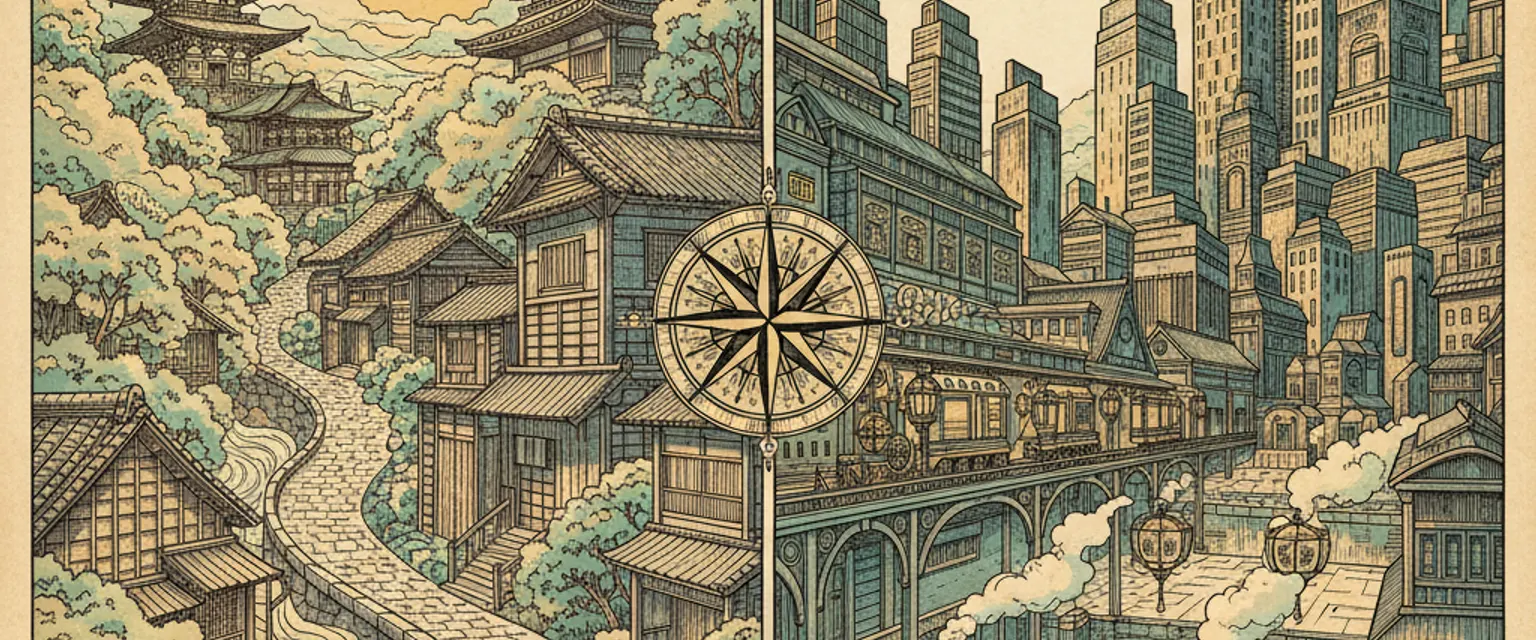
The two main candidates pull in opposite directions. Higashiyama, the eastern temple district, is the most beautiful place to stay and the most besieged. Downtown is plainer to look at but lets you live well and move fast. Here’s how to think about it.

The one-line version
Higashiyama is for people who’ll wake at dawn to have the famous lanes to themselves and don’t mind a quieter, pricier base. Downtown is for people who want food, transit, and convenience, and will commute to the temples at smart hours.

Higashiyama: the postcard, and its price
Higashiyama runs up the eastern hills and contains the greatest concentration of must-see Kyoto in the city: Kiyomizu-dera and its great wooden stage, the lantern-lit slopes of Sannenzaka and Ninenzaka, Yasaka Shrine, the temples of the Philosopher’s Path, and the old teahouse district of Gion spilling down toward the river. It is, hands down, the most atmospheric part of Kyoto.
It is also overwhelmed. From roughly 9am to dusk in any decent-weather month, the main lanes are packed to a near-standstill, and high season turns Kiyomizu into a shuffle. Public transit out here is thinner too — it’s buses more than trains, and the buses fill up.
The entire case for sleeping in Higashiyama is the hours nobody else is awake. Stay here and you can step out at first light, walk Sannenzaka in near-silence, reach Kiyomizu as it opens, and be having breakfast by the time the day-trippers arrive. That dawn window is genuinely magical, and you only get it easily if you’re already inside the neighborhood.

Downtown Kyoto: where you actually live well
Downtown — the grid around Shijo-Kawaramachi, the Nishiki Market food street, and the riverside lane of Pontocho — is the practical, well-fed heart of the city. It’s flatter, denser, and far better connected: you’re on the Hankyu and Karasuma train lines, close to the main bus hub, and a short ride from Kyoto Station.
The food alone justifies it. Nishiki is five blocks of tofu, pickles, skewers, sweets and knife shops; Pontocho at night is a glowing alley of restaurants over the Kamo River; and the whole area is thick with everything from cheap noodle counters to serious kaiseki. The shopping arcades keep you dry in a downpour, and there’s a far wider range of hotels at every price than Higashiyama offers.
The trade-off is honesty about looks. Downtown is a functional modern city centre with pockets of charm, not a wall-to-wall postcard. You won’t open your shutters onto a temple. You’ll open them onto a useful, lively, slightly ordinary street — and then ride ten minutes to the temple at the right time.
The honest comparison
| Higashiyama | Downtown | |
|---|---|---|
| Vibe | Historic, scenic, crowded by day | Modern, central, lively |
| Best for | Dawn temple access, atmosphere | Food, transit, convenience |
| Budget | €€€, fewer options | €€ to €€€, wide range |
| Transit | Bus-reliant, can be slow | Multiple train lines, central |
| Crowds | Severe 9am to dusk | Busy but manageable |
| Skip if | You hate early mornings | You want temples on your doorstep |

What I actually do
For most travellers, I’d base downtown and commute. You sleep central, eat brilliantly, move around the whole city easily, and you simply visit Higashiyama early — first train or a short morning taxi, lanes to yourself, back for a proper lunch. It’s the lower-stress, better-fed trip, and it costs you a couple of early alarms.
The exception is the romantic, slow traveller with a few days and a willingness to rise with the light. If that’s you, splurge on a night or two inside Higashiyama, walk Sannenzaka before breakfast, and feel like you have the old capital to yourself. Just don’t expect to do it on a lie-in.
How do I see Higashiyama without the crowds? Be on the famous lanes before 8:30am or after dusk, whichever your energy allows. Mid-morning to late afternoon is peak crush regardless of season.
Is downtown Kyoto a good base for first-timers? Yes — it’s the most convenient, best-connected, best-fed area, and you can reach every major sight from it. It’s the safe, smart default.
This article contains affiliate links marked rel="sponsored". We may earn a commission at no extra cost to you.