
[ GUIDE · THE DISPATCH ]
Where to Eat in Vienna: Beisl, Naschmarkt, and the Coffeehouse Ritual
Vienna eats in three modes: the old beisl taverns doing schnitzel and goulash, the sprawling Naschmarkt stalls, and the coffeehouses where lingering for hours is the whole point. Here's how to do all three properly.
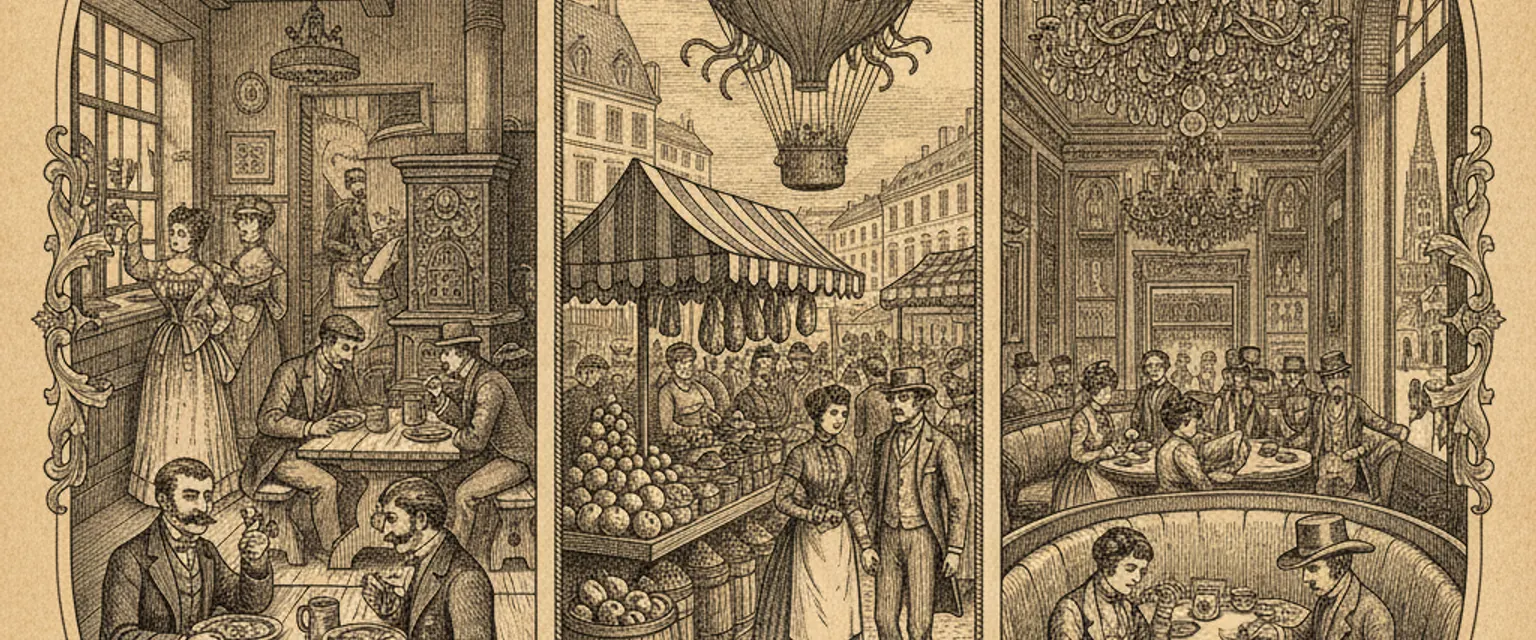
Working out where to eat in Vienna is really about learning three rituals, because this city doesn’t just feed you — it has rules about feeding you, and they’re wonderful once you stop fighting them. There’s the beisl, the market, and the coffeehouse. Get all three right over a couple of days and you’ll understand Vienna better than any palace tour will teach you.
I’ve spent a lot of time eating my way around this city, often when I should’ve been doing something more cultural. No regrets.
The beisl: where Vienna actually eats
A Beisl is the Viennese version of a neighbourhood tavern — wood-panelled, slightly worn, run by someone who has strong feelings about how long to fry a schnitzel. This is the heart of everyday Viennese eating and it’s where you want most of your dinners.
What to order:
- Wiener Schnitzel — and here’s the rule nobody tells tourists: a real Wiener Schnitzel is veal. If it’s pork it has to be called Schnitzel “vom Schwein.” Both are good; just know what you’re getting. It should be pale gold, crisp, and bigger than the plate. A wave should ripple across the breading when you tap it. That’s the sign.
- Tafelspitz — boiled beef in broth, served with apple-horseradish and chive sauce. Sounds dull, isn’t. It was the Emperor’s favourite and the man had options.
- Gulasch — Viennese goulash, thick and dark, served with a bread dumpling or fresh roll.
For schnitzel, the famous spot is Figlmüller — the schnitzel so big it’s a meme — but it’s heaving with tourists and you’ll queue. Fine to do once. For the real beisl feeling go to a smaller place in a residential district; the food’s better and the bill’s gentler.

The Naschmarkt: graze, don’t dine
The Naschmarkt is Vienna’s big public market, a long ribbon of stalls running between Linke and Rechte Wienzeile. It’s brilliant for grazing — cheese, olives, dried fruit, falafel, fresh juice, Middle Eastern and Austrian and everything in between. The atmosphere alone is worth the walk.
But a word of warning, because this is where people get fleeced. The restaurant stalls at the front end, nearest the city centre, are pricey and pushy — waiters will physically wave you in, and the bill arrives with little surprises. The further back you walk, the more honest it gets: that’s where you’ll find the cheaper produce stalls and the spots where locals actually shop and snack.
And go in the morning. By early afternoon the food stalls are packed and the produce is picked over. Saturday mornings add a flea market at the western end, which is chaos in the best way.

The coffeehouse: the ritual you mustn’t rush
This is the one. The Viennese coffeehouse is on the UNESCO list of intangible cultural heritage, and the moment you sit in one you’ll get why. Marble-topped tables, bentwood chairs, a waiter in a waistcoat, newspapers on wooden rods, and an unspoken contract: you buy one coffee and you may stay as long as you like. Hours. All afternoon. Nobody will rush you. It’s the opposite of everywhere else, and it’s glorious.
The coffee comes in codes. A Melange is the classic — espresso with steamed milk, like a cappuccino’s gentler cousin. A Kleiner Brauner is a small black with a little cream. An Einspänner is a strong black under a tower of whipped cream, served in a glass. Whatever you get, it arrives on a little silver tray with a glass of water. The water is part of it. Don’t skip it.
And the cake. A slice of Sachertorte (dense chocolate, apricot jam — the original is at Hotel Sacher, gorgeous and overpriced) or, my actual favourite, Apfelstrudel warm with a little vanilla sauce. The grand cafés like Central and Sperl are gorgeous but touristy; plenty of smaller neighbourhood cafés give you the exact same ritual with locals reading the paper beside you.
The whole etiquette: order at leisure, tip the waiter directly (round up, hand it over, don’t leave it on the table), and never, ever feel guilty for staying. That guilt is the most un-Viennese feeling there is.
The honest rundown
| Beisl | Naschmarkt | Coffeehouse | |
|---|---|---|---|
| Go for | Schnitzel, goulash, tafelspitz | Grazing, cheese, snacks | Coffee, cake, lingering |
| Best time | Lunch (cheaper) or dinner | Mid-morning | All afternoon |
| Budget | €€ | € (back stalls) | €€ for one coffee + cake |
| The trap | Tourist-mob schnitzel halls | The pushy front stalls | Only the grand cafés |
So is Vienna’s food fussy and old-fashioned? A bit. That’s exactly why I love it. In a world where every city’s restaurants are starting to look the same, Vienna stubbornly does its own thing — slow, formal, delicious — and asks you to slow down and meet it there. So slow down. Have the schnitzel. Stay for the second coffee.
Eat one proper beisl dinner, graze the back of the Naschmarkt, and lose a whole afternoon to one Melange and a newspaper. Do those three things and you’ll leave Vienna fed, rested, and quietly converted to its way of doing things.
This article contains affiliate links marked rel="sponsored". We may earn a commission at no extra cost to you.