
[ ITINERARY · THE DISPATCH ]
Two Days in Amritsar: The Golden Temple, Free Meals, and a Border Theatre Show
A warm, opinionated Amritsar 2 day itinerary — the Golden Temple at every hour, the langar kitchen feeding 100,000 a day, the gut-punch of Jallianwala Bagh, and the gloriously absurd Wagah border ceremony.
I came to Punjab a bit of a cynic about religious sites — I’d seen a lot of them, and a lot of them want your money — and this Amritsar 2 day itinerary is partly an apology for that, because the Golden Temple turned me around completely. It’s free. It feeds anyone, of any faith, for free, every single day, around a hundred thousand plates of it. You take your shoes off, cover your head, wash your feet, and walk in, and it asks nothing of you except that you behave decently. After a while in India that simple generosity hits you like a wave.
Two days does it. Barely. But it does.

Day 1: The Temple, Over and Over
Here’s my one big piece of advice for Amritsar, and it’s structural: don’t visit the Golden Temple once. Visit it three times. Pre-dawn, midday, and late at night. It’s genuinely a different building, a different feeling, each time. Plan your whole day around the temple and just keep coming back. Stay somewhere a short walk away so you can.
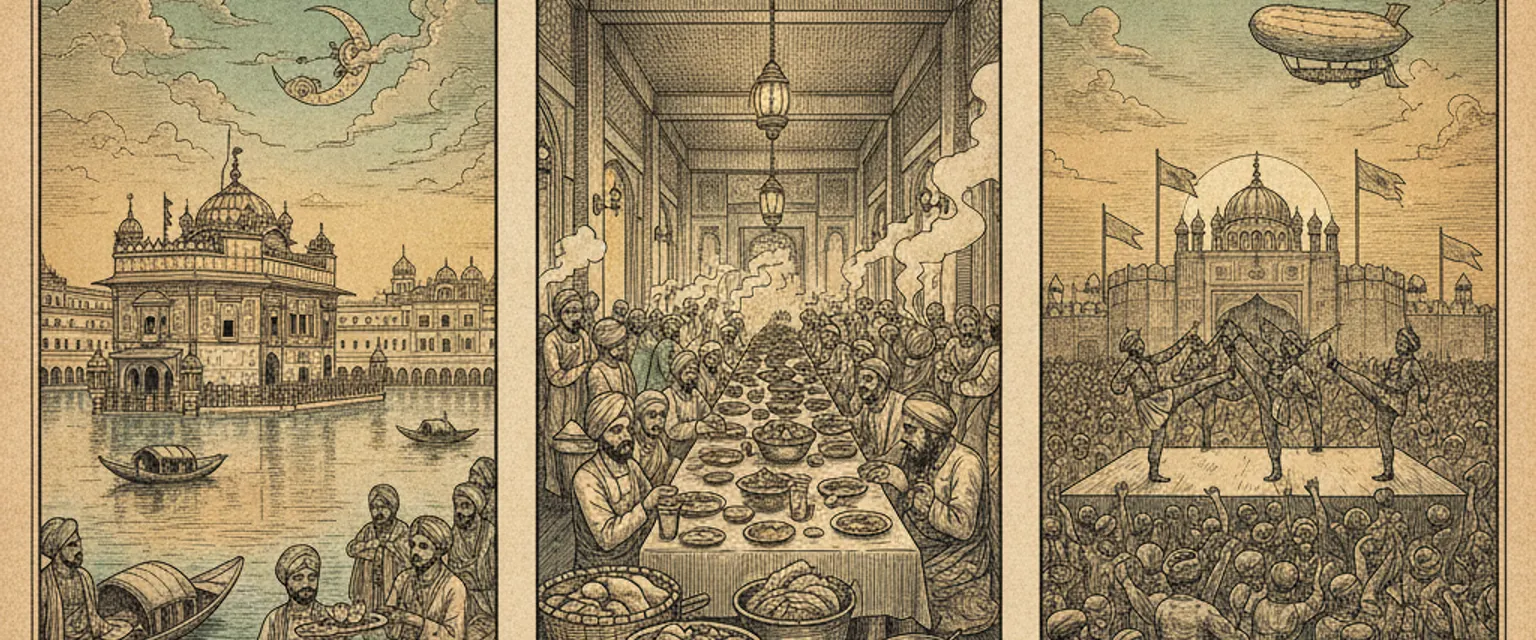
Go first before sunrise, around 4:30–5 a.m. Cold, hushed, the holy book carried in on a palanquin, the gold reflecting in the still water of the sarovar (the sacred tank), barely anyone there. It’s the most peaceful version of the place. Walk the marble parikrama (the walkway round the water) slowly. Sit by the edge. Listen to the kirtan — the live devotional singing that runs basically nonstop.
Midday, do the things around it. Jallianwala Bagh is a two-minute walk and you must go: this is the garden where, in 1919, British troops fired on a peaceful crowd hemmed in by walls, killing hundreds. You can still see bullet marks in the brick and the well people jumped into to escape. It’s quiet and heavy and important, and it’ll reframe a lot of what you think you know. Go. Don’t make it a photo-op.
Then — and this is the bit that gets me — eat in the langar, the temple’s free community kitchen. You file in, you’re handed a steel tray and a spoon, you sit cross-legged in long rows on the floor, and volunteers come down the lines ladling out dal and sabzi and chapatis straight onto your tray, calling “roti? roti?”, and you eat shoulder to shoulder with pilgrims and labourers and other travellers and absolutely everyone. It’s plain food and it’s some of the best I’ve eaten anywhere, because of where and how. Afterward, go round the back and help. Anyone can. The dish-washing hall is a clattering production line of thousands of steel plates and ten minutes of scrubbing alongside the volunteers will mean more to you than most of the trip.
Come back after dark for the third visit. This is the famous one — the temple lit up gold against the black sky, doubled in the water, the whole thing shimmering. Sit on the cool marble. It’s busy but somehow still calm. I sat there till nearly midnight my first night and lost all track of time.
Day 2: A Real Breakfast, Then the Border Circus
Start your second day with breakfast in the old city, which is its own event. Amritsar runs on butter and joy. Find a dhaba doing kulcha — the stuffed, blistered, ghee-soaked flatbread Amritsar is famous for, served with chole and a fat slab of butter melting on top. Kulcha Land or any of the legendary spots near the temple. It’s a heart attack on a plate and worth every clogged artery. Maybe 80–100 rupees. Wash it down with a lassi served in a clay cup so thick you eat it with a spoon.
Mid-morning, wander the bazaars of the walled city — narrow lanes selling phulkari embroidery, glittery juttis (those curled-toe shoes), spices, and approximately one billion sweets. Buy juttis. Haggle. They’ll start high because you’re a tourist and you both know it.
Then the day’s other big set-piece. The Wagah border ceremony, about 30 km west, at the only road crossing between India and Pakistan. Every evening before sunset, the two countries put on a synchronised, gloriously over-the-top flag-lowering — soldiers in fan-topped turbans high-kicking literally above their own heads, stamping, glaring across the line at their Pakistani counterparts doing the exact same thing, while crowds of thousands on each side roar patriotic chants at each other. It’s part military drill, part pantomime, part football match. It is completely absurd and I loved every minute.
Logistics matter here. Leave Amritsar by 2:30 p.m. at the latest — a shared cab or tour is easiest, around 300–500 rupees a head. Seats fill fast and foreigners get a slightly better viewing area if you show your passport, so bring it. The the whole thing wraps up by dusk and you’re back in town for one last late visit to the temple.
Two days, two enormous things — quiet golden devotion and roaring borderline nationalism — and the strange, brilliant fact that the same region holds both with a straight face.
Go three times to the temple, eat in the langar and then wash the dishes, and don’t skip Wagah just because it sounds daft — Amritsar’s whole personality is being deadly sincere and completely theatrical at once.
This article contains affiliate links marked rel="sponsored". We may earn a commission at no extra cost to you.