
[ TIPS · THE DISPATCH ]
Tipping Abroad: Where You're Insulting People and Where You're Getting Played
Tipping rules flip completely depending on the country. Here's a region-by-region cheat sheet so you stop over-tipping in Tokyo, under-tipping in New York, and getting guilt-tripped everywhere in between.
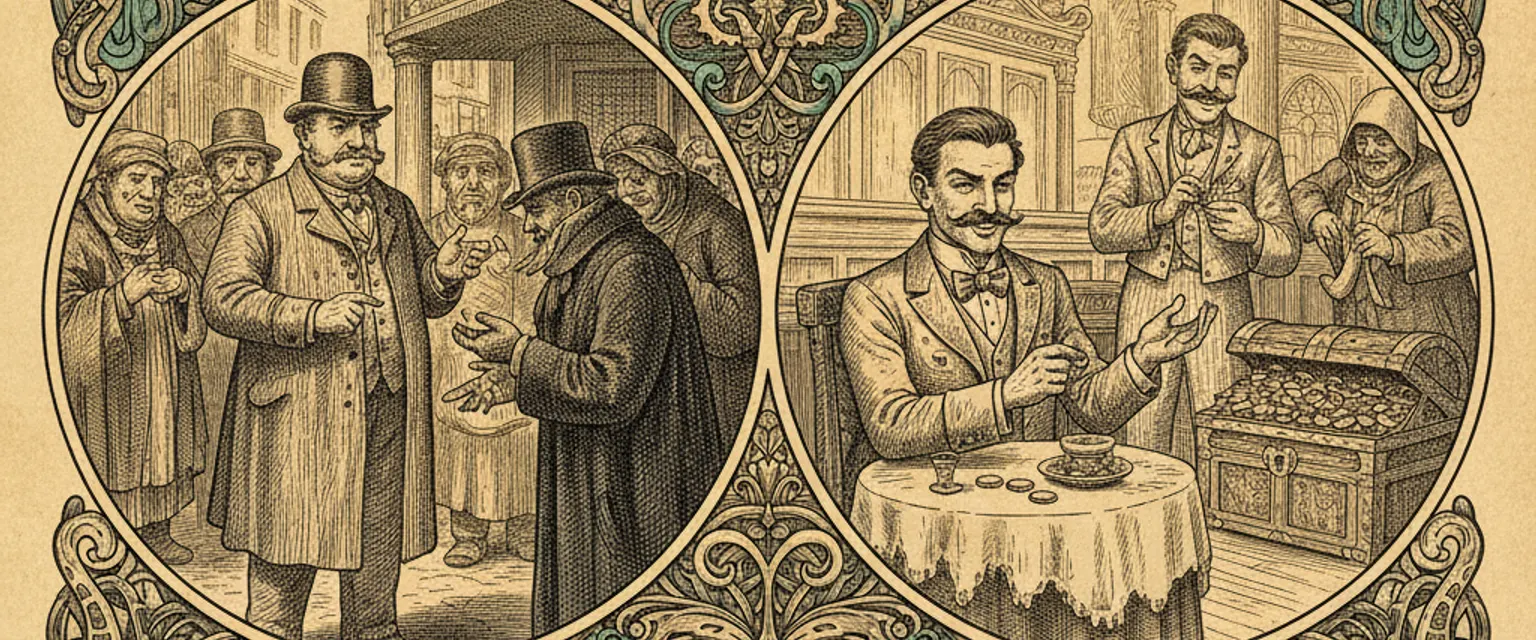
The most awkward I have ever felt in a foreign country was in a small Kyoto restaurant, chasing a waiter down the street to give back the change he was insisting I take, while I insisted he keep it. He thought I’d forgotten my money. I thought I was being generous. We were both wrong, and a small crowd formed.
Tipping is the one travel skill that flips entirely depending on where you’re standing. The exact gesture that marks you as a decent human in New York marks you as a confused tourist in Tokyo. And in a depressing number of places, the “service charge” on your bill is a quiet shakedown that has nothing to do with the staff. So let’s sort it out by region, plainly, so you can stop guessing.

East Asia: Put Your Wallet Away
In Japan, the simplest rule is the best one: don’t tip. Not at restaurants, not in taxis, not at your hotel. Service is considered part of the job, done with pride, and offering extra money can read as if you’re suggesting they need it. At high-end places you may pay a service charge built into the bill, and that’s the whole story.
South Korea works the same way. No tipping at restaurants, no tipping cabs. China is largely the same in everyday situations, though international hotels and tour guides catering to Western groups have started expecting a little, mostly because Western groups trained them to.
The exception across the region is the tour guide or driver you’ve hired privately for a full day. That’s a different relationship, and a modest cash thank-you at the end is usually welcome. But the reflexive restaurant tip? Holster it.

The United States: This Is Wages, Not a Bonus
Americans aren’t being greedy when they tip 20 percent; the system is built on it. Servers in many states are paid a “tipped minimum wage” that’s a fraction of the regular one, and tips make up the actual income. So in the US, tipping is not optional gratitude. It’s how the person serving you gets paid.
The current floor at a sit-down restaurant is 18 to 20 percent, and 20 is now standard for anything decent. Bartenders get a dollar or two a drink, or 20 percent on a tab. Taxis and rideshares, 15 percent or so. Hotel housekeeping, a few dollars a night left in the room.
What’s gotten genuinely out of hand is the tablet flip: the coffee counter that swivels a screen at you suggesting 25 percent for handing over a muffin. You are allowed to hit “no tip” for counter service where someone did nothing beyond a transaction. The guilt is engineered. Don’t pay it on reflex.
Europe: The Service Charge Trap
Europe is where you get played, and it’s almost always the same trick. Many restaurants, especially in tourist zones, add a “service charge” or “coperto” (a cover charge) to the bill. Once that’s on there, the staff are theoretically covered, and an additional 20 percent tip is just you donating money to the house.
So the first move at any European bill is to read it. If you see “servizio incluso,” “service compris,” or a service line, you’re done; round up the change at most. Italy’s coperto is a per-person cover for the table and bread, not a tip, but it does mean you owe nothing extra. In France, service is legally included, and a few coins for genuinely good service is the ceiling, not 20 percent.
Northern Europe runs low: Scandinavia, the Netherlands, Germany, you round up or add 5 to 10 percent for good service, and nobody’s offended by less. The UK often adds a 12.5 percent “optional” service charge to the bill that you are legally allowed to remove if the service was bad. Ask.
The Middle East, South Asia, and Beyond
This is the murkier middle ground where small tips genuinely help and are genuinely expected. Across much of the Middle East, North Africa, and South Asia, a 10 percent tip at restaurants is normal, and small gratuities oil the daily machinery: the porter, the driver, the man who appeared from nowhere to guide you to a doorway you could see perfectly well.
That last category is the play to watch. Unsolicited “help” followed by an outstretched hand is a hustle, and a firm, friendly no is a complete sentence. But the people doing actual service work, on modest wages, in a cash economy, that’s where a few coins matter most and cost you least.
In a lot of these places, carry small bills. Trying to tip with a large note you need broken puts you in a worse negotiating position than you realize.

The One Habit That Saves You
Before you go anywhere, spend ninety seconds learning that single country’s tipping norm, and carry a little local cash even in a card-first world. That’s the entire trick. The travelers who get it wrong are the ones who export their home habit everywhere: the American tipping 20 percent into a Japanese waiter’s confusion, the Brit refusing to tip at all in a New York diner and stiffing someone’s rent.
Match the place you’re in. It costs you nothing and it’s the clearest signal that you bothered to learn how things work where you are.
Is it ever rude to tip too much?
Yes. In Japan and South Korea, an unexpected tip can confuse staff or imply you think they’re underpaid, and you may end up with someone chasing you to return it. In service-charge-included parts of Europe, a large extra tip just overpays the house. When in doubt in those regions, round up modestly rather than adding a big percentage.
This article contains affiliate links marked rel="sponsored". We may earn a commission at no extra cost to you.