
[ ITINERARY · THE DISPATCH ]
Three Days in Quebec City: France Without the Flight (or the Attitude)
Quebec City is a walled French town on the wrong side of the Atlantic — cobblestones, croissants, and a 400-year-old fortress, minus the jet lag and the Parisian sigh. Here's three days well spent.
The fastest way to describe Quebec City to anyone who hasn’t been: it’s a walled French town that somehow ended up in North America, with all the cobblestones and croissants and four-century-old stone walls, but the people are warm to you instead of pretending they can’t understand your accent. I say this with love for Paris. Quebec City is just easier to like.
It’s the only walled city north of Mexico, the old town is compact enough to do entirely on foot, and you can fly there from most of the eastern US in a couple of hours. Three days is the sweet spot. Here’s how I’d spend them.

Day 1: Upper Town and the Most-Photographed Hotel on Earth
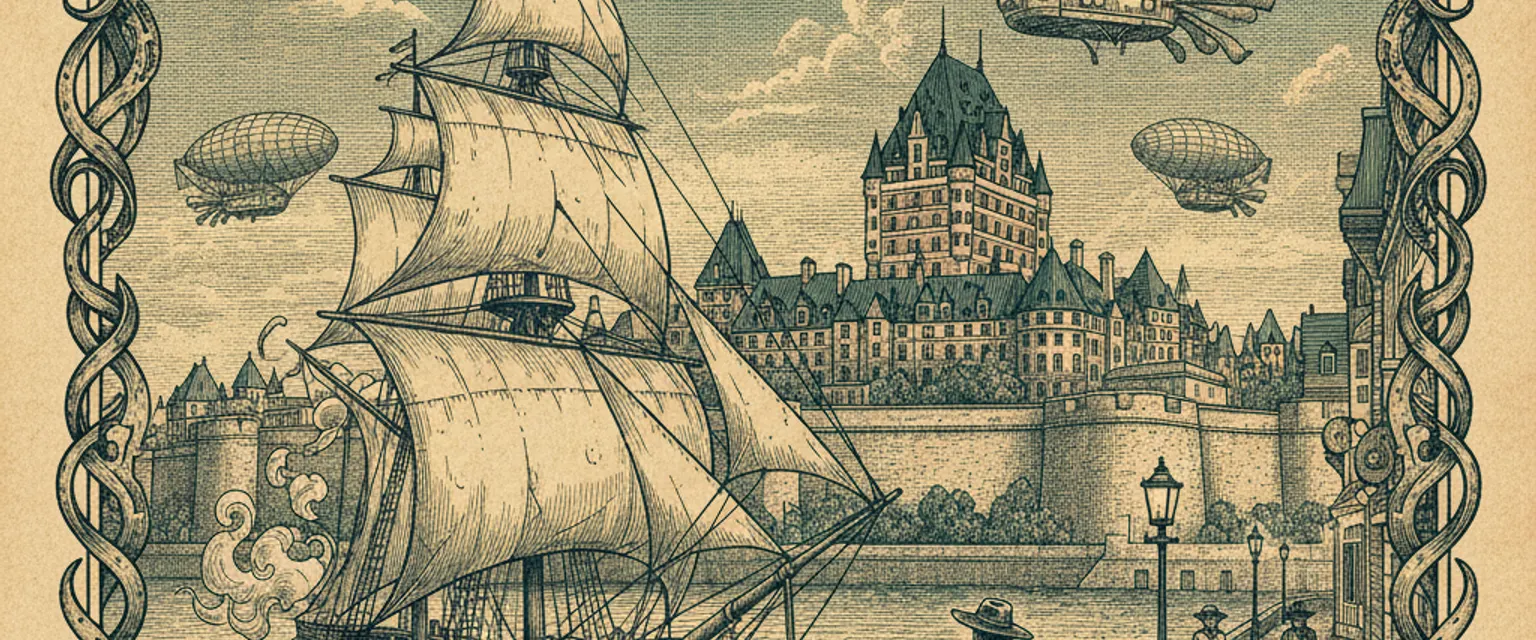
Start in Vieux-Quebec (Upper Town), the part on top of the cliff inside the fortifications. The landmark you’ll see from everywhere is the Chateau Frontenac, a gigantic green-roofed castle of a hotel that holds the record as the most-photographed hotel in the world. You don’t need to stay there (it’s not cheap) — you need to stand on the Dufferin Terrace, the wide wooden boardwalk wrapped around its base, looking down the St. Lawrence River.
Walk the ramparts — you can actually stroll along the old stone walls — and poke around Place d’Armes and the narrow lanes off Rue Saint-Jean. The whole zone is gloriously walkable and almost stupidly photogenic.
For dinner, hunt down a place doing real Quebecois comfort food. Poutine is the obvious move (fries, cheese curds, gravy — accept no frozen-curd imitations), but tourtiere (spiced meat pie) and a sugar-pie dessert are the deeper cut.

Day 2: Lower Town and Petit-Champlain
Take the funicular (or the steep “breakneck stairs” if you’re feeling it) down to Basse-Ville (Lower Town), the older waterfront level. The heart of it is Quartier Petit-Champlain, the oldest commercial district in North America — a knot of narrow cobblestone lanes lined with stone buildings, boutiques, and cafes. It’s touristy, it’s tight, and in summer it’s busy, but it’s genuinely lovely, especially first thing in the morning before the crowds.
Don’t miss Place Royale, the square where the city was founded in 1608, anchored by the little stone church Notre-Dame-des-Victoires. Find the giant trompe-l’oeil mural, the Fresque des Quebecois, which crams 400 years of local history onto one painted wall.
Spend the afternoon drifting between artisan shops and stopping for coffee and a pastry whenever the mood strikes. This is a slow day on purpose.
Day 3: The Plains, the Falls, and One Last Feast
Morning: the Plains of Abraham, the sprawling clifftop park where the 1759 battle between the British and French decided the fate of the continent. Today it’s a green expanse for picnics and runs, with cannons and a small museum to give the history weight. Walk it, then visit the Citadelle, the still-active star-shaped fortress at the high point of the walls.
Afternoon: head out to Montmorency Falls, about 15 minutes from downtown. They’re taller than Niagara (just much narrower), and you can take a cable car up, walk a suspension bridge right over the top, or climb the staircase alongside the spray. It’s the easy nature hit that rounds out the trip.
Back in town, go big on your final dinner — somewhere doing a long, unhurried French-Canadian meal — and toast the fact that you got Europe without the eight-hour flight.
Is three days enough in Quebec City? Yes. The old town is small and walkable, so three days covers it comfortably plus a half-day trip to Montmorency Falls. Add a fourth day only if you want to explore Ile d’Orleans or the surrounding countryside.
Do I need to speak French? No — English is widely spoken, especially in tourism. But a “bonjour” and a polite “merci” go a long way and noticeably improve how you’re treated.
When’s the best time to visit? Summer for terrace weather and festivals; September for fall colors and fewer crowds. Winter is freezing but magical, with the famous Carnaval and an ice hotel nearby — just dress for serious cold.
This article contains affiliate links marked rel="sponsored". We may earn a commission at no extra cost to you.