
[ ITINERARY · THE DISPATCH ]
Three Days in Jaipur: Pink Walls, a Palace of Wind, and Polite Haggling
Jaipur is pink by municipal decree, packed with forts, and absolutely built for the gentle art of haggling. Here is a three-day plan that gets you the Amber Fort, the Palace of Wind, and a bazaar strategy that won't leave you fleeced or rude.
Jaipur is pink because a maharaja ordered it painted that way in 1876 to welcome a visiting prince, and the old city has stayed that terracotta-rose color ever since, kept up by law. So the “Pink City” nickname isn’t a marketing flourish, it’s a municipal paint code, and walking through the walled center as the morning light warms those walls is exactly as good as it sounds.
It’s also a city where almost every transaction is a negotiation. The first price is never the price. This unnerves a lot of visitors into either overpaying out of guilt or going cold and hostile, and both miss the point. Haggling in Jaipur is a friendly game with rules, and once you learn them, the bazaars become the best part of the trip rather than a gauntlet.
Three days covers the big forts, the walled city, and enough bazaar time to actually get good at the game.

Day 1: The Pink City, the Palace of Wind, and a Royal Observatory
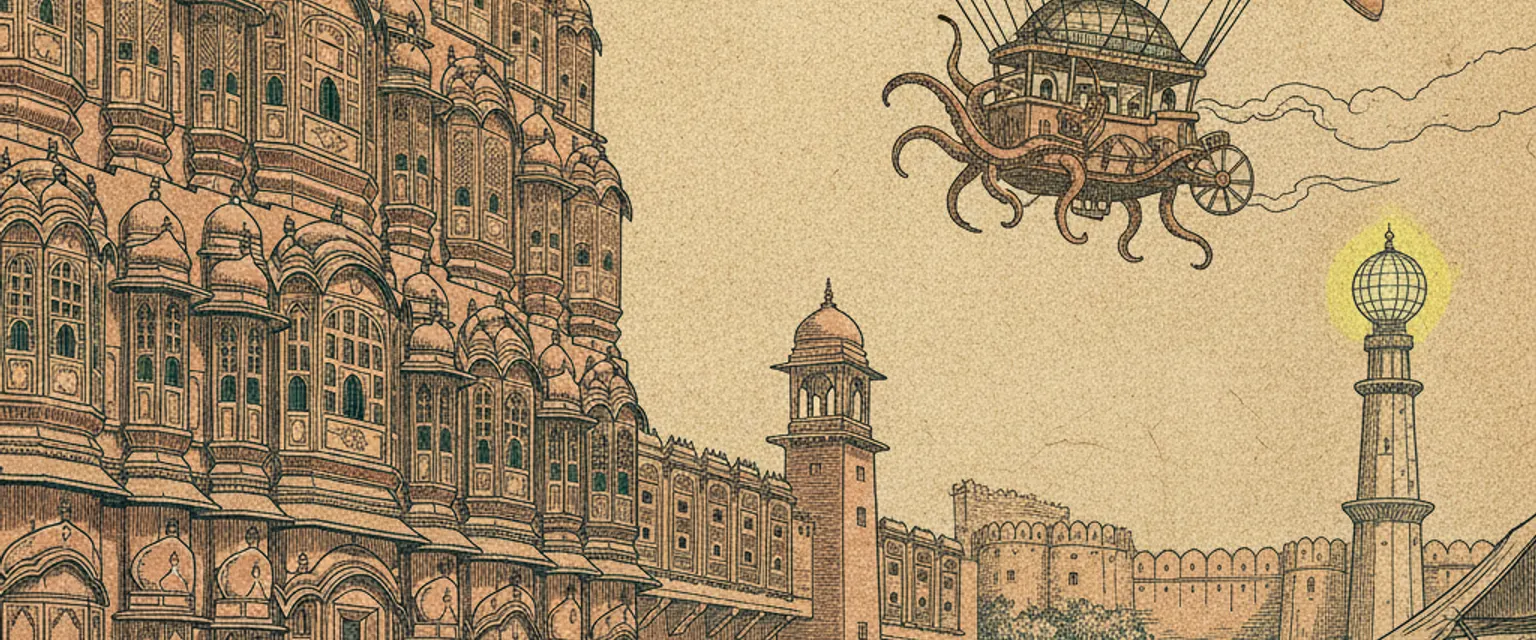
Start inside the walls. The Hawa Mahal, the “Palace of Wind,” is the icon: a five-story honeycomb facade of 953 tiny latticed windows, built so the royal women could watch street processions without being seen. The classic shot is from the café across the street at dawn, before the crowds, when the pink goes gold. Go early.
Then the City Palace, still partly home to the royal family, a sprawl of courtyards, the famous painted Pritam Niwas Chowk doorways representing the seasons, and an armory. Next door is Jantar Mantar, an open-air astronomical observatory of giant stone instruments built in the 1730s, including the world’s largest stone sundial, accurate to within seconds. It looks like a sculpture park designed by a mathematician, which is essentially what it is.
Spend the late afternoon just walking the bazaars near Johari Bazaar to get a feel for prices before you actually buy anything tomorrow.

Day 2: Amber Fort at Dawn, the Hilltop Forts, and the Bazaar Game
Get to Amber Fort early, ideally right at opening. This honey-colored fortress-palace 11 km outside the city is the showstopper: ramparts snaking up the hillside, the mirrored Sheesh Mahal hall where a single candle once lit the whole room in reflected flame, and courtyards stacked up the slope. Early means cooler, emptier, and better light. (Skip the elephant rides; the ethics are bad and there are jeeps and an easy walk up.)
Above Amber sits Jaigarh Fort, home to the world’s largest wheeled cannon, and across the ridge Nahargarh Fort, which has the best sunset view back over the whole pink sprawl. Pick one for the afternoon depending on your energy.
Back in town, commit to the bazaars properly. Here’s the haggling game in short: the opening price is often two to three times fair. Smile, name a price well below what you’ll pay, and meet somewhere in the middle. Walking away usually summons a better offer. Stay friendly the entire time; this is a social ritual, not a fight, and a laugh gets you a better price than a scowl. Johari Bazaar is jewelry and textiles, Bapu Bazaar is fabrics and shoes.
Day 3: Crafts, a Stepwell, and Finally Eating Everything
Day three, slow down and go a little deeper. Jaipur is a craft capital: blue pottery, block printing, gemstone cutting. Visit a block-printing workshop in nearby Sanganer or Bagru and watch fabric stamped by hand, dye by dye, and you’ll never look at a cheap printed scarf the same way.
Detour to the Panna Meena ka Kund stepwell near Amber, a geometric criss-cross of stairs descending into the earth, far quieter than the forts and weirdly hypnotic to look at.
And eat. By now you’ve been smelling Jaipur’s food for two days. Try dal baati churma (baked wheat balls drowned in ghee and lentils, with a sweet crumble), a thali that arrives as a dozen small bowls, and a lassi thick enough to stand a spoon in from a hole-in-the-wall lassi shop. Rajasthani food is rich and unapologetic, and you’ve earned it.
Is three days enough for Jaipur? Comfortably, for the city’s highlights and a real taste of the bazaars. If Jaipur is your gateway to the rest of Rajasthan (Udaipur, Jodhpur, the desert), three days here is the right opener. If you want to add cooking classes, more craft villages, or a day trip to Abhaneri’s spectacular stepwell, stretch it to four, but don’t shortchange the haggling time, because getting good at it is half the fun.
This article contains affiliate links marked rel="sponsored". We may earn a commission at no extra cost to you.