
[ ITINERARY · THE DISPATCH ]
Three Days in Salta: Andean Color, Empanadas, and the Road to the Clouds
Three days in Salta, the colonial city in Argentina's deep north where the empanadas are the best in the country, the hills come in rainbow stripes, and a train climbs to 4,200 metres for no reason except that it can. My full day-by-day.
Three days in Salta rearranged my mental map of Argentina. I’d done Buenos Aires, done the steak-and-tango thing, and figured I had the country sorted. Then I flew north and landed in what felt like a different continent — adobe villages, llamas, hills striped pink and ochre and green like someone took a highlighter to the Andes, and a colonial city that still goes to bed for a long lunch.
This is the north, and it’s slower, browner, older, and in my opinion more interesting than anything down in the pampas. Also the empanadas. We’ll get to the empanadas.

Day 1: The city itself
Salta — locals call it Salta la Linda, Salta the beautiful, and for once the nickname isn’t just civic pride — is one of the best-preserved colonial cities in the country. Start at the Plaza 9 de Julio, the main square, ringed by palm trees and arcaded buildings and the pink-and-yellow cathedral. Sit on a bench, have a coffee, watch the city not be in a hurry.
The one museum you can’t skip is the MAAM (Museo de Arqueología de Alta Montaña). It houses the Llullaillaco children — three Inca child mummies found near-perfectly preserved at the summit of a 6,700-metre volcano, where they were left as offerings five centuries ago. It’s haunting and respectful and genuinely one of the most affecting museum experiences I’ve had anywhere. Only one mummy is displayed at a time, rotated to preserve them. Go quietly.
In the afternoon, take the teleférico (cable car) up Cerro San Bernardo for the view over the whole valley, then walk down through the gardens.
And then dinner. The empanadas. Salta is, full stop, the empanada capital of Argentina. They’re small, baked (not fried), hand-pleated with thirteen folds by tradition, and so juicy you have to lean forward when you bite or wear the filling. Find a peña — a folk-music restaurant where guitarists play traditional northern songs between courses — and order a dozen empanadas, a bottle of red, and stay late.
Day 2: Cafayate and the Quebrada de las Conchas
This is your big day, and it’s a long one — about 3 hours each way, so leave early. The drive south to Cafayate runs through the Quebrada de las Conchas, a canyon of wild red and orange rock formations with names like the Amphitheatre (a natural stone bowl with extraordinary acoustics — there’s often a musician busking inside, and it’s spine-tingling) and the Devil’s Throat. Stop at all the marked viewpoints. The road is the attraction here as much as the destination.
Cafayate itself is a small, dusty, lovely wine town sitting at around 1,700 metres. This is Torrontés country — a crisp, floral white grape that grows beautifully at altitude and that you basically can’t get this good anywhere else. Do a couple of bodega tastings (many are walkable from the plaza), have lunch, buy a bottle or three. Don’t miss the wine ice cream stand on the main square — they do a Torrontés and a Cabernet scoop, and yes it’s a gimmick, and yes you should get both.
Drive back in the late afternoon when the canyon walls go properly red in the low sun. It’s a long day in a car but I’d do it again tomorrow.
Day 3: The Tren a las Nubes — or the painted hills
Your last day is a fork in the road, and it depends on your tolerance for altitude and early starts.
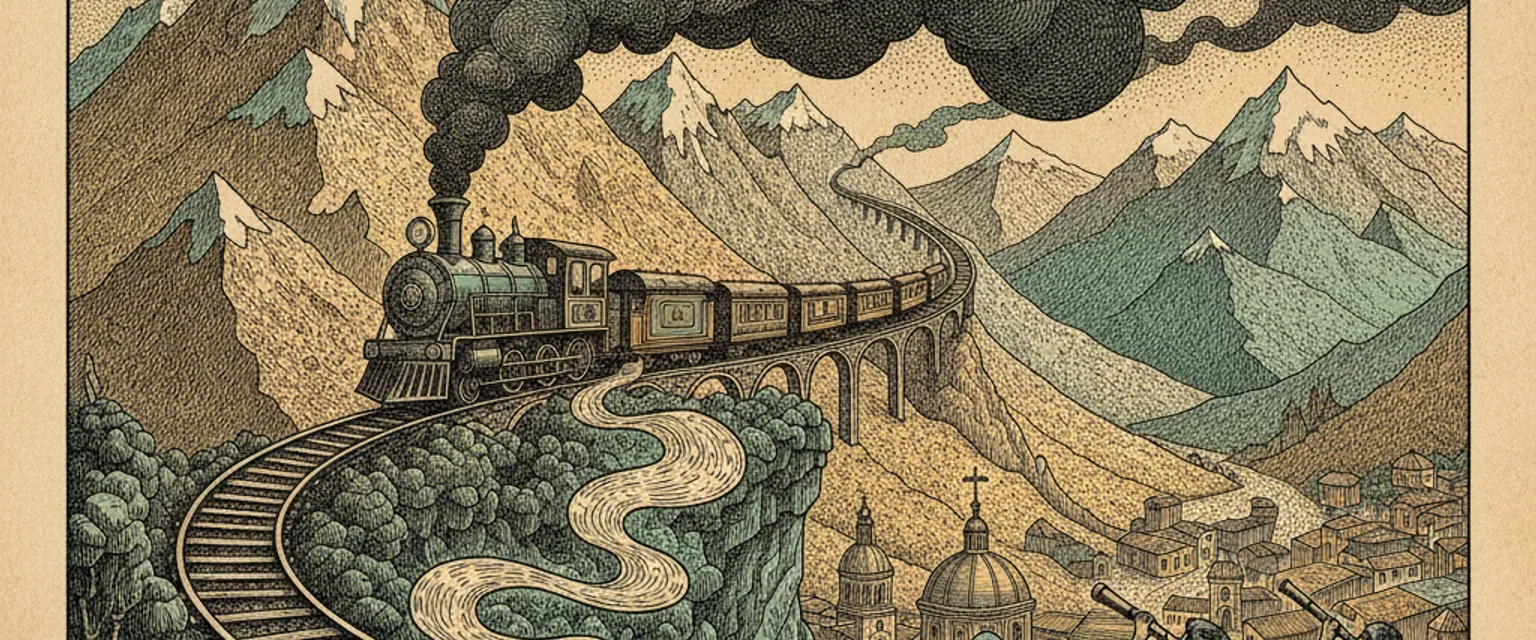
Option A — the Tren a las Nubes (Train to the Clouds). One of the highest railways on earth, climbing through the Andes to about 4,200 metres and crossing the dizzying La Polvorilla viaduct, a spindly steel bridge over a high desert ravine. It’s a feat of 1920s engineering and the landscape up there — bone-dry altiplano, distant volcanoes, herds of llamas — is otherworldly. It’s a full, long, fairly expensive day and the thin air is no joke; people get headaches and worse. But if your body handles altitude okay, the views are memorable. Book ahead.
Option B — the Quebrada de Humahuaca. If trains aren’t your thing, day-trip north instead toward Purmamarca and the Cerro de los Siete Colores — the Hill of Seven Colours, a mountainside genuinely striped in seven distinct mineral hues. The village at its foot is tiny, adobe, and ringed by a craft market selling alpaca everything. Further on, Tilcara has Inca ruins and more rainbow hills. It’s another long drive but the payoff is some of the most photogenic landscape in South America.
Whichever you choose, get back to Salta in time for one last round of empanadas. You’ve earned them, and frankly you’ll miss them the second you fly home.
| Day | Plan | Highlight |
|---|---|---|
| 1 | Salta city | MAAM museum, peña empanadas |
| 2 | Cafayate day-trip | Quebrada de las Conchas, Torrontés |
| 3 | Train or painted hills | Tren a las Nubes / Purmamarca |
FAQ
Is three days enough in Salta? For the city plus one big day-trip and one mountain or train day, yes. To go deeper into the Puna or up to the salt flats at Salinas Grandes, add a day or two.
How bad is the altitude? Salta city is mild (~1,200m), but the Train to the Clouds and the painted-hills drives push past 3,000–4,200m, where altitude sickness is real. Acclimatise, hydrate, and lean on coca tea.
When’s the best time to go? April to November — the dry season — gives you clear skies and comfortable days. Summer (Dec–Mar) brings heat and afternoon rains that can wash out the canyon roads.
Come for the colours, stay for the empanadas, and don’t be surprised when northern Argentina quietly becomes the part of the trip you can’t stop talking about.
This article contains affiliate links marked rel="sponsored". We may earn a commission at no extra cost to you.