
[ ITINERARY · THE DISPATCH ]
Three Days in Plovdiv: Europe's Oldest City and Nobody's Heard of It
Plovdiv has been lived in for eight thousand years, has a working Roman theatre, and costs a fraction of anywhere west. Here's a three-day case for Bulgaria's quietly brilliant second city.
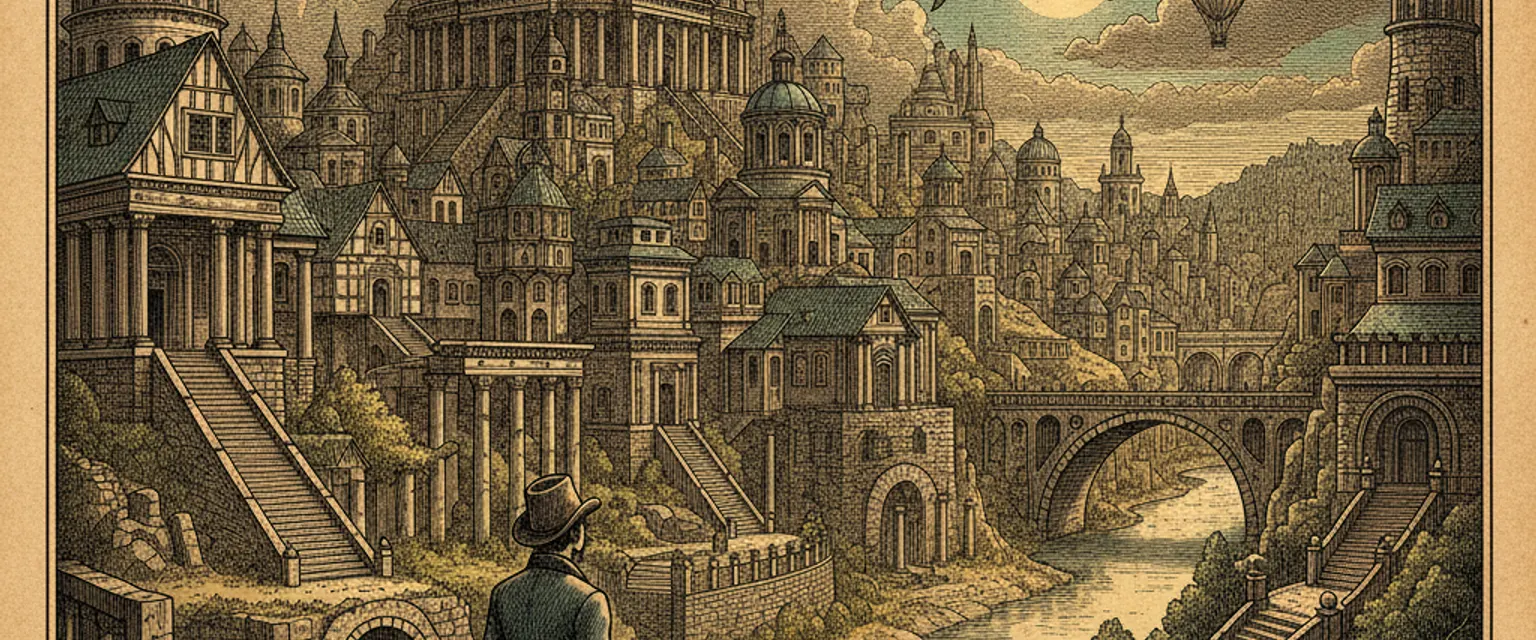
Here’s a fact that should make Plovdiv famous and somehow hasn’t: it’s one of the oldest continuously inhabited cities in Europe, with roughly eight thousand years of people living on the same hills. Athens, Rome, and Constantinople are spring chickens by comparison. And yet you can mention Plovdiv to well-travelled friends and watch a blank look settle in. Their loss. This is a city with a working Roman theatre, a tangle of painted merchant mansions, a buzzing arts quarter, and prices that feel like a typo if you’re coming from Western Europe.
Three days is the sweet spot: two for the city, one for the hills and monasteries around it.
Day 1: Layers of Empire
Start where everyone should, the Ancient Theatre of Philippopolis, a Roman amphitheatre from the second century that isn’t a roped-off ruin but a venue that still hosts concerts and opera under the open sky. Sit in the marble seats, look out past the columns to the Rhodope Mountains, and let the scale of the thing land. Then walk down into the Old Town, a steep cobbled maze of nineteenth-century National Revival mansions painted in ox-blood reds and deep blues, their upper floors jutting out over the streets. Several are open as house-museums; the Balabanov House and the Ethnographic Museum are the ones to pick if you only do two.
Down on the main pedestrian street, peer into the sunken Roman Stadium, where you can see the curved end of a 30,000-seat arena buried under the modern shopping drag. The whole city is like this: dig anywhere and an empire falls out.
Day 2: Kapana, the Fun Part
Day two is for Kapana, “the Trap,” a grid of small streets that was once the craftsmen’s quarter and is now the city’s creative district: indie galleries, third-wave coffee, craft beer, street art, and small restaurants where a proper dinner with wine costs less than a sandwich back home. Spend the morning drifting and caffeinating, then eat your way through lunch. Try a shopska salad, the tomato-cucumber-white-cheese national dish, and Bulgarian wine, which is genuinely good and absurdly cheap.
In the afternoon, climb one of the city’s hills, Nebet Tepe, the ancient acropolis with the oldest settlement remains and a free panorama over the whole red-roofed city. It’s the best sunset in Plovdiv and it costs nothing.
Day 3: Into the Hills
Get out of town for your last day. The classic move is the Bachkovo Monastery, about half an hour south, Bulgaria’s second-largest, a frescoed Orthodox complex tucked into a wooded gorge with food stalls outside selling grilled trout and honey. Alternatively, head to Asen’s Fortress, a medieval church perched alone on a cliff edge with a drop that’ll make your stomach lurch. Either makes an easy half-day by bus, organized tour, or a cheap taxi split between a few people.
Back in the city, spend your final evening doing the thing Plovdiv does best: sitting outside, eating well, paying almost nothing, and quietly wondering why nobody told you about this place.
That’s the running theme. Plovdiv isn’t undiscovered because it’s lacking; it’s undiscovered because Bulgaria stays off most itineraries entirely. Go before that changes.
Is Plovdiv worth visiting? Yes, emphatically. You get genuine Roman ruins, a gorgeous Old Town, a lively arts district, and Western-Europe quality at Eastern-Europe prices, all walkable and rarely crowded.
How many days do you need in Plovdiv? Two days covers the city comfortably; a third lets you add a monastery or fortress trip into the surrounding hills and turns a stopover into a proper short break.
This article contains affiliate links marked rel="sponsored". We may earn a commission at no extra cost to you.