
[ ITINERARY · THE DISPATCH ]
Three Days in Luang Prabang: Monks at Dawn, Waterfalls by Noon, Naps Forever
An honest three-day Luang Prabang plan: the alms ceremony done respectfully, the Kuang Si waterfalls, and a town that genuinely runs on naps.
Luang Prabang moves at the speed of a ceiling fan. This is a town where the most exciting thing that happens before 6am is a line of monks collecting rice, and the most exciting thing after lunch is finding shade. I mean that as the highest compliment. After the sensory assault of most Southeast Asian cities, three days here is a reset button.
Two warnings up front. First, the alms ceremony is a real religious practice, not a photo op, and tourists routinely behave badly at it. I will tell you how not to. Second, the heat is no joke, which is why this plan has naps built in. Embrace them.
Day 1: The Alms at Dawn, Then the Old Town
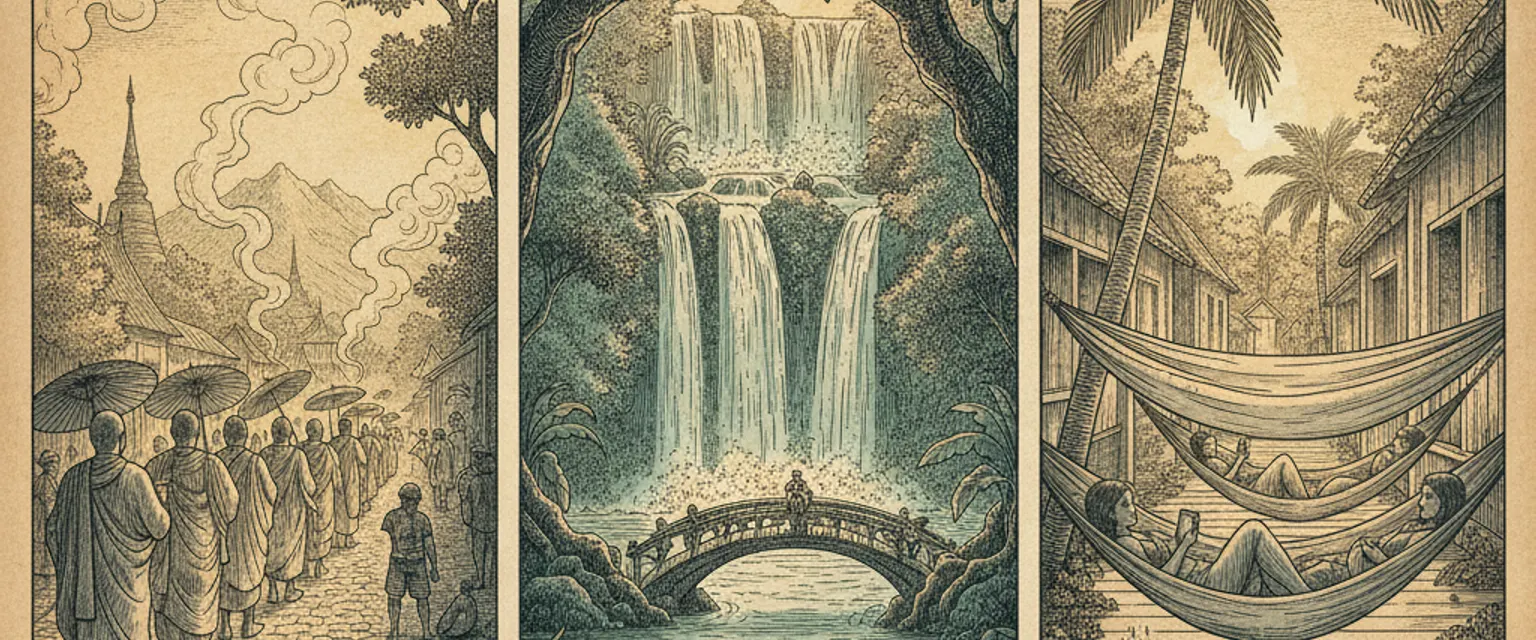
Set an alarm for 5am. The tak bat, or alms ceremony, happens at first light as hundreds of saffron-robed monks walk the streets collecting offerings of sticky rice. It is quiet, solemn, and genuinely moving when done right.
How to do it right: stay across the street, keep silent, do not use flash, do not stick your camera in anyone’s face, and crouch low so your head is below the monks’. If you want to give alms, buy rice from a respectful source beforehand and learn the etiquette, or just watch. The vendors flogging cheap rice to tourists at dawn are part of the problem, not the experience.
Nap, then breakfast, then explore the old town, which is a UNESCO peninsula of French-colonial shophouses and gilded temples. Wat Xieng Thong at the tip is the masterpiece, with its sweeping low roofs and the tree-of-life mosaic. Wander Sakkaline Road and duck into temples as you go.
In the evening, browse the Night Market along Sisavangvong Road for Hmong textiles and grab dinner at the cheap, brilliant vegetarian buffet alley off it.
Day 2: Kuang Si Waterfalls and a Sunset Climb
Today you leave town for the Kuang Si Falls, about 45 minutes out by tuk-tuk or minivan. These are the multi-tiered turquoise pools you have seen in every Laos photo, and for once the photos undersell it. The water is an unreal milky blue from the limestone, and you can swim in the lower pools. Climb to the top tier if your legs are willing.
At the entrance, the Free the Bears sanctuary rescues moon bears from the bile trade. It takes ten minutes and it is genuinely worthwhile. Pack a swimsuit, water shoes help on the slippery rocks, and go in the morning before the day-trippers arrive.
Back in town, recover with a long lunch and, yes, a nap. Then climb Mount Phou Si in the late afternoon, 300-odd steps to the gilded stupa at the top, for the classic sunset over the Mekong. It gets crowded, so go a little early and claim a spot on the quieter western side.
Day 3: Morning Market, the Mekong, and Pak Ou Caves
Start at the Morning Market (not the night one) near the Royal Palace, where locals actually shop. River fish, jungle vegetables, sticky rice in baskets, the occasional thing you would rather not identify. It is the most authentic hour of your trip.
Then get on the water. Take a slow Mekong longboat upriver to the Pak Ou Caves, two riverside caverns stuffed with thousands of old Buddha statues left by pilgrims over centuries. The journey is the point: the river, the karst hills, the villages drifting past. Many boats stop at Ban Xang Hai, a whisky-making village, on the way.
Get back for a final afternoon of doing nothing, ideally from a riverside cafe with a Beerlao and a book. That is not a cop-out; that is the assignment.
Three days is just right here. Stay longer if you want a yoga-and-coffee retreat; the town will happily oblige and will not rush you for a second.
Is Luang Prabang boring? Only if you came for nightlife. For temples, waterfalls, river trips, and deliberate slowness, three days is perfectly judged.
This article contains affiliate links marked rel="sponsored". We may earn a commission at no extra cost to you.