
[ ITINERARY · THE DISPATCH ]
Three Days in Ljubljana's Big Sister: A Long Weekend in Zagreb
Everyone routes through Zagreb to get somewhere else. Stay three days and you get an entire capital — coffee culture, a strange and brilliant museum, and prices that haven't caught up — almost to yourself.
I went to Zagreb because a flight there cost €31 and the connection to the coast left me with a free Friday-to-Monday I hadn’t planned for. I assumed I’d kill time. Instead I drank the best espresso of my year for €1.50, stood in a museum reading a stranger’s breakup note next to a donated waffle iron, and got mildly emotional about a city I’d booked by accident.
Here’s the thing nobody tells you: Zagreb is what people pretend Ljubljana is. Walkable, unbothered, gorgeous in an unfussy way, and roughly 30 percent cheaper. Ljubljana gets the “hidden gem” headlines while Zagreb — eight times the size, twice the food scene — sits 140 km east getting treated as a bus station with a cathedral. Give it three days and it stops being a stopover.
Day 1: Lower Town, the World’s Shortest Funicular, and Coffee as a Sport
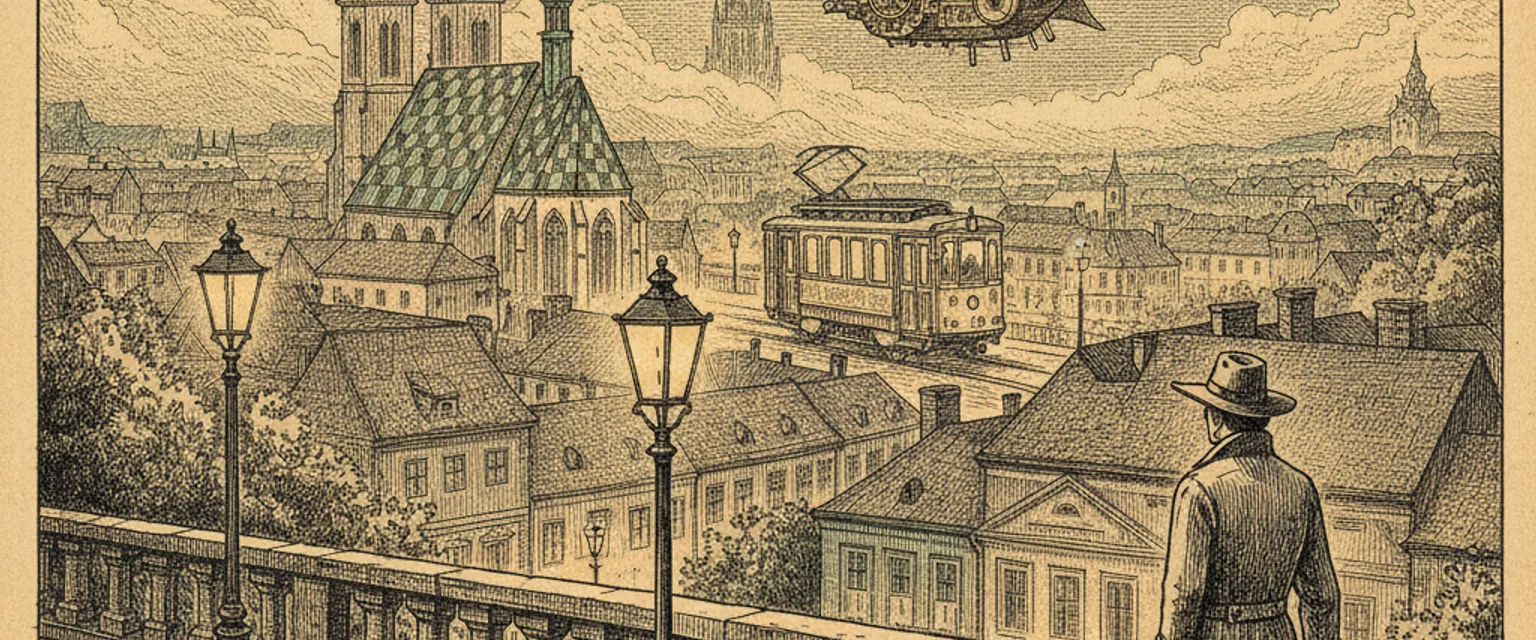
Start in Donji Grad (the Lower Town), the flat Austro-Hungarian grid where most of the good cafés and your hotel should be. Walk Tomićeva to the Zagreb funicular — it’s 66 metres long, runs for about 64 seconds, and is the shortest public funicular in the world by some measures. It costs less than a euro and is gloriously pointless. Ride it anyway.
Up top you’ll hit Strossmayer Promenade (locals call it Stross), a tree-lined ledge with a view over the red rooftops and a statue of the writer A.G. Matoš sitting on a bench, which is the single most photographed bench in Croatia. Wander down through Lotrščak Tower, where a cannon fires at noon every single day, every day since 1877, for reasons that are now mostly tradition and partly tourism.
Afternoon: drop back down to Trg bana Jelačića, the main square, and learn the local religion — coffee. Zagrebčani do not “grab a coffee.” They sit for two hours over one macchiato and talk. Find a terrace, order a bijela kava, and do not rush it. Rushing it marks you instantly as a foreigner.
Evening: dinner at Submarine Burger if you want cheap and excellent, or Mali Bar off Ilica for small plates that punch well above the bill.
Day 2: Dolac Market, the Broken Relationships Museum, and the Upper Town
Get to Dolac market by 9 a.m. — the open-air “belly of Zagreb,” a sea of red parasols selling strawberries, paprika, and sir i vrhnje (cottage cheese and cream, the local breakfast). Buy fruit, eat it on the cathedral steps, feel smug.
Then climb to Gornji Grad (the Upper Town) for the day’s main event: the Museum of Broken Relationships. This is the one genuinely unmissable thing in Zagreb — an entire museum of objects donated by people after breakups, each with a card explaining the story. An axe used to chop up an ex’s furniture. A wedding dress in a jar. It is funny, then it sinks you. Entry is around €7 and worth triple.
Outside, you’ve got St. Mark’s Church with its mad tiled roof (the coats of arms of Croatia and Zagreb, picked out in glazed tiles), the Stone Gate shrine where locals still leave lit candles, and narrow gas-lit streets that a man still lights by hand at dusk — yes, an actual lamplighter, still employed.
Evening: head to Tkalčićeva, the pedestrian street that is one long ribbon of bars. Order a Ožujsko or a craft beer at Mali Medo, which brews its own.
Day 3: Day Trip to Samobor (Cream Cake and a Reset)
You could spend Day 3 in the city — Maksimir Park and its lake, or Mirogoj cemetery, which is so architecturally beautiful it feels wrong to call it a cemetery. But for a proper change of scene, go to Samobor, 25 km west, about 40 minutes by the bus from the main bus station.
Samobor is a toy-sized town built around a stream, and its entire reason for existing (for visitors) is kremšnita — a custard cream slice the size of a brick. Get one at Slastičarna U Prolazu, sit by the water, and accept that you will eat the whole thing. There’s a ruined castle (Stari grad) on the hill above town if you want to earn the calories first via a 20-minute woodland walk.
Back in Zagreb by late afternoon. Last dinner at Stari Fijaker for štrukli — Zagreb’s signature dish, baked dough pockets stuffed with cheese, somewhere between a dumpling and a lasagne and better than both.

How Zagreb stacks up against Ljubljana
| Zagreb | Ljubljana | |
|---|---|---|
| Size | Medium (800k) | Tiny (300k) |
| Cost | € | €€ |
| Crowds | Low–medium | Medium |
| Best for | Food, coffee, museums | Slow strolling, postcards |
| Signature day trip | Samobor / Plitvice | Lake Bled |
| Vibe | Unpretentious, lived-in | Polished, photogenic |
The honest verdict: Ljubljana is prettier in a one-glance way; Zagreb is more interesting to actually spend time in. If you only have a weekend in this corner of Europe, the prettier one wins the postcard and the bigger one wins the trip.
FAQ
Is three days too long for Zagreb? No — two days covers the centre comfortably, and the third day for Samobor (or Plitvice Lakes, two hours south) is what turns a stopover into a real trip. People who say “Zagreb is a day” only ever gave it a day.
Do I need to rent a car? Not for this itinerary. The centre is walkable, the funicular and trams cover the rest, and Samobor is an easy bus ride. Save the rental for the coast.
When should I go? May, June, and September are ideal — warm terraces, full špica, and no August heat. December’s Advent festival (Zagreb has repeatedly won “best Christmas market in Europe”) is the other strong window, if you don’t mind the cold.
This article contains affiliate links marked rel="sponsored". We may earn a commission at no extra cost to you.