
[ ITINERARY · THE DISPATCH ]
Three Days in Dresden: Rebuilt From Rubble Into Baroque Showing Off
A three-day Dresden itinerary through the Frauenkirche that rose from ashes, the absurdly ornate Zwinger palace, and an Old Town so baroque it borders on showing off. Plus the gritty Neustadt across the river where the locals actually drink.
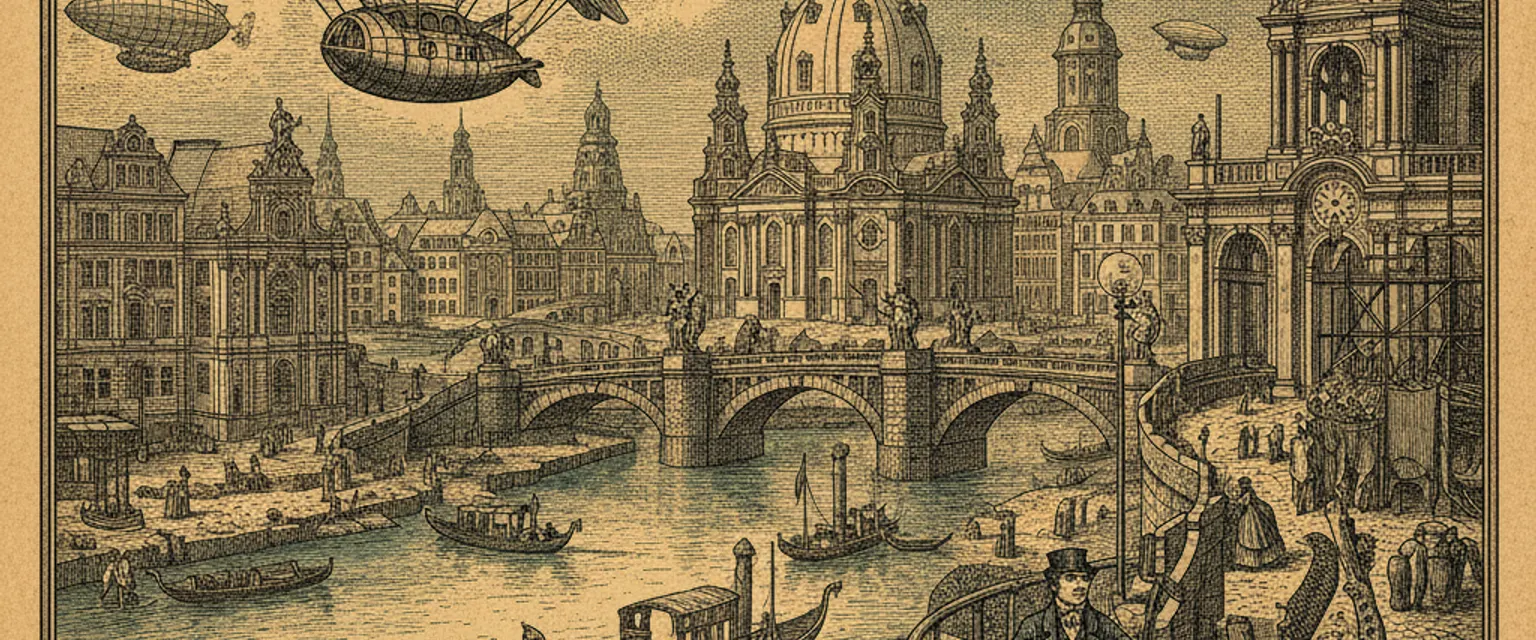
Here’s a thing that still gets me. Almost everything you’ll photograph on a 3 days in Dresden itinerary is, in some sense, a reconstruction. The city was firebombed to rubble in February 1945. What you see — the spires, the palaces, the river skyline that Canaletto painted — is the result of decades of patient, stone-by-stone rebuilding. And you’d genuinely never know unless someone told you.
That’s the whole emotional weight of the place. It looks like baroque showing off, and it absolutely is, but it’s showing off as an act of defiance. They put it all back. The Frauenkirche sat as a deliberate pile of blackened stones for forty-five years under the GDR, a war memorial, and then after reunification they rebuilt it using as many of the original numbered stones as they could salvage. You can still see the dark old ones speckled through the pale new sandstone, like a scar that healed but didn’t disappear.
I find it moving every single time. Anyway. The plan.

Day 1 — The Old Town and the Phoenix Church
Walk straight into the Altstadt and let it hit you. The Frauenkirche is the heart of it — start here. Go inside (free, but donate), then climb up to the dome lookout for the view over the river. Standing in there, knowing what stood here in 1990, is the trip in a nutshell.
Around the corner, the Fürstenzug — the “Procession of Princes” — is a 102-metre mural made of around 23,000 Meissen porcelain tiles, showing the rulers of Saxony on horseback. It survived the bombing largely intact, which feels like a small miracle given everything around it didn’t.
Then the Brühlsche Terrasse, the riverside promenade they call “the balcony of Europe,” for the postcard view down the Elbe. Have a coffee up there.
Dinner: somewhere doing Saxon food. Sauerbraten and dumplings, heavy and good. The Old Town spots are pricey and a bit touristy, so I’d cross over to the Neustadt even tonight if you’ve energy.

Day 2 — Palaces and Treasure Vaults
This is your big culture day, and it’s the Zwinger and the Residenzschloss (Royal Palace), basically next to each other.
The Zwinger is a baroque palace complex built around a vast courtyard, all fountains and pavilions and a crown-shaped gate. Inside, the Old Masters Gallery holds Raphael’s Sistine Madonna — and specifically those two bored little cherubs at the bottom that ended up on a million postcards and mugs. They’re real, they’re here, and people crowd round them more than the actual Madonna, which made me laugh.
Then the Residenzschloss, where the real jaw-dropper is the Grünes Gewölbe (Green Vault) — the treasure rooms of the Saxon kings, stuffed with absurd jewelled objects, ivory, gold, the largest green diamond in the world. There are two parts: the Historic Vault (timed, limited numbers, book early) and the New Vault. Even one of them is plenty for non-jewellery people like me. It’s overwhelming in the way these things are.
By now your brain’s full. Go sit by the river.
Day 3 — The Neustadt and the Real City
Spend today across the water in the Neustadt, the bohemian quarter that the war and the rebuild somehow left scruffy and alive. This is where Dresden’s twenty- and thirty-somethings actually live and drink. Graffiti, courtyards, indie shops, cheap eats from all over the world.
Don’t miss the Kunsthofpassage — a string of connected courtyards each decorated by a different artist. The famous one is the “Singing Drainpipes” house, a blue building covered in funnels and gutters that play music when it rains. It’s daft and delightful and exactly the antidote to a day of royal jewels.
Lunch cheap and global here. Then, if you’ve a third afternoon spare, take the tram or a boat upriver toward Schloss Pillnitz, a riverside summer palace with Chinese-influenced architecture and beautiful gardens, about half an hour out. Quiet, green, a lovely fade-out to the trip.
Last evening, back to the Neustadt for a proper night out. The bars cluster around Alaunstraße. This is the un-baroque Dresden, and you need both halves to really get the place.

Dresden Fast Facts
| Info | |
|---|---|
| Getting around | Excellent trams; the centre is walkable, Neustadt a short hop |
| Budget/day | ~€70–110 mid-range, cheaper than western German cities |
| Best months | May–September; the Christmas Striezelmarkt in December is famous |
| Book ahead | Historic Green Vault (timed entry, sells out) |
| Don’t skip | The Neustadt — the Old Town alone is only half the story |
FAQ
Is Dresden worth three days? Yes — two for the Old Town palaces, one for the Neustadt and a riverside trip. Two days alone misses the living half of the city.
Was Dresden really rebuilt? Much of the centre, yes, especially after 1990. The Frauenkirche reconstruction finished in 2005.
Is it touristy? The Old Town gets busy; the Neustadt stays local. Split your time and you get the best of both.
Any good day trips? Saxon Switzerland national park, with its sandstone cliffs and the Bastei bridge, is about an hour away and gorgeous.
Go see what defiance looks like when it’s built in sandstone — Dresden earns every bit of its showing off.
This article contains affiliate links marked rel="sponsored". We may earn a commission at no extra cost to you.