
[ ITINERARY · THE DISPATCH ]
Three Days in Dakar: Atlantic Surf, Sabar Drums, and Senegalese Teranga
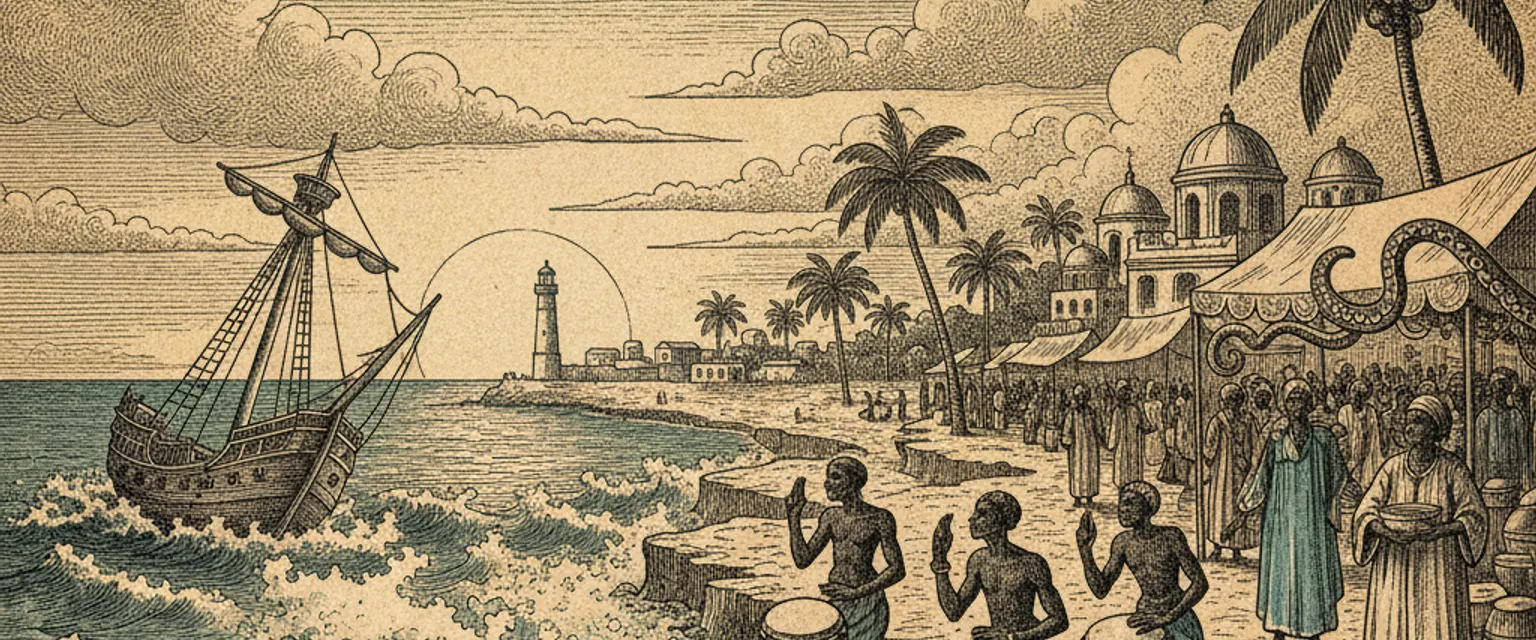
Dakar is a peninsula jutting into the Atlantic, fueled by drums, fish, and a hospitality so fierce it has its own word. Three days here means surf, the haunting island of Gorée, a giant statue, and music that doesn't quit. My plan.
A 3 days in Dakar itinerary has to make room for a word that doesn’t quite translate: teranga. It means hospitality, but bigger — a whole worldview where a stranger gets fed, welcomed, looked after, no questions. I felt it the first hour, when a man I’d asked for directions simply walked me the twenty minutes there rather than point. That’s Dakar. It’s loud, dusty, salt-aired, occasionally maddening, and one of the most generous places I’ve ever washed up in.
The city sits on a fist of land punching west into the Atlantic, so the ocean is always there — in the surf breaks, the fish on every plate, the wind that never fully stops. Three days is tight but doable if you don’t dawdle.

Day 1: Île de Gorée and the Weight of It
Take the morning ferry from the downtown terminal out to Île de Gorée — about twenty minutes across the water, and the second you step off, the noise of the mainland falls away. No cars. Bougainvillea spilling over pastel colonial houses. It is, on the surface, almost unbearably pretty.
And then you reach the Maison des Esclaves (House of Slaves) and its “Door of No Return,” and the prettiness curdles into something you’ll carry for years. Whether or not the precise numbers are debated by historians, the place stands as a memorial to the transatlantic slave trade, and standing in that doorway looking at the open ocean is a gut-punch. Get the guide. Listen. Don’t take a grinning selfie in the doorway — I watched someone do that and wanted to sink into the sea.
Spend the rest of the day wandering Gorée’s lanes slowly, eat grilled fish at a little terrace, catch the late-afternoon ferry back. You won’t want to rush off this island and you shouldn’t.

Day 2: A Giant Statue, the Surf, and the National Dish
Morning, go see the African Renaissance Monument — a 49-meter bronze of a man, woman, and child striding out of a hill, taller than the Statue of Liberty. It’s controversial (the cost, the politics, the very North-Korean-built aesthetic of it) and honestly I found it a bit much, but the view from the base out over the city and ocean is genuinely great and you can climb up inside the man’s head. Yes. His head.
Then get in the water. Dakar has a real surf scene — the Yoff and Ngor breaks on the north shore are friendly for lessons, and the local instructors are patient and very good. I’m a mediocre surfer at best and I caught more waves here than anywhere, mostly because the guy teaching me refused to let me give up. Board rental and a lesson cost a fraction of what you’d pay in Europe.
Lunch has to be thieboudienne — the national dish, rice cooked in a thick tomato-fish sauce with vegetables and a piece of fish that’s been stuffed with herbs. It is enormous, it is the whole point of Senegalese cooking, and the best versions come out of unmarked neighborhood spots, not restaurants. Ask anyone where the good one is. They’ll tell you, possibly at length.
| Morning | Afternoon | Evening | |
|---|---|---|---|
| Day 1 | Ferry to Gorée | Slave house + island lanes | Ferry back, quiet dinner |
| Day 2 | Renaissance Monument | Surf lesson at Yoff | Thieboudienne feast |
| Day 3 | Médina walk | Markets + textiles | Live sabar night |
Day 3: The Médina, the Pink Lake, and the Drums
Spend the morning on foot in the Médina, Dakar’s dense old quarter — the Grande Mosquée, the tailors, the fabric stalls where you can have a shirt made by the next day if you ask nicely. It’s intense and full-on and the best way to feel the actual pulse of the city. Buy textiles here; the wax-print fabrics are gorgeous and a fraction of boutique prices.
If you’ve got the legs and a driver, the Lac Rose (Lake Retba) sits about an hour out — a lake so salty it turns bubblegum pink in the right light, where workers wade out to harvest salt by hand. It’s touristy and the pink only really pops midday in dry season, so manage expectations, but it’s a surreal sight if the timing’s right. Skip it if you’re tired; it’s not worth a rushed slog.
Save your energy for the night, because Dakar’s real treasure is its music. Find a venue with live sabar — the thunderous Senegalese drumming that gets people up dancing in a way that is frankly intimidating to a stiff foreigner. Mbalax is the local genre that grew out of it (this is Youssou N’Dour’s home turf), and a good live night here will rearrange your sense of what rhythm can do. I sat there clapping on the wrong beat for an hour and nobody cared, they just pulled me up to dance anyway.
Honest notes. Dakar is dusty and the harassment from souvenir sellers near the tourist spots can wear thin — a firm, friendly “non merci” and walking on works. The traffic is rough and the city sprawls, so factor in transit time and use the apps. And the pace is its own thing; punctuality is, let’s say, relaxed. Lean into it or you’ll spend three days frustrated by something that’s actually part of the charm.
But the surf, the fish, the drums, and that fierce, no-strings welcome — three days and I understood why people who come to Dakar tend to keep coming back.
Eat the thieboudienne with your hands if they offer, dance on the wrong beat anyway, and learn what teranga means — it’s the best souvenir Senegal hands you for free.
This article contains affiliate links marked rel="sponsored". We may earn a commission at no extra cost to you.