
[ DISCOVERY · THE DISPATCH ]
The Underwater Restaurants, Museums, and Mailboxes You Need a Snorkel For
Dinner below the waterline, art galleries you swim through, and a working post office on the seabed where you mail a waterproof postcard. The underwater world has gone weirdly civic, and I'm obsessed.
I have mailed a postcard from the bottom of the sea. Genuinely. There’s a working underwater post box off Vanuatu where you snorkel down, hand your waterproof card to a postal worker in dive gear, and they stamp it with a special embossed cancellation that doesn’t need ink. I surfaced laughing through my snorkel, which if you’ve ever done it, is a terrible idea. Worth it though.
That’s when I went properly down the rabbit hole — or the reef hole — of the underwater restaurants and museums and assorted oddities people have built below the waterline. There are more than you’d think. And they are spectacular.

Eating below the surface
Let’s start with dinner, because it’s the one everyone wants.
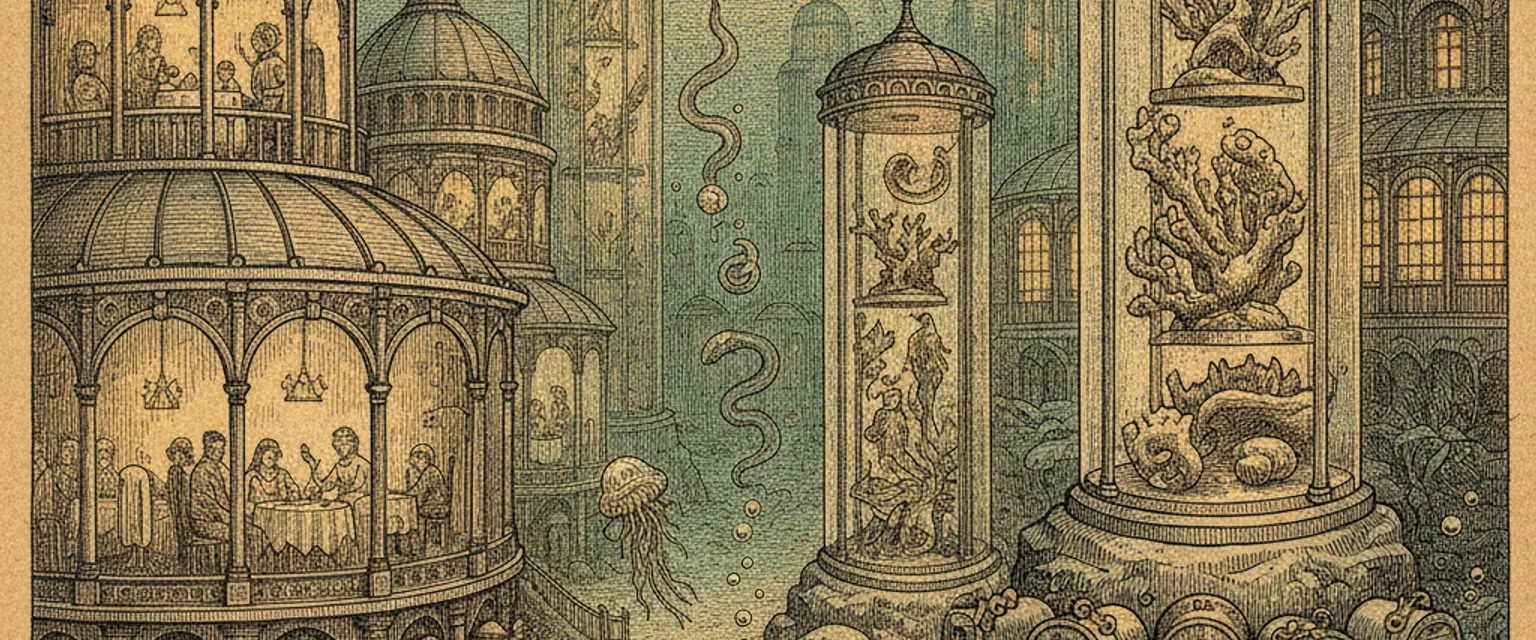
Norway has Under — Europe’s first underwater restaurant, a great concrete slab half-sunk into the cold Atlantic at the country’s southern tip, with one enormous window facing into the murk where you watch fish and weather and the changing light of the sea while you eat a tasting menu. It’s not warm and tropical. It’s moody and grey and Nordic and frankly all the better for it. You book months out.
The Maldives, predictably, does the warm version — several resorts have glass-walled dining rooms sunk among the reefs, where you eat with rays and reef sharks cruising overhead. It’s expensive in a way that made me wince. But the first time a manta ray glides over your table while you’re mid-sentence, the wincing stops.
The key difference: the restaurants you don’t get wet for. You walk down a tunnel or a staircase, sit in a dry, climate-controlled room, and the ocean is on the other side of the glass. No snorkel required. Just a reservation and, usually, a serious budget.

Art you have to swim through
Now the part you do get wet for, and my favourite category by miles.
Mexico’s MUSA — the underwater sculpture museum off Cancún and Isla Mujeres — is hundreds of life-size human figures cast in marine concrete and sunk onto the seabed, where they’ve slowly become an artificial reef, coral and algae claiming faces and outstretched hands. You snorkel or dive over them and it’s eerie and gorgeous and a bit haunting, this silent crowd standing on the sand as fish weave between them. It was built partly to draw divers off the fragile natural reefs nearby, which I love — art doing actual ecological work.
There are sisters to it now in other waters — sunken sculpture parks off Lanzarote, off Grenada — same idea, different sea. The Grenada one was the original, a whole “Vicissitudes” ring of figures holding hands on the seabed. You float above them and the scale takes a second to land.
The wonderfully pointless category
And then there’s the stuff that exists for no reason except joy, which is the best reason.
The Vanuatu underwater post office I mentioned — Hideaway Island, a real branch of the national post, staffed by divers, where you genuinely send mail from the seabed. Japan has had underwater mailboxes too, one off Susami that holds a Guinness record. There are underwater hotel rooms, underwater chapels people have actually married in, sunken “galleries” of nothing but a single chair on the sand for the photo.
Is any of it necessary? No. Completely not. That’s the charm. Someone looked at the sea and thought, what if there was a post office down there, and then they just… did it. I find that deeply reassuring about people.
How to actually pull these off
Let me save you some grief, because there’s a real gap between “I want to see the underwater statues” and standing on a boat actually doing it.
First, sort out what level of wet you’re signing up for. The restaurants are dry — you just need a reservation and a credit card you’re prepared to be brave with. The snorkel-access stuff (shallow sculptures, the Vanuatu post box) needs only a mask, fins, and the ability to duck-dive a few feet without panicking. The deep galleries and most underwater chapels need a dive certification, full stop, and no operator worth trusting will bend that. Know which bucket your dream falls into before you book flights.
Second, go small on the tours. The big cattle-boats dump a crowd on a site all at once and the whole eerie, silent, otherworldly thing evaporates into a churn of fins and GoPro sticks. A small-group operator costs a bit more and is worth every penny. Ask how many people per trip before you pay. If they won’t tell you, that’s your answer.
Third, manage the photo obsession. Yes, get the shot. But I’ve watched people miss the entire experience because they spent it fighting a fogged-up housing and a fiddly waterproof case, surfacing furious. Do one pass just looking. Float over the silent crowd of statues with your own eyes, no screen. Then go back down for the camera if you must. The memory you keep is the one you actually saw, not the one you filmed badly.
And a gentle reality check: the sea is not a theme park. Currents, cold, depth, your own nerves — these are real, and the dry-glass-restaurant crowd sometimes forgets that the snorkel and dive options are genuine open water. Listen to the guide. Don’t overrate your swimming. The whole thing is more fun when you’ve been a little bit sensible.
So here’s where I’ve landed. The fancy glass dining rooms are wonderful and you should do one once if the budget allows, the ray gliding over your table really is something. But the ones that stay with me are the wet ones — the silent concrete crowd on the seabed, the daft little post box, the moment you hand a card to someone in a mask thirty feet down and you both grin around your regulators.
The sea is full of human nonsense, and I mean that as the highest compliment.
Get wet for the weird ones — the sunken statues and the seabed post box will outlast any dinner-with-a-view on your list of things you can’t believe you actually did.
This article contains affiliate links marked rel="sponsored". We may earn a commission at no extra cost to you.