
[ DISCOVERY · THE DISPATCH ]
The One Museum the Locals Actually Love (And the Famous One They Skip)
Every city has a small museum residents quietly adore and a famous one they wouldn't dream of paying for twice. I went looking for the gap between the two, and it told me more about each place than any guidebook ever has.
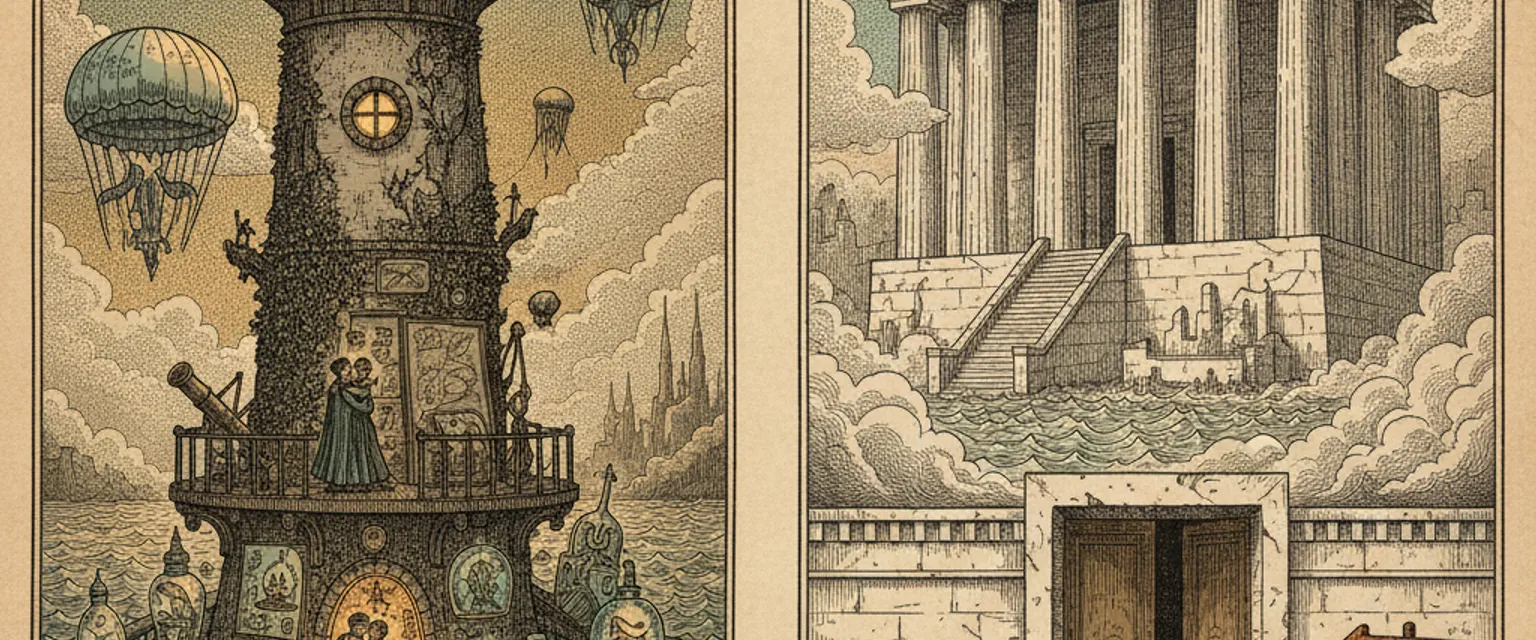
I have a rule now, and it has never once let me down: find the museums locals love, not tourists, and you find the actual city. The famous one is for you. The small one is for them.
Let me explain how I got there.
The first time I tried this, it was an accident. I was in Lyon, knackered, and the queue for the big fine-arts palace was doing that thing where it wraps around itself like a sad ribbon. A woman behind me — Sylvie, she sold flowers two streets over, told me her whole life in eleven minutes — basically scoffed. “We never go in there,” she said. “We go to the little one. The cinema one.” She meant the Musée Miniature et Cinéma. And reader, it was glorious. Tiny handmade film sets. The actual xenomorph from Alien just… standing there. I spent three hours and left grinning like an idiot.
Why the small museum wins
The famous museum is built to impress a stranger. The small one was built because somebody could not stop caring about one weird thing, and that obsession leaks out of every glass case. You feel it.
And there’s a practical reason too. The big institutions price for foot traffic — €20, €25, sometimes more once you add the “special exhibition” upsell that you didn’t ask for. The local favourite is usually a fiver. Or free on the first Sunday. The maths alone changes how you spend a trip.
Here’s the thing nobody tells you though: the staff at the famous museum already know this. Ask the woman scanning tickets where SHE goes on her day off. I have done this maybe forty times. She always has an answer, and it is never the building she’s standing in.
A few I’d cross a city for
In Amsterdam everyone funnels into the Rijksmuseum, which, fine, it’s magnificent, go once. But the Kattenkabinet — a museum about cats, in a canal house, founded by a man grieving his cat — is the one I think about at 2am. Five euros. Half-empty. A Rembrandt sketch of a cat, casually, on the wall, like it’s nothing.
In Mexico City the crowds go to the big anthropology museum (deservedly, it’s a monster of a place). The locals I drank mezcal with kept pushing me toward the Museo del Juguete Antiguo — a four-storey madhouse of vintage toys stacked floor to ceiling by one collector who clearly never threw anything away. Its chaotic. Its perfect.
And in Naples — okay, the archaeological museum has the Pompeii treasures and you should see them. But ask a Napoletano and half of them light up about the Cappella Sansevero instead, for the Veiled Christ, a marble sculpture carved so thin the shroud looks wet. Book the slot in advance. They cap numbers and the the line gets brutal by ten.
You see the pattern? Specific. Personal. Built by one stubborn human.
How to actually find yours
When I land somewhere new I do three things, in order. First, I check whether the city’s small museums have a free evening (a lot do — usually Tuesday or Thursday, when the residents come after work and it feels like a neighbourhood living room). Second, I ask one local the bartender question. Third, and this is the lazy genius move, I read the one-star reviews of the famous museum. The complaints — “too crowded,” “rushed,” “couldn’t see the famous painting” — are basically a map pointing away from the trap.
Does this mean skip the icons entirely? No. Go to the Louvre. Stand in front of the thing for ninety seconds, feel nothing, move on, that’s allowed and honestly a bit freeing. But give the afternoon — the good, slow, unrushed afternoon — to the small one. The cat house. The toy tower. The chapel with the impossible marble.
What the locals’ choice tells you
Here’s the part I find almost philosophical, if you’ll let me get a bit soft for a paragraph. The famous museum tells you what a city wants the world to think of it. The grand statement. The national pride, polished up for visitors. Fine. Useful, even.
But the small museum tells you what the people there actually find funny, or sad, or fascinating, when no one’s watching. A city that keeps a cat museum running has a sense of humour about itself. A town that lovingly preserves a one-room museum of failed inventions, or fishing knots, or a single eccentric’s button collection — that’s a place with self-awareness and warmth. You learn the temperature of a city from its small museums in a way the marble palaces will never give you.
And they’re often cheaper to support, which matters. When you pay your fiver at the little place, that money is keeping the lights on somewhere it genuinely makes a difference, not topping up an institution that pulls in millions. I like knowing my four euros mattered to someone.
One more thing, because I get asked: no, you don’t need to be an “art person.” Most of these aren’t art at all. They’re obsession museums — sewing machines, lighthouses, medical oddities, a basement full of pinball — and the only ticket you need is mild curiosity and a willingness to be charmed. The famous gallery can make you feel like you’re failing a test. The small one never does. It just wants to show you the thing it loves.
The best museum afternoon I’ve had this year cost four euros and smelled faintly of old paper and someone’s lunch. There was one other person in the room. We nodded at each other like co-conspirators. That’s the feeling I’m chasing, every single time.
So go find the small one. The city is keeping it for you.
Find the museum somebody couldn’t stop caring about, and you’ll have already found the best part of the trip.
This article contains affiliate links marked rel="sponsored". We may earn a commission at no extra cost to you.