
[ DISCOVERY · THE DISPATCH ]
The Night Train Is Back, and It's Quietly Better Than Flying Across Europe
Europe quietly rebuilt its night-train network while everyone was busy hating airports. Real routes, real beds, and you wake up in the city centre — here's why I stopped flying short-haul.
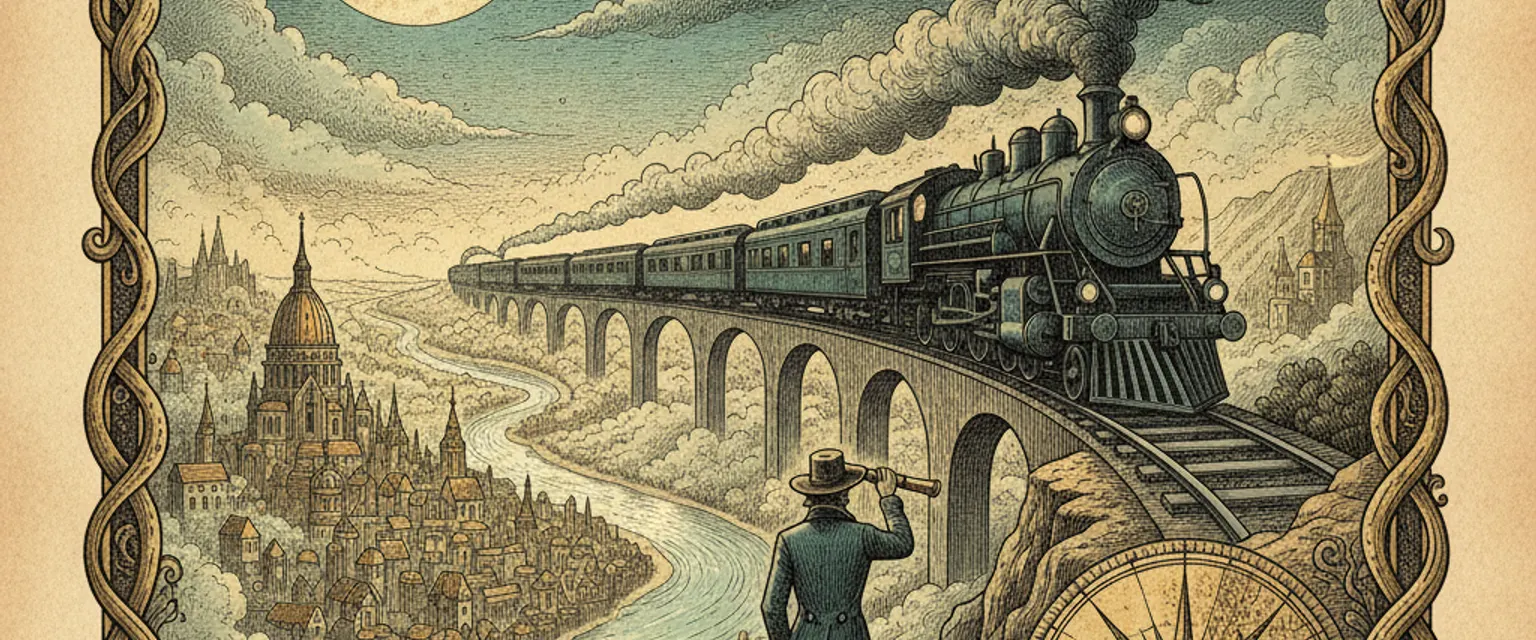
The first time I took a sleeper across Europe I did it ironically — a sort of “wouldn’t it be funny” booking from Vienna to Brussels, expecting a cramped, rattling night of regret to write a smug little story about. Instead I had a hot shower in my own compartment, a glass of Grüner Veltliner watching the Austrian dark go by, and I woke up gliding into a Belgian morning having paid nothing for a hotel and burned about a tenth of the carbon. The joke was on me. There was no story about how bad it was, because it wasn’t bad. It was the best long-distance travel decision I’d made in a decade.
Here’s what genuinely surprised me: this isn’t nostalgia. Europe didn’t keep its night trains; it nearly killed them in the 2010s and then deliberately brought them back. Austria’s ÖBB Nightjet bet big on sleepers when everyone else was scrapping them, and it worked so well that new operators and new routes keep launching. The night train isn’t a heritage novelty. It’s a quietly superior way to cross the continent, and most people haven’t noticed yet.
The routes that actually exist right now
This is the part people don’t believe until you name them, so let me name them. ÖBB Nightjet is the backbone: Vienna to Hamburg, Vienna to Brussels, Vienna to Paris, Munich to Rome, Zurich to Amsterdam, Vienna to La Spezia for the Italian coast. These are real, bookable, running-tonight trains, many in the newer purpose-built carriages with private mini-cabins.
Then there’s European Sleeper, a plucky cooperative-funded operator that launched the Brussels–Berlin–Prague “Good Night Train,” proving a startup could put sleepers back on tracks the big railways had abandoned. Sweden runs a state-backed sleeper from Stockholm up to the Arctic and a Berlin connection. France has revived domestic Intercités de Nuit from Paris down to the Pyrenees and the Alps. There’s even the grand long-haulers — the Paris–Venice run, and seasonal services threading toward the Balkans.
You won’t reach every city by sleeper. But the spine of Europe — the Vienna, Munich, Zurich, Paris, Berlin, Brussels, Amsterdam, Rome corridors — is now genuinely connected by night, and the map keeps filling in.

Why it actually beats flying (the unglamorous math)
Strip away the romance and the case is still strong, because of how flying short-haul really works. A “one-hour flight” is never one hour. It’s the train or taxi to an airport on the edge of the city, two hours early for security theatre, the flight, the wait at a carousel, and another haul from a far-flung airport into the centre. Door to door, a “quick flight” across Europe routinely eats six or seven hours of your waking, productive day.
The night train eats none of your day. It runs while you sleep — hours you were going to lose anyway. You board a station in the city centre in the evening and step off in another city centre in the morning, rested, having also saved the price of a hotel night. That’s two wins stacked: a transport cost and an accommodation cost collapsed into one ticket. When I price a Vienna–Brussels trip honestly — flight plus airport transfers plus one hotel night versus a single sleeper berth — the train is frequently cheaper outright, before you even count the day it gives back.
And the carbon difference isn’t marginal. A train journey emits a small fraction of the equivalent flight’s emissions — the kind of gap where you can take the smug photo and actually mean it.
What it’s genuinely like on board (the honest version)
Let me be fair, because it’s not flawless. There are three tiers and they matter. A seat is cheapest and roughly as comfortable as sleeping on any train, which is to say: doable, not delightful. A couchette is a shared compartment with simple fold-down bunks (four or six berths), often with strangers — sociable, affordable, light-sleeper-hostile. A sleeper is a proper private cabin with made-up beds, sometimes an en-suite sink or shower, and it’s the one that converts skeptics. Pay for the sleeper if the budget stretches; it’s the difference between enduring the night and enjoying it.
It is not silent. Trains couple and uncouple in the small hours, you’ll feel the rhythm of the track, and a 6 a.m. border stop can stir you. Bring earplugs and an eye mask and you’ll sleep fine. The newer Nightjet cabins have solved most of the old gripes — power sockets, reading lights, secure doors, decent climate control — and the breakfast tray slid through the door at dawn, coffee and a roll as the Alps go pink, is a genuinely lovely way to arrive anywhere.

Who it’s for, and who should still fly
It’s not the universal answer. If you’re crossing the whole continent — Lisbon to Helsinki — fly; the sleeper network won’t carry you that far in one comfortable hop. If you genuinely cannot sleep on anything that moves, no eye mask will save you and a day flight is kinder.
But for the medium-haul middle — the 600-to-1,200-kilometre journeys that are too far to day-train and too short to make flying worth the airport ordeal — the night train is now the smart default, not the eccentric choice. Vienna to Rome, Paris to Berlin, Zurich to Amsterdam, Brussels to Prague: these are exactly the trips where the sleeper wins on time, money, comfort, and conscience all at once. The revival is real, the routes are bookable, and the secret is only a secret because we all got in the habit of hating airports instead of looking at the timetable.
Do I need a rail pass, or do I book each train separately? For one or two sleeper journeys, book them directly with the operator (ÖBB Nightjet, European Sleeper) — it’s cheaper and guarantees you an actual berth, which passes don’t always cover without a supplement. A pass only earns its keep if you’re doing many trains across several weeks.
Is it safe to sleep with strangers in a couchette? Yes, broadly — compartments lock from the inside, conductors patrol, and millions do it without incident. That said, keep your passport, phone, and wallet in a small bag you sleep with or zip into the bunk’s storage, the same basic caution you’d use in any hostel dorm.
This article contains affiliate links marked rel="sponsored". We may earn a commission at no extra cost to you.