
[ DISCOVERY · THE DISPATCH ]
The Last Telephone Boxes and Analog Things People Travel to Touch
A pilgrimage to the last telephone boxes and analog landmarks — the dials, switches, and red boxes the world forgot to delete. Here's where to find the things people now travel just to touch with their own hands.
I drove ninety minutes out of my way once to use a working red telephone box. Picked up the receiver, fed in actual coins, called my mum, who was extremely confused. The last telephone boxes and analog landmarks like it are vanishing fast, and somewhere in the last few years I became the kind of person who’ll cross a country to touch one. I have made my peace with this.
Here’s the thing I keep coming back to. We have replaced almost every physical object with a glowing rectangle, and the rectangle does everything better and faster, and yet — and YET — people are increasingly travelling specifically to find the old physical thing and put their hands on it. There’s a hunger for the analog that I don’t think is just nostalgia. It’s the wanting to touch a thing that does one job, mechanically, that you can understand by looking at it. Try understanding your phone by looking at it. You can’t. It’s a black mirror full of secrets.
So this is a pilgrimage guide. To the dials, the switches, the boxes the world forgot to delete.

The red boxes, obviously
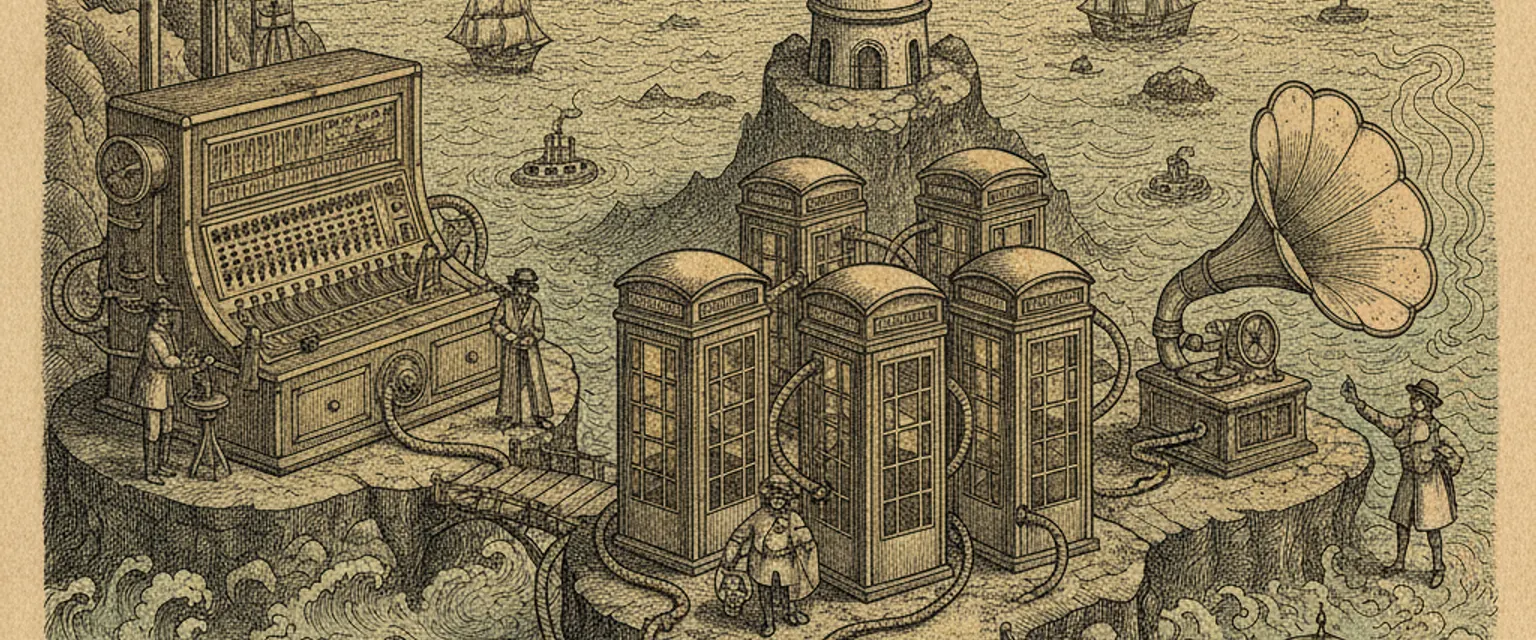
The British K2 and K6 telephone boxes — Giles Gilbert Scott’s design, that perfect red, the little crown above the windows — are the patron saints of this whole thing. Most have been ripped out or “adopted” by villages and turned into tiny libraries or defibrillator stations (which is genuinely lovely, go find one of those). But a few are still live, working phones.
Box 800 area, central London still has clusters near Covent Garden and outside the Royal Courts of Justice, kept partly for the tourists, fair enough. But the magic ones are rural — a single red box on an empty Yorkshire lane, or the row of them outside the old Parliament Square that photographers stake out at dawn. Step inside. Smell it (old paint, rain, a faint phone-book ghost). Lift the receiver even if it’s dead.

The departure boards that go clackclackclack
If you know, you know. The split-flap board — the mechanical departure display that updates with that rippling clatter of little flaps spinning to new letters — is one of the great analog sounds, and airports and stations have almost entirely replaced them with silent LED screens. Soulless. Efficient and soulless.
The last famous one was at Philadelphia’s 30th Street Station, retired not long ago to much public mourning. Frankfurt Airport kept a Solari board running far longer than most. Your best bet now is smaller European train stations and a handful of preserved ones in railway museums. When you find a live one, just stand under it when a train’s called and listen to the whole board ripple over. People film it. People who’ve never thought twice about a departure board suddenly can’t look away. The sound does something.
The lifts and the funiculars
Paternoster lifts — those doorless lifts that never stop, a chain of open compartments you step into and out of while they’re moving — are mostly banned now (people, predictably, got hurt) but a few survive in old university and government buildings in Germany and the Czech Republic. Riding one is mildly terrifying and completely wonderful. Step in, ride to the top, decide if you’re brave enough to stay on as it tips over the top in the dark (you’re not, get off, everyone gets off).
And the old funiculars — water-counterweight cliff railways from the 1880s and 90s, no electricity, just two cars and a tank of water doing the physics. Lynton & Lynmouth in Devon still runs on water alone, has since 1890. You ride a Victorian machine up a cliff powered by nothing but gravity and a clever idea. It’s beautiful and it’s free of any computer at all.

A loose list for the analog pilgrim
- Working pneumatic tube systems — a few old department stores and hospitals still whoosh paper around in brass tubes. Ask. People love showing them off.
- Letterpress and old print shops — many now run tours where you actually set type and pull a print. You leave with ink on your hands and a thing you made with a machine from 1850.
- Manual lighthouses and foghorns — most are automated, but heritage groups fire up the old foghorns on certain days and the sound is felt in your chest, not heard.
- Hand-operated chain ferries and swing bridges — small ones survive on rivers everywhere, cranked by one person, taking you across the way it’s been done for centuries.
- The last functioning telegraph and clock towers that still get wound by hand by a single keeper who’s usually delighted you came.
Why bother, really
Because the rectangle gives you everything except the one thing these objects all have: resistance. A phone box door is heavy. A flap board is loud. A water funicular is slow. They push back. They make you feel the doing of the thing — the weight of the receiver, the clunk of the coin, the lurch of the lift. And there’s a deep, slightly sad satisfaction in standing in front of a machine you can fully understand just by watching it work.
So go touch the analog things before they’re gone, because they are going, fast. Lift the dead receiver. Stand under the clacking board. Ride the lift that scares you a little. Don’t just photograph it — photographing it is the most digital thing you could possibly do. Put the phone away. Put your hand on the cold metal.
Touch the thing. That’s the whole pilgrimage. The photo is for later — the cold metal under your hand is for now.
This article contains affiliate links marked rel="sponsored". We may earn a commission at no extra cost to you.