
[ DISCOVERY · THE DISPATCH ]
The Cities You Should Arrive at by Boat (And Why It Ruins You for Airports)
Some skylines only make sense from the deck of a ferry, not a taxi window. The cities worth arriving at by boat, why the approach beats the destination, and how it quietly ruins airports forever.
I’ll tell you the exact moment I became insufferable about this. We were on the slow ferry into one of the best cities to arrive by boat, the deck cold and salt-sprayed, and the skyline just… rose. Out of the water. Slowly, the way a place is supposed to reveal itself, the way it did for every traveler for about four thousand years before someone invented the jet bridge. And I thought: I’m never doing this by plane again if I can help it.
I’ve mostly kept that promise. And I’ve turned into the person at dinner parties who says “but did you arrive by sea?” Sorry. I’m not sorry.

Why the boat ruins you (in a good way)
An airport gives you a city all at once, and badly. You land in a field somewhere outside, in a building that looks like every other building, then you’re funneled through duty-free and dumped at a taxi rank thirty minutes from anything. The city doesn’t arrive. You arrive at the city’s admin department.
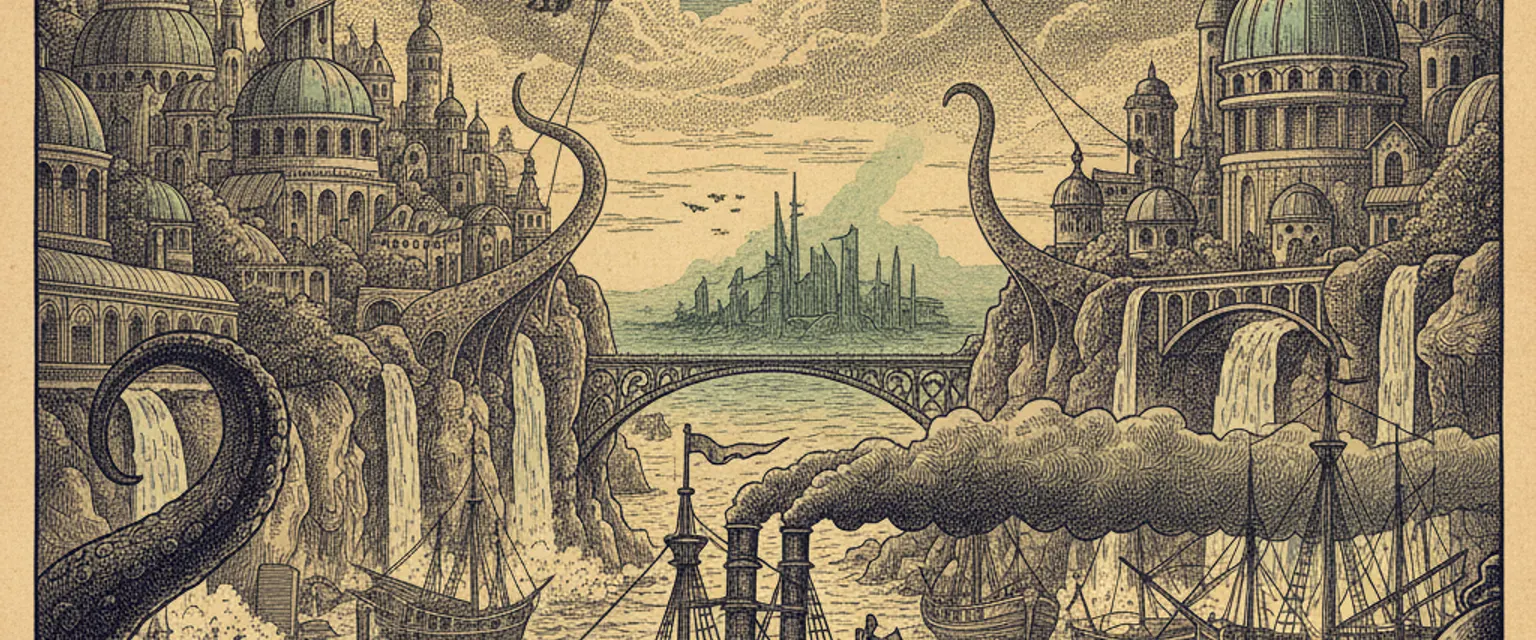
A boat gives you the approach. The slow build. You see the place the way it was designed to be seen — from the front door, the harbour, the bit that faced the world for centuries. Cities that grew up around water put their best face toward it. Their grand buildings, their domes, their defensive walls, all aimed at the sea because the sea was where everyone important came from. Arrive that way and you’re getting the intended view. The director’s cut.
Plus there’s the slowness. You’ve got time to feel yourself getting there. By the time you dock you’ve already started belonging.

Venice, obviously, but do it right
Yes, Venice. Everyone says Venice. They’re right but most people do it wrong — they take the train across the causeway, which is fine, or worse they fly into Marco Polo and get a transfer. Take the ferry. The Alilaguna or, if you’re flush, a private water taxi from the airport across the lagoon, and the city assembles itself from the water like it’s showing off. Which it is. There is no version of arriving in Venice by road that isn’t a slight betrayal of the place.
Hong Kong from the Star Ferry
Okay, you don’t arrive in Hong Kong by boat from abroad, not really. But the first time you cross Victoria Harbour on the Star Ferry from Tsim Sha Tsui to Central — for about three Hong Kong dollars, it’s almost free — that wall of skyscrapers coming at you off the water does the same trick. I rode it back and forth twice the first night just to keep watching. The bloke selling tokens definately thought I was odd.

Stockholm through the archipelago
This one’s a secret weapon. Come in by sea from the Baltic and you don’t get a city, you get thirty thousand islands first, threaded one after another, pine and red cottages and bare granite, for hours, and then — almost grudgingly — Stockholm. By the time the city shows up you’ve been so thoroughly softened by the archipelago that the place could be a car park and you’d love it. It is not a car park. It’s gorgeous.
Lisbon up the Tagus, and a confession
There’s a ferry across the Tagus from Cacilhas, and yes it’s a commuter boat, full of people going to work who could not care less about the view. But you stand at the back and watch Lisbon climb its hills in that mad yellow light, the whole city tiled and tumbling toward the water, and it costs about a euro and a half. Locals reading their phones. Me, gawping like a tourist. Which I was.
The confession: I’ve now planned entire trips backward, choosing the destination because it had a good sea approach. Naples from the bay. Cartagena coming in off the Caribbean. Istanbul on a Bosphorus ferry with a glass of tea and a city on both sides of you, Europe on your left and Asia on your right, gulls stealing simit off the deck. Is this a healthy way to choose holidays? Probably not. Do I regret it? Not even a little.

What it actually does to you
Here’s the thing the boat gives you that the plane never can: anticipation that pays off. Flying, the anticipation is all in the booking, then it’s just logistics and a cramped seat and a queue. By sea, the anticipation builds, right up to the moment the skyline breaks the horizon, and then it delivers. Your brain files the arrival as an event instead of a transit. You remember it. I can’t tell you what most of my flights looked like. I can describe every harbour I’ve sailed into.
And that’s the ruin of it. Once you’ve felt a city rise out of the water, the jet bridge feels like being mailed somewhere in a box. Functional. Soulless. A means.
So next time there’s a ferry option, even a slower, fiddlier, slightly-more-expensive one — take the boat. Stand at the back. Get a little cold and a little salty. Watch the place come to you.
Cities have front doors and they nearly all face the water. Stop sneaking in the back through an airport. Knock on the front.
This article contains affiliate links marked rel="sponsored". We may earn a commission at no extra cost to you.