
[ DISCOVERY · THE DISPATCH ]
The Chef's-Only Restaurants Where Cooks Eat on Their Night Off
Skip the tasting menus. The real intel is where the cooks who make them go to relax. How I find the chef's-only restaurants in any city, and why the late-night staff joint always wins.
If you want to know where to eat in a city, stop asking the concierge and start asking where chefs eat on their day off. That’s it. That’s the whole trick, and it’s taken me years and a lot of mediocre €90 tasting menus to fully trust it. The people who cook the fancy food do not, on their precious night off, go eat more fancy food. They go somewhere loud and cheap and fast that makes one thing perfectly. And those places — the chef’s-only joints — are where the actual eating is.
Let me tell you how I find them, because it’s learnable, and then I’ll tell you why they’re always better.

How to actually find them
First: befriend a cook. Sounds glib, isn’t. If I’m at a good restaurant and the server seems game, near the end I ask, quietly, “where do you and the kitchen go after a shift?” Nine times out of ten the answer comes with a little grin, because you’ve asked the question almost nobody asks, and the place they name is never on a list anywhere.
The grin is the tell. When their face changes, you’ve found it.
Second: look for restaurants open absurdly late, the kind that fill up at 1am. Cooks finish service at eleven, midnight. They eat after. Anywhere doing brisk business at half-twelve on a Tuesday with a few people in stained whites in the corner — there’s your place.
Third, and this one’s underrated: ask at the morning fish market or the produce market. The traders know exactly which restaurants buy the best stuff and which chefs come in person at 6am. A chef who shops personally cares, and the traders will point you right at them.

Why the staff joint always wins
There’s a reason this works and it’s not romance, it’s economics and exhaustion. A cook on their night off wants three things: it’s cheap (they don’t earn much, let’s be honest), it’s fast (they’ve stood up for twelve hours, they’re not sitting through nineteen courses), and it’s correct — one dish, nailed, every time, because their palate is ruined for anything less and they’ve got zero patience for a kitchen showing off.
So these places tend to be specialists. The ramen counter that does one bowl. The asador that does meat and only meat. The dumpling window. They’ve stripped away everything except the thing they’re great at, and that focus is exactly what you, a hungry traveler, actually wanted the whole time.
In San Sebastián — a town drowning in Michelin stars — I asked a young cook where he ate, and he sent me to a scruffy place doing nothing but grilled turbot and a txakoli wine list two items long. No tablecloths. A till that looked older than me. Best fish of my life, and a third of the price of the starred place down the road that everyone photographs. The waiter, a gruff man named Iñaki who clearly thought I was lost, warmed up considerably when I cleaned the plate.

A few patterns I’ve noticed
Industry-favorite spots cluster near the big restaurant districts but one street back, where rents are lower. The fancy strip is the storefront; the cooks eat in the alley behind it.
They’re often run by an older couple, or one ferocious person who’s been doing the same dish for thirty years and would rather close than change it. There’s usually no website. The menu, if it exists, is on a wall, handwritten, half crossed out. And they keep odd hours — closed when tourists eat, open when cooks do.
The food is rarely “from here,” either. Cooks crave what they don’t make all day, so in a temple-of-haute-French town the staff joint is often a brilliant Vietnamese place, or Sichuan, or a kebab counter run by someone’s uncle. Comfort, speed, big flavor. That’s the brief.
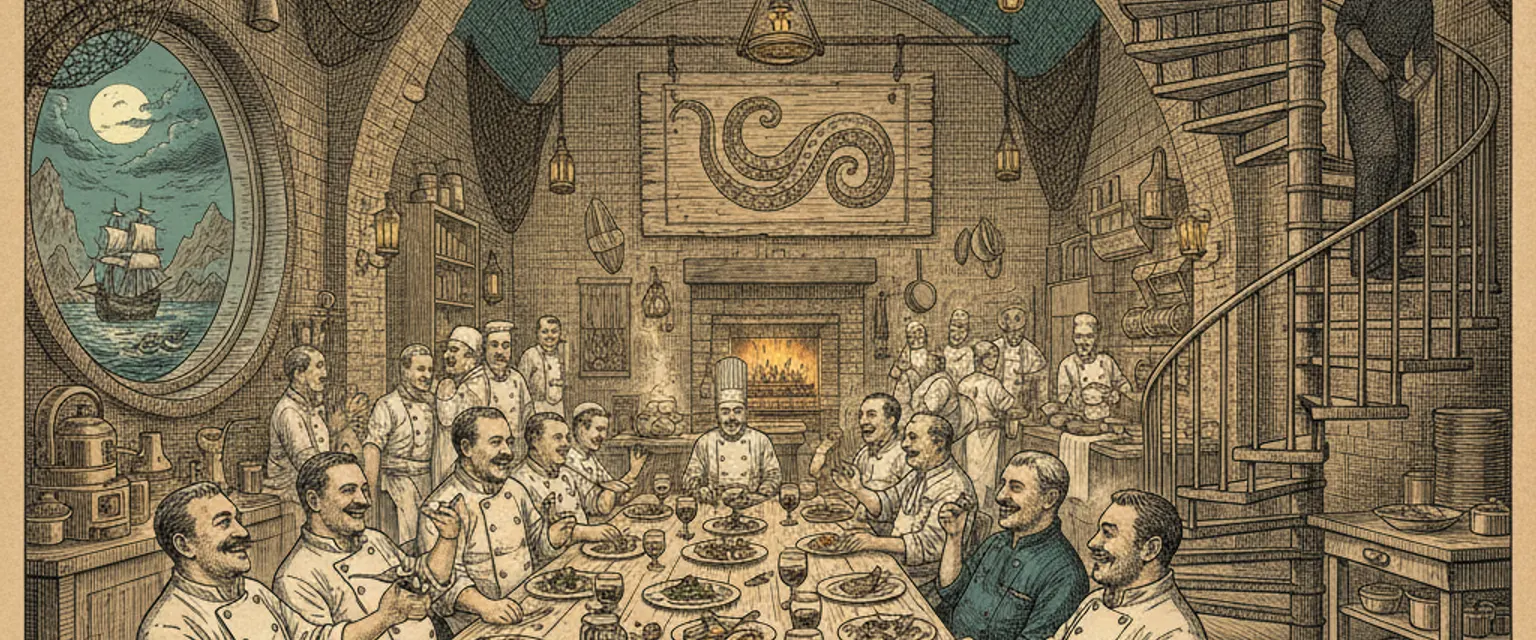
And honestly the best part isn’t even the food, though the food is the point. It’s the room. Off-duty cooks are loose, funny, a bit feral, swapping plates, arguing about technique, drinking faster than is wise on a Tuesday. You’re eating inside the actual culinary culture of a place instead of the polished version sold to visitors. You feel let in.
One more thing, and it’s a small kindness that pays off. When you do land in one of these places, behave like a guest, not a reviewer. Don’t photograph everyone’s dinner, don’t ask the gruff owner forty questions mid-rush, don’t loudly announce you “found” their spot. Order well, eat with obvious pleasure, tip properly, and the room softens toward you fast. I’ve been waved into back tables, handed off-menu plates, and once poured a glass of something the owner clearly didn’t sell to strangers — all because I shut up and ate. The chefs found these places by being decent regulars. You get adopted the same way, just much, much faster.
So next trip, skip one tasting menu. Just one. Use the money and the evening to find where the people who’d have cooked it go to switch off. Look for the clogs. Ask the late-shift server with the grin. Eat the one dish they do perfectly.
You’ll definately eat better, you’ll spend less, and you’ll have a story that doesn’t start with “so we had the seven-course.”
The tasting menu is the show. The staff joint is the after-party. Always, always go to the after-party.
This article contains affiliate links marked rel="sponsored". We may earn a commission at no extra cost to you.