
[ ITINERARY · THE DISPATCH ]
The 4-Day Panama City Itinerary: A Canal, a Skyline, and a Colonial Old Town
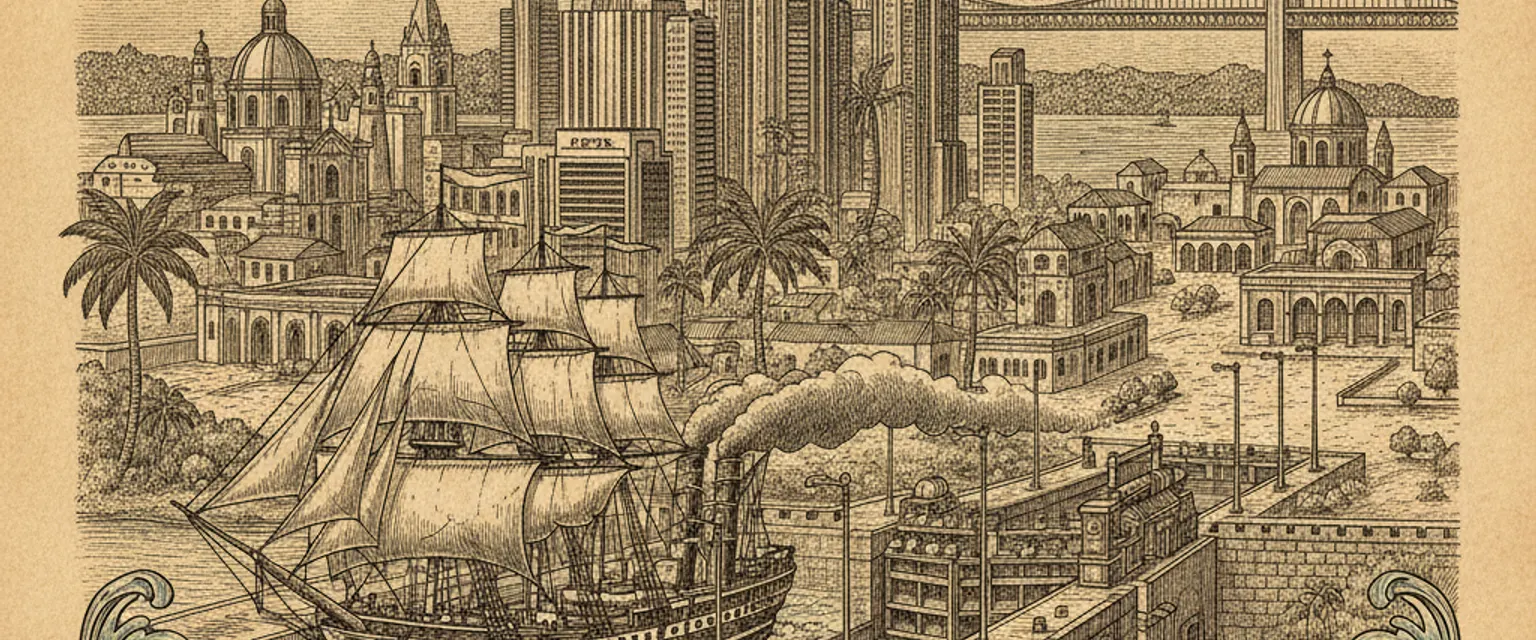
Panama City is two cities pretending to be one — a glass skyline on one side, a crumbling-gorgeous colonial quarter on the other, and one of the engineering wonders of the world in between. Four days does it justice.
The thing that gets me about Panama City — and what makes a 4 days in Panama City itinerary actually fun rather than just efficient — is how it can’t decide what it is. You’re standing in Casco Viejo, the colonial old town, in front of a 1700s church with half its roof gone, and across the water there’s a skyline of glass towers that looks like Miami had a baby with Dubai. Same city. Ten-minute drive. It’s a little dizzying and I kind of love it.
And then there’s the canal, which I’ll be honest I thought would be boring. It is not boring. Watching a ship the size of a city block get lifted by water through a hundred-year-old set of locks is genuinely one of the most quietly impressive things I’ve ever stood and gawked at. So. Four days, two cities, one wonder of the world. Let’s go.
Day 1: The canal, finally seen up close
Get the canal out of the way first because it reframes everything else. The Miraflores Locks has a visitor center with viewing decks, and the trick is timing — ships transit on a schedule that shifts, but generally late morning and mid-afternoon you’ve got the best odds of watching a big container ship actually go through. The little museum inside is decent, but the real show is leaning on that rail watching the gates close and the water do its slow, ridiculous magic.
In the afternoon, head back toward the modern city and walk the Cinta Costera, the waterfront promenade, with the skyline rising next to you and the old town visible across the bay. It’s a good way to get the lay of the land.
Dinner in the modern district — the food scene here is surprisingly international (Panama’s a crossroads, always has been). Get some seafood; the Pacific’s right there.
Day 2: Casco Viejo, the old town that steals the trip
This is my favorite day. Casco Viejo (also called Casco Antiguo) is the colonial quarter, a UNESCO site, and it’s that gorgeous mix of beautifully restored and gloriously crumbling, sometimes on the same block — one building a boutique hotel, the one next door a roofless shell with a tree growing out of it.
Just walk it. The Plaza de la Independencia with the cathedral, the Iglesia de San José and its famous golden altar (the story goes a priest painted it black to hide it from the pirate Henry Morgan, and it worked), the seawall promenade Las Bóvedas with the skyline view. There’s no rush and no single must-do — the wandering IS the thing.
Eat ceviche here. There’s a Mercado de Mariscos (fish market) at the edge of the old town where you can get a cup of fresh ceviche for a couple of dollars and eat it standing up, and it beats every fancy plate I had all week.
Day 3: Into the rainforest (yes, it’s right there)
Here’s what nobody tells you: there’s proper rainforest fifteen minutes from the skyscrapers. Soberanía National Park sits right along the canal, and you can do the Pipeline Road for birdwatching (it’s a top-notch birding spot, sloths and toucans and the lot) or take a short boat trip on Gatún Lake to see capuchin monkeys on Monkey Island.
It’s a full reset from two days of city, and the contrast — container ships gliding past actual rainforest — is so Panama it almost feels staged. Book a half-day tour or hire a driver; some of this is easier with a guide who knows where the wildlife actually is.
Back in the city for the evening, maybe a low-key dinner. You’ll be tired and a bit sunburned.
Day 4: The new canal, or the causeway
Two options for your last day, depending on your appetite.
If the canal hooked you (it’ll hook you), the Agua Clara Locks on the Caribbean side show off the 2016 expansion — the new, bigger locks built for the giant modern ships, with a slick viewing center. It’s a longer drive but you’ll see the engineering at a whole other scale.
If you’d rather take it slow, do the Amador Causeway — a flat strip of road built on canal-dredging rock that connects a few small islands to the mainland, with the Biomuseo (a wildly colorful Frank Gehry building about Panama’s natural history) at one end and bike rentals and breezy seafood spots along the way. Easy, pretty, a gentle goodbye.
Getting around and other reality
Uber works well and is cheap; use it. Cabs are fine too but agree the fare first. The city’s hot and humid year-round, so plan outdoor stuff for mornings. The currency is basically the US dollar (they call it the balboa, but it’s dollars), so no exchange headache. And Casco Viejo is where I’d stay — it’s the most charming base by a mile, even if it’s a bit pricier.
Four days here gets you the wonder, the wandering, and the wildlife without it ever feeling crammed. Panama City is underrated precisely because it’s hard to summarize — it’s a finance hub and a colonial relic and a rainforest gateway all at once, and four days is just enough to stop trying to make sense of it and just enjoy the whiplash.
See a ship cross the canal at least once. You’ll be weirdly moved. Everyone is.
This article contains affiliate links marked rel="sponsored". We may earn a commission at no extra cost to you.