
[ ITINERARY · THE DISPATCH ]
The 4-Day Hamburg Itinerary: Harbor Cranes, Reeperbahn, and Fish Sandwiches
A four-day Hamburg itinerary through the Speicherstadt warehouse district, a fish-market breakfast that starts before dawn, the Reeperbahn after dark, and the brick-and-water city that quietly outclasses Berlin.
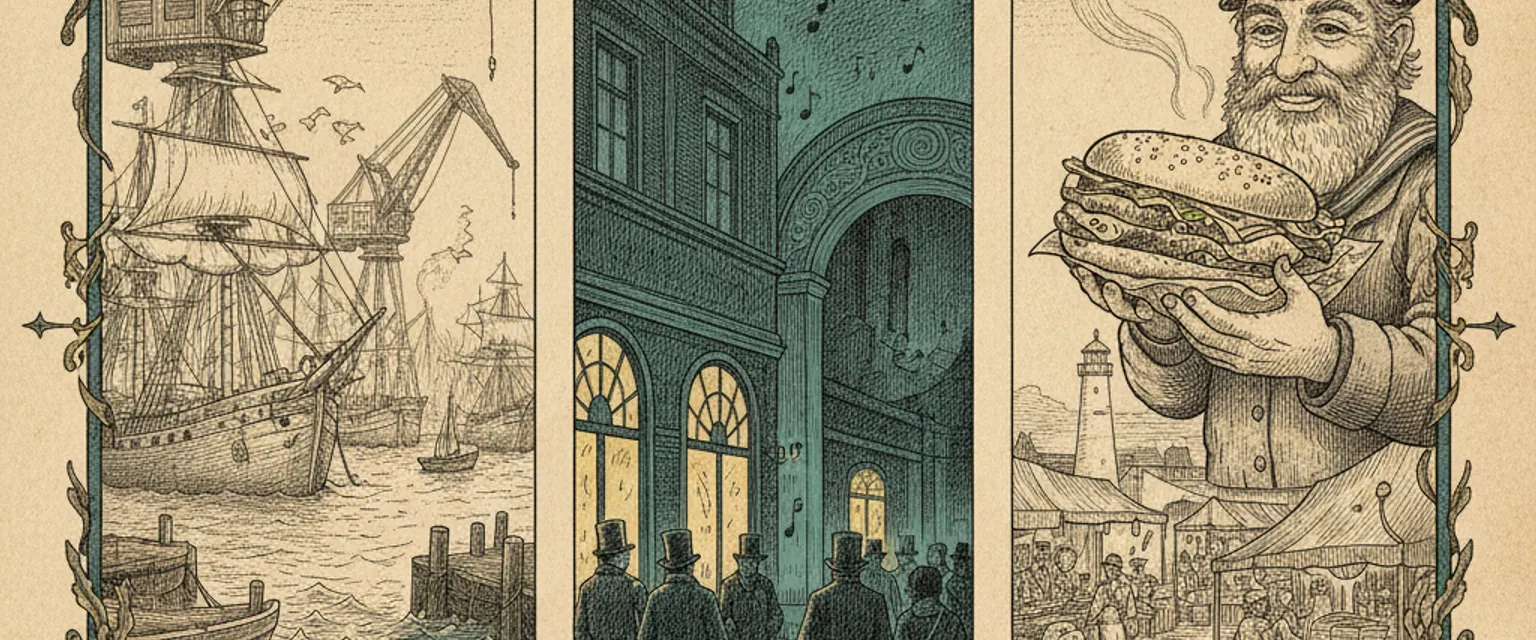
People sleep on Hamburg, and I don’t fully get why. Maybe because Berlin shouts louder. But a 4 days in Hamburg itinerary will sell you on a city of red brick and grey water, harbour cranes the size of cathedrals, and a fish sandwich culture that I now genuinely miss when I’m not there.
It’s a port city to its bones — more bridges than Venice and Amsterdam combined, they love to tell you, and honestly the number checks out. The water is everywhere. The Alster lakes in the middle, the Elbe along the south, canals threading through warehouses. And the light off all that water in the late afternoon does something to the brick that I’ve never managed to photograph properly.
Four days is right. Two and you’ll rush it. Let me walk you through it.
Day 1 — The Harbour and the Warehouse City
Get your bearings at the Landungsbrücken, the long harbour piers. From here you see the working port — container ships, dry docks, the lot. Take a HADAG ferry on line 62; it’s part of the normal public transport (so your day ticket covers it) but runs the harbour like a cheap cruise. Locals do it, tourists overpay for the official boat tours. Don’t be a tourist about it.
Then the Speicherstadt — the warehouse district, the largest in the world, all red brick on oak piles over the canals. It’s UNESCO-listed and at golden hour it’s the prettiest thing in the city. Inside you’ve got the Miniatur Wunderland (the world’s biggest model railway, and yes, grown men weep there) and the Hamburg Dungeon if that’s your thing.
Lunch is a Fischbrötchen — a fish sandwich, soft roll, raw or pickled herring or fried fish, onions, remoulade. Get it from a harbour stall, not a sit-down place. Two euros, eaten standing up, gulls eyeing you. Perfect.

Day 2 — Lakes, the Old Town, and Coffee
Slow morning around the Binnenalster and Aussenalster — the two lakes in the city centre. Locals sail, row, and jog them; you should rent a little boat or just walk the shore with a coffee. This is where you see Hamburg money, the elegant white villas along the water.
The Rathaus (town hall) is a neo-Renaissance pile with a courtyard worth a look, free to wander into. Around it is the old merchant centre, the arcades, the Chilehaus — an expressionist brick building shaped like a ship’s prow that you’ll want to photograph from the corner.
Coffee culture here is serious. The city built its wealth partly on the coffee trade and they take it personally. Find a roastery in the Speicherstadt Kaffeerösterei and have it done properly.

Day 3 — The Reeperbahn and St. Pauli
Now the loud part. The Reeperbahn, in the St. Pauli district, is the famous red-light and nightlife street — sailor bars, neon, theatres, clubs, and yes the working girls in the side streets behind the screens. The Beatles cut their teeth in clubs here in the early 60s; there’s a little square, Beatles-Platz, shaped like a vinyl record to mark it.
Daytime, St. Pauli is scruffy and brilliant — graffiti, the cult football club (their skull-and-crossbones is everywhere), cheap eats, record shops. Nighttime it goes off. Pace yourself. The trick is to start with a beer somewhere local rather than the tourist traps right on the main strip, which are overpriced and a bit grim. And keep your wallet in your front pocket.

Day 4 — The Fischmarkt and the Blankenese Escape
If it’s Sunday, set an alarm you’ll hate. The Fischmarkt runs from 5am (7am in winter) and it’s a 300-year-old institution where market criers sell fish, fruit, plants, and absolute nonsense at top volume, while a band plays in the old auction hall and people who haven’t been to bed yet drink beer next to people who got up early. It’s gloriously chaotic. Have a Fischbrötchen and a coffee and watch the whole strange ritual.
Then escape west to Blankenese, the village-within-the-city on the Elbe, where steep little lanes climb a hill above the river and the captains and merchants built their houses. You can walk down to the sandy “beach” along the Elbe and watch the giant container ships slide past, weirdly close. It’s the calm after the storm of the previous night, and a lovely way to end.
Hamburg Fast Facts
| Info | |
|---|---|
| Getting around | HVV ticket covers U-Bahn, S-Bahn, buses, and the harbour ferries |
| Budget/day | ~€90–140 mid-range |
| Best months | May–September; the harbour is bleak in deep winter |
| Free win | Elbphilharmonie Plaza viewpoint |
| Set an alarm | Fischmarkt, Sunday, 5–9:30am only |
FAQ
Is four days too many for Hamburg? No. The harbour, the lakes, St. Pauli, and the day trip to Blankenese fill it comfortably without rushing.
Is the Reeperbahn safe? Yes, busy and policed, but it’s a nightlife district — usual rules about your valuables and your drinks apply.
Do I need a car? Definitely not. Public transport and the ferries cover everything.
When’s the Fischmarkt? Sunday mornings only, early. Miss it and you’ve missed the most Hamburg thing there is.
Give Hamburg the long weekend it deserves — it’ll out-charm Berlin and barely make a fuss about it.
This article contains affiliate links marked rel="sponsored". We may earn a commission at no extra cost to you.