
[ ITINERARY · THE DISPATCH ]
The 3-Day Strasbourg Itinerary: Half-Timbered, Half-German, Fully Charming
A 3 days in Strasbourg itinerary through the most German city in France: Petite France canals, tarte flambée, a neck-breaking cathedral, and a winstub crawl.
The first thing to understand about any 3 days in Strasbourg itinerary is that you’re going to a French city that has been German roughly as often as it’s been French, and it kept the best bits of both. Sauerkraut and croissants. Riesling and red wine. Street signs in two languages, half-timbered houses leaning over canals, and a cathedral so tall you’ll genuinely hurt your neck. It’s France, but it’s wearing lederhosen under the beret. I find it completely charming and so will you.
Three days is the sweet spot. Enough for the city and one trip out into the vineyards.
Day 1: The Cathedral That Wrecks Your Neck
Walk straight to the Cathédrale Notre-Dame and just stand in front of it for a minute. It’s pink sandstone, absurdly ornate, and for a couple hundred years it was the tallest building in the entire world. Craning up at the single spire is genuinely a little disorienting — Victor Hugo called it a “gigantic and delicate marvel” and the man wasn’t wrong.
Go inside for the astronomical clock. There’s a daily show around 12:30 when the figures move; it’s old, it’s clever, and yes it’s a touch underwhelming after the build-up, but the engineering is from the 1500s so cut it some slack. Then climb the 332 steps to the platform for the rooftop view across the red-tiled old town to the Black Forest in Germany. On a clear day you can see another country from up there.
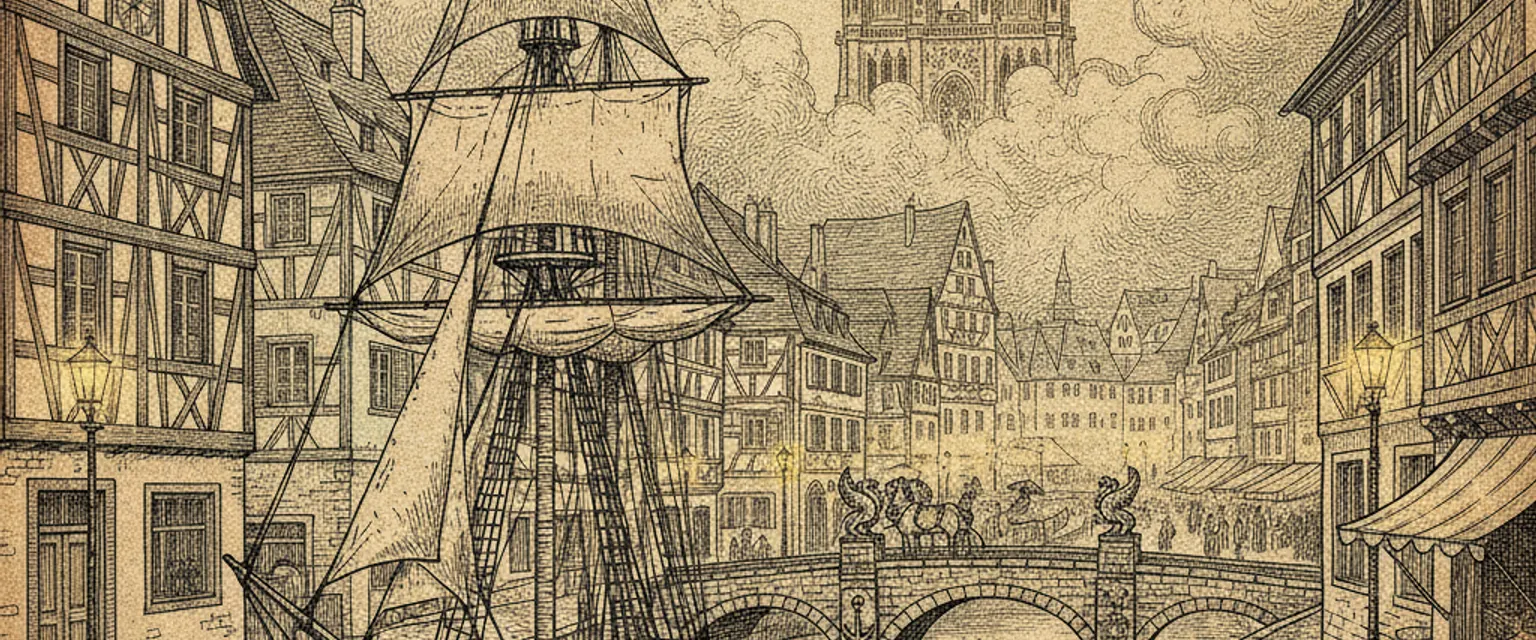
Late afternoon, wander into Petite France. This is the postcard quarter — the old tanners’ district, where crooked timber houses with steep roofs lean over the canals of the river Ill. The roofs are steep on purpose; the tanners dried their hides up in the open lofts. Go at dusk when the lights come on and it reflects in the water and it’s almost too pretty. Almost.
Dinner: tarte flambée (or flammekueche in the local Alsatian). It’s a wafer-thin tart, like a pizza’s elegant cousin, topped with crème fraîche, onion, and lardons, cooked fast in a hot oven. Get the traditional one first, then maybe a sweet apple-and-cinnamon one for pudding. They’re cheap and you’ll want three.
Day 2: On the Water and Into the Neustadt
Morning: a boat tour on the Ill. The river loops the whole old island, so a flat-bottomed boat shows you Petite France, the cathedral, the old customs house and the EU buildings all in about 70 minutes. Touristy? Sure. But it’s a genuinely good way to read the city’s layout, and you sit down, which after day one your feet will appreciate.
Then cross into the Neustadt, the “new town” the Germans built when they ran the place from 1871 to 1918. It’s a totally different vibe — wide imperial boulevards, grand stone buildings, a whiff of Berlin. It’s a UNESCO site now and almost nobody visits it because they’re all back in the cute timber bit. Their loss. The contrast between the fairy-tale old town and this muscular German grandeur is the whole story of Strasbourg in two neighbourhoods.
Dinner in a winstub — the traditional Alsatian wine tavern, cosy, wood-panelled, a bit clubby. Order the choucroute garnie (sauerkraut piled with sausages and pork, deeply German) and a bottle of dry Alsace Riesling or a Pinot Gris. Chez Yvonne is the famous one; it’s a institution and slightly touristy now but the food holds up. Go hungry. Leave wider.
Day 3: Markets, Vines, or the EU
Three options for your last day, pick by mood.
Food and slow morning: hit the Marché Couvert or the open market on Boulevard de la Marne, graze on Munster cheese (smells like feet, tastes like heaven) and Alsatian charcuterie, then a lazy coffee.
The day trip: Strasbourg sits at the top of the Alsace Wine Route, and villages like Obernai, Riquewihr and Eguisheim are a short train-and-bus or a rental car away. They’re storybook — flowery, half-timbered, surrounded by vines — and you can taste Riesling and Gewürztraminer right where it’s grown. Riquewihr is the prettiest and the busiest; Eguisheim is quieter and I liked it more.
The brainy one: the European Quarter, where the European Parliament and Council of Europe sit. You can tour the Parliament free (book ahead, bring ID). Strange to think this canal-and-stork town is one of the capitals of a continent. But that’s Strasbourg — it’s spent its whole history being the place where two big things meet, so it makes sense the EU planted a flag here.
Three days in and you’ll have stopped trying to file Strasbourg as French or German and just accepted it’s gloriously both, and a bit of its own thing besides.
Eat the tarte flambée, drink the Riesling, look up at that ridiculous spire until your neck complains. Then book the trains back early — you’ll already be plotting a return for the Christmas markets.
This article contains affiliate links marked rel="sponsored". We may earn a commission at no extra cost to you.