
[ ITINERARY · THE DISPATCH ]
The 3-Day Palermo Itinerary: Markets, Mosaics, and Magnificent Chaos
Palermo is loud, scuffed, gorgeous, and a little unhinged. It also has gold mosaics that'll knock the wind out of you and the best street food in Italy. Three days, done properly.
A 3 days in Palermo itinerary for people who like their cities a little feral
Let me set expectations. Palermo is not a tidy city. It’s scuffed and graffitied and the traffic obeys no known law of physics. The first time I crossed Via Maqueda I genuinely thought I might die. (You don’t. You just walk slowly and with total commitment, and the scooters flow around you like water.)
And it is one of my favourite places in Italy, full stop. Because under the grime is Norman-Arab-Byzantine architecture so beautiful it makes you angry, and street food so good you’ll plan your whole day around it, and a population that argues, sings, and feeds you with equal intensity. Three days. Eat everything. Here’s the plan.
Day 1: Markets and gold
Start in the Ballarò market, the city’s oldest, best done mid-morning when the vendors are in full throat. This isn’t a polished farmers’-market thing — it’s tarps and yelling and whole swordfish heads staring at you and a guy grilling something over a barrel. Eat as you go. Arancine (Palermo says arancine, with an e, and will fight Catania about it), panelle (chickpea fritters in a roll), and if you’re brave, pane ca’ meusa — a spleen sandwich that’s far better than that sentence makes it sound.
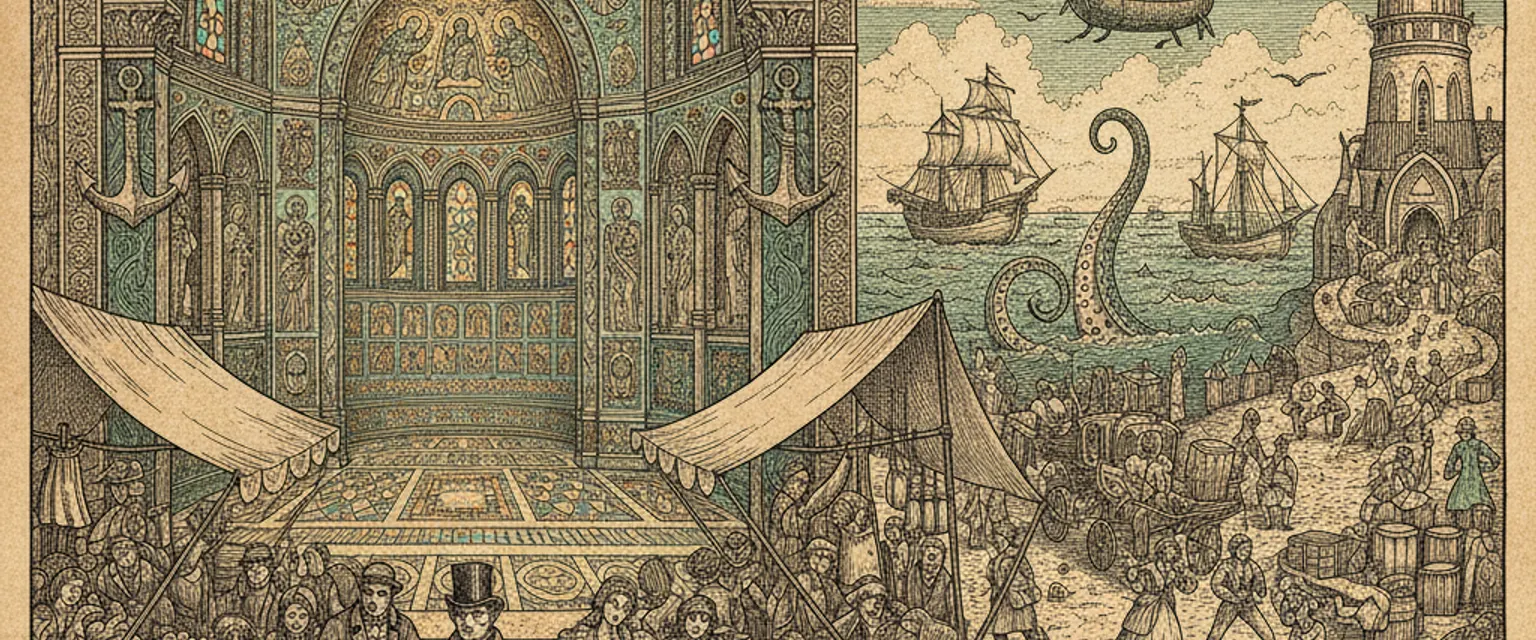
Then, fully fed, walk to the Palazzo dei Normanni and the Cappella Palatina inside it. Buy the ticket, climb up, and walk into a small room where every inch of the upper walls is Byzantine gold mosaic — Christ, saints, palm trees, a wooden Arab honeycomb ceiling on top. It glows. I stood there with my mouth open and I wasn’t the only one.
Afternoon: the Quattro Canti (the baroque crossroads), the gorgeous Fontana Pretoria (locally nicknamed the Fountain of Shame for all the nudes), and the wild rooftop of San Cataldo with its three red domes. Dinner near the Vucciria, the market that turns into a rowdy open-air bar at night.
Day 2: Monreale and the sea
Take bus 389 from Piazza Indipendenza up to Monreale (about 30–40 minutes, a couple of euros). The cathedral there has even more mosaic than the Cappella Palatina — the entire interior, acres of gold, including a Christ Pantocrator above the altar so huge and direct it feels like being looked at. Pay the little extra to climb to the rooftop terraces; the cloister next door, with its 228 carved columns, is the kind of place you sit in and stop talking.
Back in the city, nap or wander, then head out to Mondello (bus 806) for a late-afternoon swim or just a walk on the sand, ending with an Aperol somewhere on the front as the light goes pink. Mondello’s seafood places can be touristy, so eat back in town.
If the beach isn’t your thing, swap Mondello for the Teatro Massimo — the third-largest opera house in Europe, the one from the end of The Godfather Part III, where Michael Corleone watches his daughter die on the steps. You can tour the inside for around 12 euros, and if there’s a performance on, even a cheap upper-tier seat is a wild way to spend an evening in a city this rough around the edges. There’s a lovely contradiction in Palermo that you feel here especially: the same streets that smell of fish guts and exhaust also hold this gilded, hushed, ridiculously grand opera house, and nobody seems to find that strange. The first time I came out of the Massimo into the warm chaos of a Friday night, with the Vucciria already roaring two blocks over, I thought: this is the most Palermo thing possible. Beauty and bedlam, holding hands.
| Day | Morning | Afternoon | Evening |
|---|---|---|---|
| 1 | Ballarò market + street food | Cappella Palatina | Vucciria nightlife |
| 2 | Monreale mosaics | Mondello beach | Seafood dinner |
| 3 | Catacombs | Long lunch + Kalsa | Last aperitivo |
Day 3: The Catacombs and a slow goodbye
The Catacombe dei Cappuccini are not for everyone. Thousands of mummified Palermitani, dressed in their best, hung along the corridors. It is genuinely unsettling and oddly moving and I think about it more than I’d like. If that’s too much, swap it for the Galleria Regionale in the Palazzo Abatellis, which holds a famous fresco of Death on a galloping horse — so, no real escape from mortality in this city.
Spend your last afternoon in the Kalsa, the old Arab quarter that’s slowly gentrifying but still raw at the edges, and have a final long lunch. Order pasta con le sarde — pasta with sardines, wild fennel, raisins, and pine nuts, a dish that tastes like the whole island’s history in one fork. Then cannoli, filled to order (never pre-filled, never), and a strong coffee, and you’re done.
Two honest warnings. Pickpockets work the crowded markets, so keep your bag in front and don’t flash your phone. And the heat in high summer is punishing — Palermo in August is for the brave only; spring and autumn are far kinder, and the the markets are just as loud.
But that chaos is the whole point. Palermo doesn’t tidy itself up for you. It hands you a spleen sandwich, points at a thousand-year-old gold ceiling, and dares you not to love it. I couldn’t.
Come hungry, leave a little wrecked, and start planning the trip back before you’ve even left.
This article contains affiliate links marked rel="sponsored". We may earn a commission at no extra cost to you.