
[ GUIDE · THE DISPATCH ]
Marrakech by Neighborhood: Medina Madness vs. Gueliz Modern Calm
Marrakech neighborhoods and where to stay, decoded: riad-in-the-souk Medina intensity against Gueliz's new-town calm. Honest pros, cons, prices, and who each suits.
If you’re trying to choose Marrakech neighborhoods and figure out where to stay, it really comes down to two worlds: the Medina and Gueliz. One is a thousand-year-old maze of pink walls, souks, and riads where you’ll get gloriously, repeatedly lost. The other is the French-built new town with wide streets, espresso, and hotels that have actual elevators. I’ve stayed in both, more than once. Here’s the honest breakdown.

The Medina: beautiful, intense, completely overwhelming
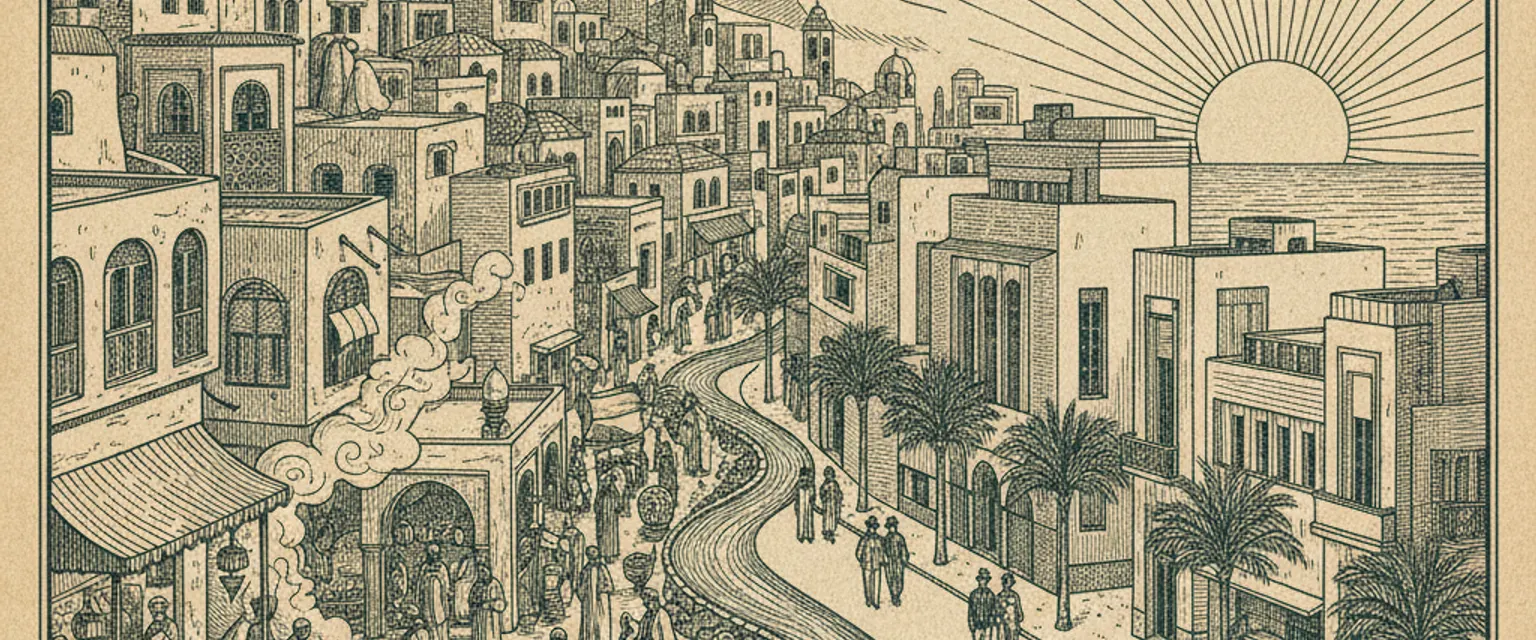
The Medina is the walled old city, and it is the reason you came. No cars in most of it (mopeds, though — watch the mopeds, they appear from nowhere). Narrow alleys that twist back on themselves. Souks selling lanterns, leather, spices in conical mountains, rugs you didn’t plan to buy. And at the centre, Jemaa el-Fnaa, the great square that turns into a smoke-and-snake-charmer carnival every single night.
You stay in a riad — a traditional house built inward around a courtyard, often with a plunge pool and a roof terrace. From the alley it’s a battered wooden door. Inside it’s tilework, citrus trees, and a calm so total it doesn’t seem possible given the chaos three steps away. That contrast is the whole magic of it.
Who it’s for: first-timers, romantics, anyone who wants Marrakech to grab them by the collar. You’re inside it the moment you step out the door.
The trade-offs: it’s loud, it’s a sensory assault, and the navigation will break you a little. You will get lost. Kids will offer to “guide” you for a tip and sometimes lead you the wrong way on purpose. And cars can’t reach most riads, so you’ll arrange a porter with a cart for your luggage, which is charming the first time and mildly stressful the second. Riads run a huge range — RM… sorry, I mean roughly €50 for a simple one up to several hundred for the gorgeous ones.

Gueliz: the calm, modern, slightly unromantic one
Gueliz is the ville nouvelle, built by the French, and it could be a different city. Wide boulevards, traffic lights, pavement cafes, art galleries, a tram-flat grid you can actually navigate, and modern hotels with proper rooms and big pools. It’s where well-off locals shop and sip coffee and live more or less normal lives.
Who it’s for: repeat visitors, families, anyone who finds the Medina exhausting (no shame — it is), and travellers who want a base that gives them space to breathe. After a day getting hustled in the souk, retreating to a quiet Gueliz terrace with a mint tea is genuinely restorative.
The trade-offs: it’s not “Marrakech” in the postcard sense. You’re a ten-minute taxi or a longish walk from Jemaa el-Fnaa, so the magic isn’t on your doorstep — you commute to it. And it can feel a bit anonymous, a bit any-city. Hotels are better value for comfort though, and you’ll often get more room and a bigger pool for your money than a riad gives.

So which one
Here’s how I’d call it. The Medina is the experience; Gueliz is the comfort. They’re a short cheap taxi apart, so you’re never truly cut off from either.
Pick the Medina if it’s your first time and you want to be swallowed whole by the place — the riad courtyards alone are worth it, and waking up inside the old city is something you don’t forget. Pick Gueliz if you’ve done Marrakech before, if you’re travelling with kids or with someone who wilts in crowds, or if you just know yourself well enough to want an off-switch once the sun drops.
My actual advice, if you can swing it? Split your stay. Two or three nights in a Medina riad to drink in the chaos, then move to a Gueliz hotel to recover by a pool. Best of both, and it stops the Medina from tipping over from “magical” into “I need to lie down in a dark room.”
A few practical notes that apply wherever you sleep. Money: carry small dirham notes, because nobody in the souk has change for a big bill and “I have no change” is also a soft negotiating tactic. Haggling is expected and meant to be friendly — start at maybe a third of the first price, smile through it, and walk away if it stalls (you’ll often get called back). And tipping is woven through everything; a few coins for the porter, the cafe, the man who “helped” you find a door you didn’t need help finding.
Getting around: petit taxis (the small beige ones) are cheap but insist on the meter or agree the fare before you get in, or you’ll pay the tourist rate. From the airport, settle the price first — it’s a fixed-ish run and drivers know it. And if you’re in the Medina, just accept that you’ll walk; cars can’t follow you down most of those lanes anyway, which is half the charm and all of the navigation problem.
And whatever you choose — learn to say no warmly and keep walking. The hustle is part of the city’s texture, not a personal attack. Smile, “la shukran” (no thanks), keep moving. You’ll find your rhythm by day two.
First trip? Lose yourself in the Medina and book a riad. Just don’t trust the blue dot — and don’t say I didn’t warn you about the mopeds.
This article contains affiliate links marked rel="sponsored". We may earn a commission at no extra cost to you.