
[ DISCOVERY · THE DISPATCH ]
Madagascar Has a Forest of Stone Needles So Sharp You Need Harnesses to Cross
I clipped into a harness, edged across a wobbling cable bridge, and looked down at a forest made of knives. The Tsingy de Bemaraha is the strangest place I've ever walked. Here's how to actually reach it.
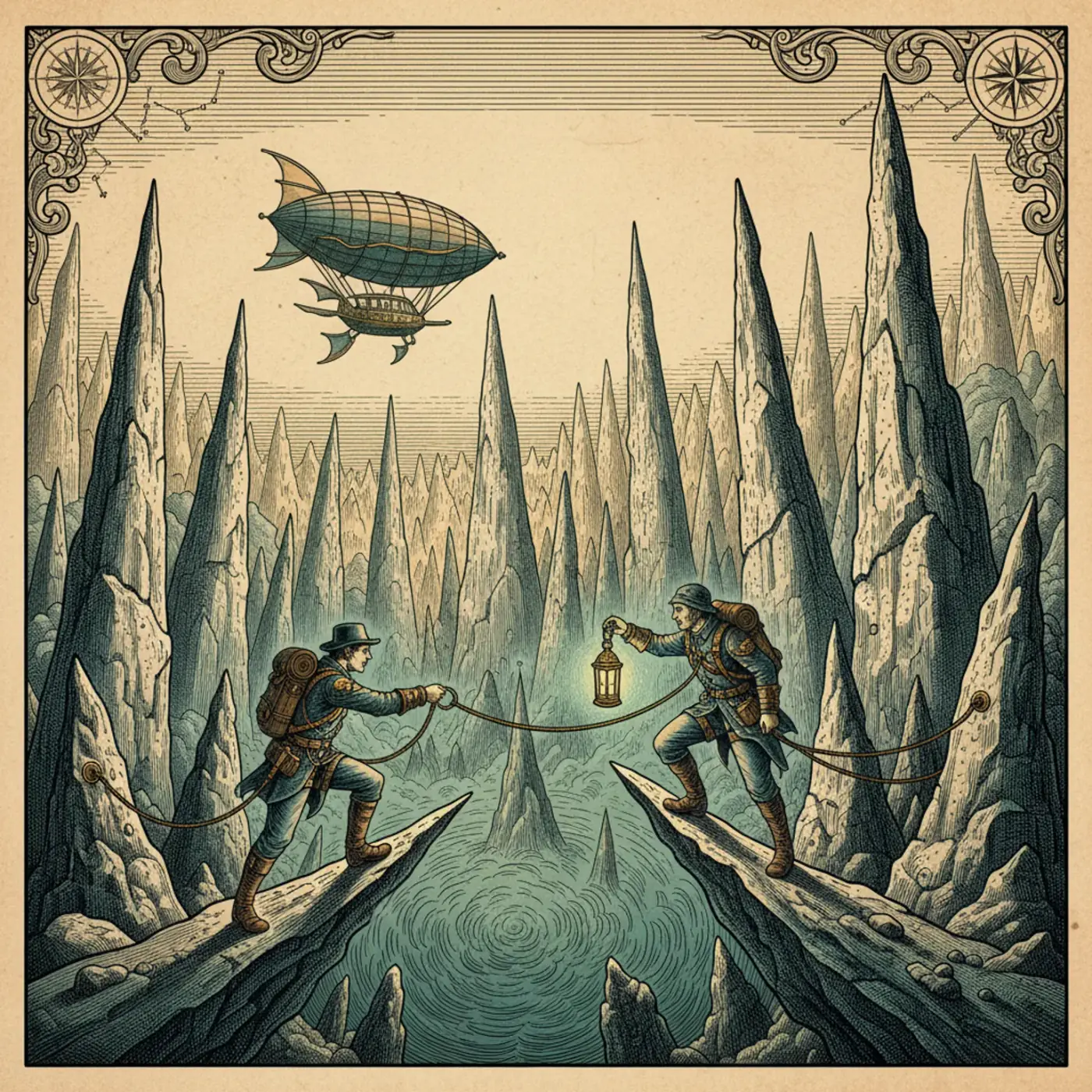
The Tsingy de Bemaraha in Madagascar is the only landscape I’ve ever stood in front of and genuinely struggled to file under “rock” — it looks more like a city built by something insectoid. Thousands of grey limestone spires, packed shoulder to shoulder, every single one weathered to an edge sharp enough to flay you. The word “tsingy” in Malagasy roughly means “where you cannot walk barefoot.” Brutal. Accurate.
You don’t hike this place so much as climb through it. They put you in a harness, clip you to a via ferrata cable, and you pick your way up between the needles and across suspension bridges strung over drops that go down further than you want to know. I am not great with heights. I went anyway. Best decision of that whole trip.

So what actually is it
Picture a slab of ancient seabed limestone. Now picture a few million years of monsoon rain dissolving it from the top down, carving vertical grooves until the whole plateau is sliced into these freestanding blades. That’s the tsingy. A “karst” formation, technically, but no textbook word prepares you for cresting a ridge and seeing a whole horizon of stone fangs.
And in the gaps between the needles — this is the bit that got me — there’s a hidden forest. Lemurs live down in the shaded canyons. Deciduous trees and weird endemic plants cling to ledges. You’re crossing the top of an ecosystem most people will never see, partly because almost nobody comes here. Madagascar is the wildlife frontier that’s been about to “have its moment” for years, and the tsingy is its strangest postcard.
The journey is no joke
I’ll be straight with you. This is not an easy place to reach, and pretending otherwise does you a disservice. You start in Morondava, on the west coast — which itself is a flight or a long haul from the capital, Antananarivo. From Morondava it’s a punishing drive, typically broken over two days, on dirt tracks with two river ferries (rickety wooden barges, very much part of the adventure). You’ll pass the famous Avenue of the Baobabs on the way, which softens the blow considerably.
You absolutely need a 4x4 and a driver who’s done it. And you can only do any of this in the dry season, roughly May through November. The rest of the year the roads turn to soup and the parks close. Show up in February and you’ll get nowhere, full stop.
On the rock itself
A licensed local guide is required, and honestly thank god, because they rig your gear and know exactly which gap leads where. Mine was a softly spoken guy named Tovo who’d been guiding the Grands Tsingy for over a decade and moved across the rock like he was on a sidewalk while I clung to every cable like my life depended on it. Which, to be fair, it sort of did.
There are a few circuits at different difficulty levels. The Petits Tsingy is gentler, more of a walk. The Grands Tsingy is the proper one — ladders bolted to rock faces, narrow chimneys you squeeze up through, and then that payoff: you haul yourself out onto a viewpoint and the entire stone forest unrolls below you, silver-grey and endless, with a cable bridge swaying gently across a chasm. I stood there for ages. Nobody else around. Just wind and the click of my own carabiner.
A waiter back in Morondava had told me, when I said where I was headed, “ah, the tsingy — you will be afraid, and then you will be happy.” That’s exactly the order it happened in.
Real talk before you book
Bring gloves. Cheap gardening ones are fine — you grab the rock constantly and it will shred bare hands. Long trousers, closed shoes with grip, water, more water. It gets properly hot.
Don’t underestimate the time. With the drive, the ferries, the two circuits, you want at least four or five days out and back from Morondava, more if you want to linger at the baobabs (you will).
And go now-ish. Madagascar’s infrastructure is slowly improving and the tsingy is on more and more lists. Right now you can still get a UNESCO World Heritage site of frankly alien beauty almost to yourself. That window won’t stay open forever. Few do.
The thing I keep coming back to is the silence up there. No engines, no chatter, no phone signal. Just you, clipped to a wire, balanced between two blades of ancient sea, looking at something that took millions of years and absolutely did not make it for you.
If you’ve got the time and the legs for it, the Tsingy de Bemaraha is the wildest, sharpest, most alien place I’ve put my boots on — go before everyone else figures Madagascar out.
This article contains affiliate links marked rel="sponsored". We may earn a commission at no extra cost to you.