
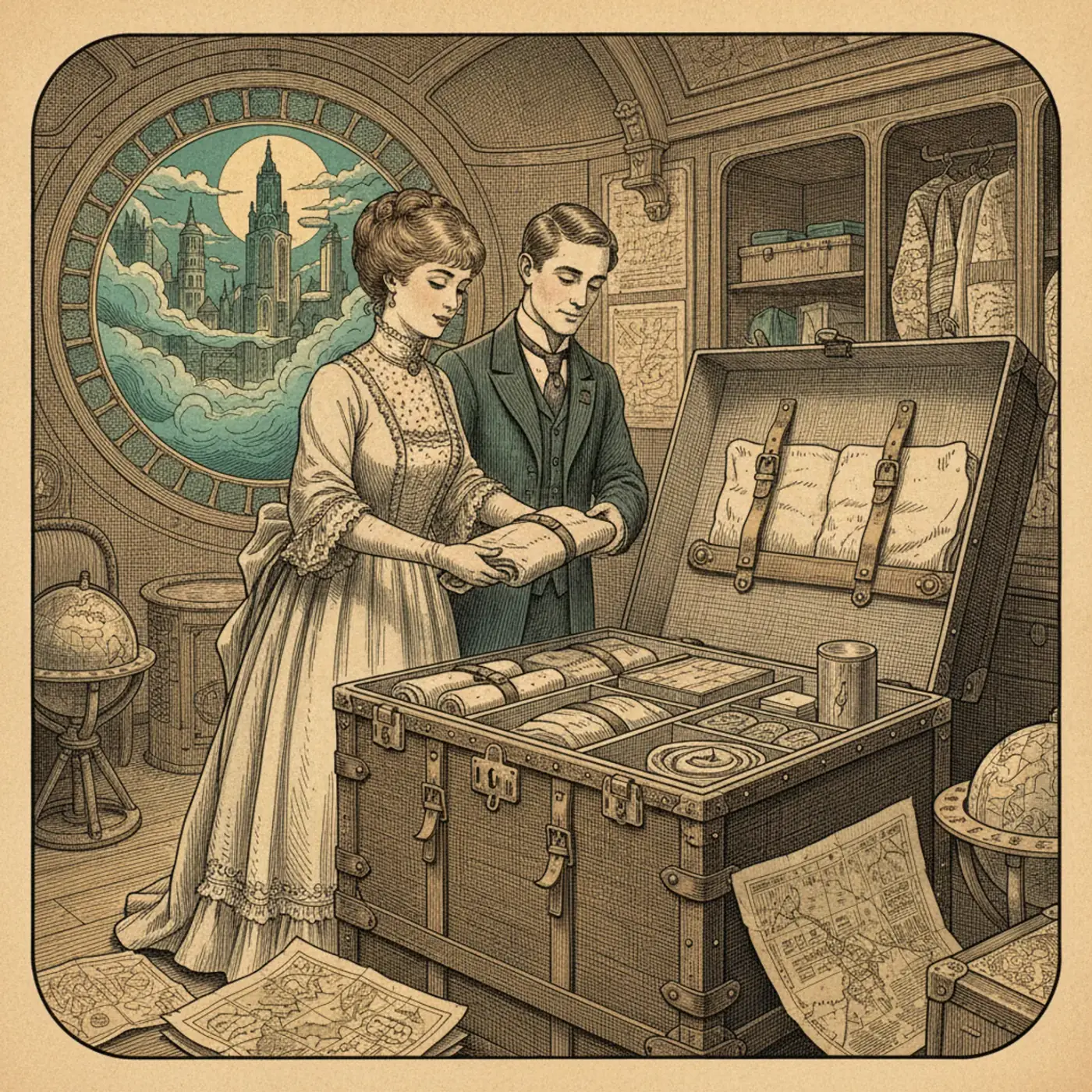
[ TIPS · THE DISPATCH ]
How to Pack a Suit or Dress So It Survives the Trip Without an Iron
I've turned up to a wedding looking like I'd been folded into the overhead bin myself. Never again. Here's how to pack a suit without wrinkles using the bundle wrap and the shower-steam trick — no iron, no garment bag, no panic.
If you’ve ever needed to know how to pack a suit without wrinkles at 11pm the night before a wedding, with no iron in the Airbnb and a partner asking why you packed it “like that,” this one’s for you. I’ve been that person. Crumpled, sweating, googling “can you iron a suit with a hairdryer.” (You sort of can. It’s grim.) Let me save you the grief.
The short version: stop folding things into squares, start wrapping them into one soft bundle, and let a hot shower do the ironing. That’s it. The long version has the details that actually make it work.

Why folding wrecks formalwear
A crease happens where fabric folds sharply against itself and then sits under pressure for hours. The sharper the fold and the longer the pressure, the deeper the wrinkle. When you fold a jacket in quarters and stack books — sorry, clothes — on top, you’re basically pressing creases in on purpose. Wool springs back a bit. Cotton and linen do not forgive you. Linen, frankly, wrinkles if you look at it sternly, so we’ll come back to that.
The fix is to never give the fabric a sharp fold to begin with. Which is what bundle wrapping does.

The bundle wrap, step by step
This sounds fiddly. It’s two minutes once you’ve done it once. The idea: build a soft core in the middle and wrap each garment around it in big, gentle curves, so nothing ever folds sharp.
- Make the core. Roll up your soft stuff — t-shirts, socks, underwear, a packing pouch — into a pillow about the size of a loaf of bread. Put it in the centre of your bag.
- Lay the most wrinkle-prone, biggest item down first, flat, draped over the bag with the sleeves and ends hanging off the edges. For a dress, lay it full length. For trousers, lay them long.
- Lay the next item across, in a different direction. Then the next. You’re building a star.
- Now fold each hanging end back over the core, one at a time, wrapping snug around that soft pillow. Every item curves around the core instead of folding flat.
When you’re done it’s one fat, smooth bundle with no hard edges anywhere. Creases have nowhere to form. I was sceptical the first time and then genuinely impressed — a cotton dress that would normally come out a disaster came out basically ready to wear.

The one fold a suit jacket forgives
Sometimes you can’t bundle a structured suit jacket — it’s too stiff, and a garment bag isn’t always practical for a carry-on. There’s exactly one fold that doesn’t betray you, and tailors use it.
Turn the jacket inside out from the shoulders. Reach inside one shoulder and pull it through, then tuck the other shoulder into it so the two shoulders nest together, lining now facing out. The padded shoulders protect each other and the outer fabric is on the inside, cushioned. Now fold it once at the waist, gently, and lay it flat on top of everything — never at the bottom. The shoulders are the part that shows wrinkles worst at an event, and this keeps them pristine.
For dress trousers, lay them flat and fold once at the knee, then drape them over the bundle so the crease line runs straight. Don’t fold them into thirds. The leg crease is the only crease you want, so don’t add competition.
Linen, and other lost causes
Linen will wrinkle. Accept it. The look is meant to be a little relaxed, so a few soft creases read as intentional. What you don’t want are the hard square fold-lines from a suitcase. Bundle wrap it on the outside layer, hang it the second you arrive, and let gravity pull the worst out overnight. Don’t fight linen. Negotiate.
Silk dresses: pack with tissue paper between layers if you have it, or a thin cotton t-shirt. The tissue stops the silk from creasing against itself. Hotels sometimes leave it from the laundry — ask.

The shower-steam trick that replaces the iron
This is the move that’s saved me more times than any product. You arrive, your suit or dress has a wrinkle or two despite your best efforts. No iron, or you don’t trust the scorched one bolted to the wall.
Hang the garment in the bathroom — on the back of the door, the curtain rail, the towel hook, wherever’s clear of the spray. Turn the shower on as hot as it goes, shut the door, and leave the room for 15 minutes. Come back to a sauna and a garment that’s relaxed most of its wrinkles. The steam loosens the fibres and gravity does the pulling. Give it a gentle tug downward while it’s warm and damp, hang it somewhere airy, and by the time you’re dressed it’s good.
So no, you don’t need the iron. You need a soft core, a few gentle wraps, the inside-out shoulder fold, and a hot shower. Do that and you walk into the wedding looking like you brought a valet, not like you brought a wrinkled apology.
Bundle it, nest the shoulders, steam out the rest in the bathroom — and let everyone else be the one tugging at their lapels in the photos.
This article contains affiliate links marked rel="sponsored". We may earn a commission at no extra cost to you.