
[ ITINERARY · THE DISPATCH ]
Five Days in Havana: Cars Older Than Your Parents, Rum Older Than Both
Havana is a city of impossible beauty and complicated logistics where a 1957 Chevrolet will take you across town for $5, a mojito costs $2, and everything else requires a certain tolerance for improvisation.
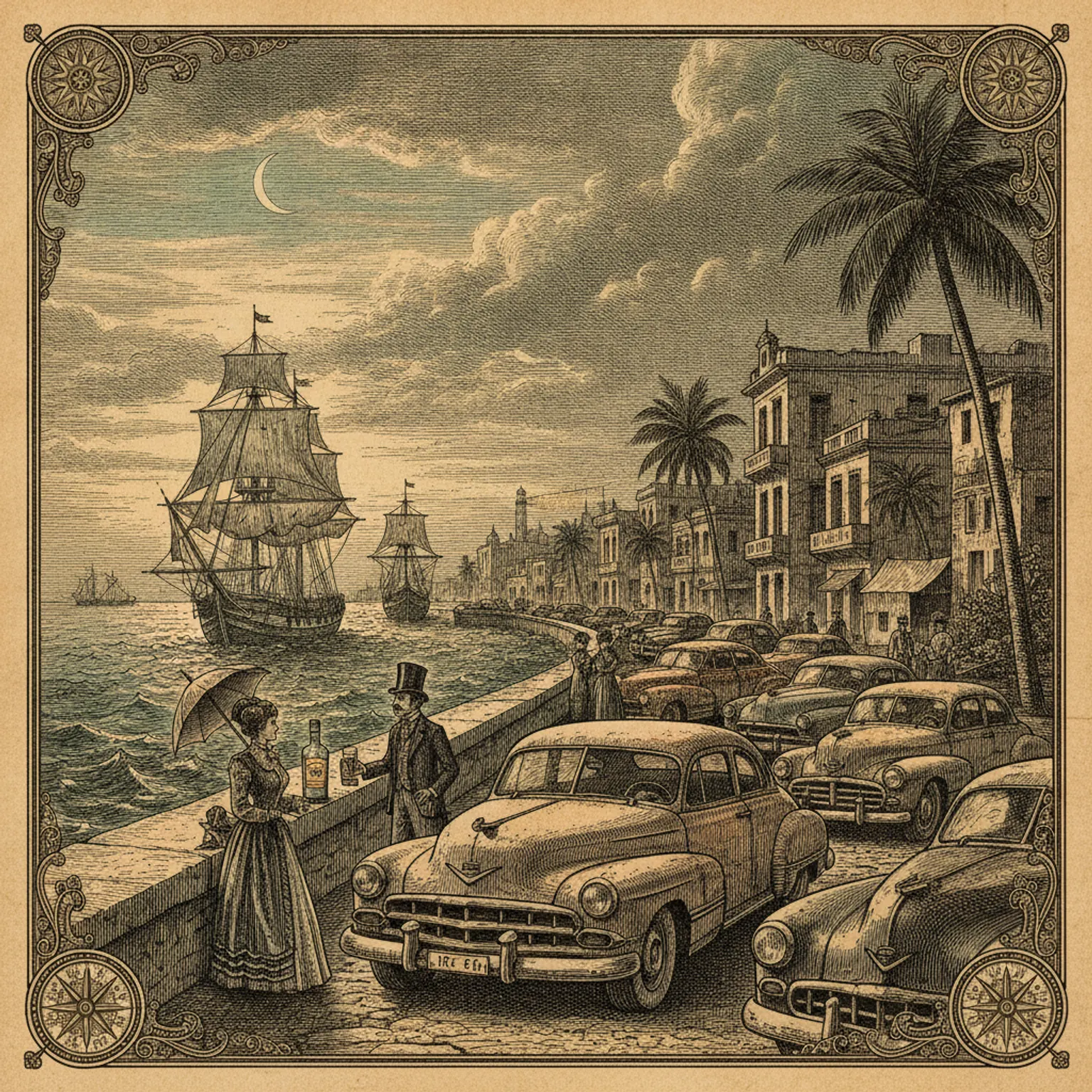
My taxi from Havana airport was a 1955 Buick Special the colour of a swimming pool, driven by a man named Orlando who played salsa from a phone duct-taped to the dashboard and offered me a rum from a flask he kept in the glove compartment before we’d left the airport road. I was in Cuba for approximately eleven minutes at this point. I accepted the rum. This was clearly the correct decision.
Havana is not like anywhere else you have been or will go. It operates on its own logic, its own timeline, and its own currency system (bring cash — your credit cards don’t work here). In exchange for accepting these terms, it offers you one of the most beautiful, chaotic, photogenic, and genuinely moving cities on earth.
Day 1: Old Havana on Foot
La Habana Vieja (Old Havana) is a UNESCO World Heritage Site and the most concentrated collection of Spanish colonial architecture in the Americas. Start at Plaza de la Catedral — the Cathedral of the Virgin Mary, completed in 1777 — and walk south through the plazas: Plaza de Armas (secondhand booksellers, a bust of Columbus, the 18th-century Castillo de la Real Fuerza fortress), Plaza de San Francisco de Asís (a former convent, now a concert hall), and Plaza Vieja (the most photographed, with its painted buildings and rooftop bar at Cámara Oscura).
Walk the Malecón at sunset — the 8-kilometre seawall promenade where all of Havana comes to sit, talk, fish, drink, and watch the waves. It is crumbling and magnificent and you will take many photos of it that fail to capture the experience.
First dinner: La Guarida in Centro Habana — a private restaurant (paladar) on the third floor of a crumbling mansion, famous enough to have hosted Beyoncé, still excellent, must-book.
Day 2: Vedado, Rum, and Live Music
Vedado is the residential and commercial district from the 1950s boom — Art Deco apartment buildings, wide boulevards, the Hotel Nacional (former playground of mobsters and film stars, still excellent for a daiquiri on the terrace). The Necropolis Cristóbal Colón is one of Latin America’s great cemeteries: ornate 19th-century mausoleums, a map of power and history, and the tomb of La Milagrosa — a woman whose grave gets daily flowers and is believed to grant miracles.
Fábrica de Arte Cubano: a converted vegetable oil factory now operating as Havana’s premier contemporary arts and music venue, open Thursday–Sunday evenings. Multiple rooms, multiple performances simultaneously, a queue that starts at 9 p.m. Worth every minute of the wait.
Museum: Museo del Ron (rum museum) offers a tour of Cuban rum production history plus a tasting. The context helps you enjoy the mojitos more intentionally.
Day 3: Day Trip to Viñales Valley
Two and a half hours west by car (hire a taxi — expect to negotiate, budget $50–60 each way for a classic car) brings you to the Viñales Valley, a UNESCO-listed landscape of mogotes — dramatic limestone karst hills rising from flat tobacco fields. Rent a horse or a bicycle at the village and ride through the tobacco country; visit a veguero (tobacco farmer) who will roll a cigar in front of you and then sell it at a price that is either very reasonable or a tourist premium depending entirely on your negotiating confidence.
Lunch at any of the village paladares. Return to Havana by early evening; you’ve earned a Havana Club 7-year at the Bar Dos Hermanos on the harbour.
Day 4: Slower Havana
A slower day for the things you’ve missed: the Museo Nacional de Bellas Artes (Cuban art collection is extraordinary, the international collection is merely good — focus on the Cuban building); the Capitolio Nacional, a 1929 state capitol that is Cuba’s answer to Washington D.C. and currently under restoration; and the Floridita bar at the corner of Obispo — touristy, yes, but also genuinely Ernest Hemingway’s regular haunt and the birthplace of the daiquiri as a refined drink rather than a blended travesty.
Evening: find live music. Every hotel lobby has some; Casa de la Música in Miramar has the real thing — Cuban bands, dancing, an energy that doesn’t translate to recording.

Day 5: Trinidad Day Trip or Departure
If your flight departs late, Trinidad (3–4 hours east) is a beautifully preserved colonial town with cobblestone streets, a Sugar Mill Valley, and its own music scene. An early start and late return is doable but tiring.
Otherwise: a slow final morning on the Malecón, shopping for rum and cigars (the Casa del Habano on Mercaderes is the most reliable for quality), and the bittersweet logistics of leaving.
Havana logistics everyone gets wrong
| Issue | Reality |
|---|---|
| Credit cards | US-issued cards don’t work; bring cash in Euros, Canadian dollars, or British pounds |
| Currency | Cuban pesos (CUP) for locals; USD/EUR accepted at tourist venues |
| WiFi | Patchy and state-controlled; buy a NAUTA card at a hotel |
| Classic car prices | $5–15 for short hops; negotiate before getting in |
| Accommodation | Casas particulares (private homestays) > state hotels on quality and character |
| Safety | Very safe by Caribbean standards; petty theft rare; hustlers (jineteros) persistent but harmless |

FAQ
Do US citizens need a special visa for Cuba? US citizens require a Cuban tourist card (tarjeta del turista) and technically need to travel under one of 12 authorized categories (the most common is “Support for the Cuban people,” which covers essentially any independent travel). Check current US Treasury OFAC regulations before booking, as these have changed repeatedly.
What’s the best way to bring money? Cash. Hard currencies (EUR, GBP, CAD) can be exchanged at banks or cadecas (exchange houses). Exchange at the airport last resort; rates there are poor. Bring more than you think you need — ATMs exist but frequently don’t work or run out of cash.
Is Havana right for solo travelers? Very much so — Cubans are extraordinarily social and strangers become companions quickly, especially around music. Solo women report more piropo (street attention) than is comfortable; this is cultural but varies by neighbourhood. Vedado and Old Havana are both fine for solo evening exploration.
This article contains affiliate links marked rel="sponsored". We may earn a commission at no extra cost to you.