
[ DISCOVERY · THE DISPATCH ]
The Deserts That Flood Into Lakes Once a Decade — And I Caught One
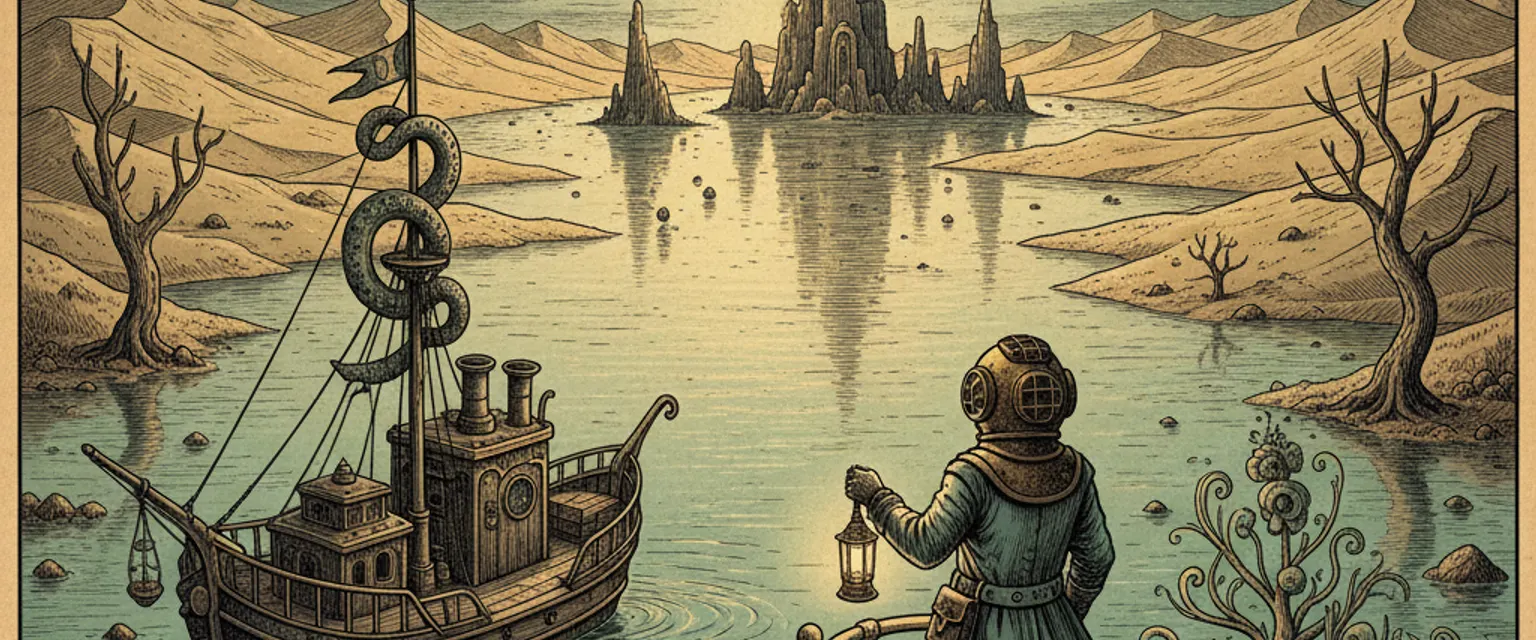
Once a decade, the driest place in Australia turns into an inland sea the size of a small country. I flew over it in a 1970s Cessna with a pilot named Trev. Here is how to catch a desert that floods.
The text from Trev came in at 6:14am: “She’s filling. Bird’s fueled. You coming or not.”
I had eleven minutes to decide whether to drive four hours from Marree to an airstrip that, on the map, is just a slightly less red patch of red. I went. Because the thing Trev was talking about — the driest, deadest, most aggressively nothing place in Australia turning into an inland sea — happens maybe three or four times a century at full strength. And it was happening that week.

The lake that isn’t a lake (until suddenly it’s the biggest one in the country)
Kati Thanda-Lake Eyre sits in the South Australian outback, about 700km north of Adelaide, in a basin so low it’s the lowest natural point on the continent. Most years it’s a blinding white salt pan you could land a plane on. Locals don’t even call it a lake. It’s a “claypan.” A “salina.” A place where, in 2019, a tourist’s thongs (Australian for flip-flops, calm down) reportedly melted to the surface.
Then, every so often, monsoon rain falls 1,000km away in Queensland. Not on the lake — nowhere near it. The water creeps south through the Channel Country, through Cooper Creek and the Diamantina, over weeks, sometimes months, and pools into this basin until it becomes a body of water bigger than some European nations. Pelicans appear. Nobody is fully sure where the pelicans come from. They just know, the way Trev knows.
When I flew over it, the salt crust hadn’t fully dissolved yet, so the flooded sections were doing this thing where the water went pink and orange and then, near the edges, a green I have genuinely never seen in nature. Trev banked the Cessna hard so I could photograph it and said, completely deadpan, “Don’t chuck up on the camera.” I did not chuck up on the camera.
William Creek: population 6, opinions per capita 4,000
The town I staged out of, William Creek, has a permanent population that fluctuates between “a few” and “Trev’s gone to Coober Pedy.” There’s one pub, the William Creek Hotel, where the walls are covered in business cards, expired licenses, and a bra I chose not to ask about. The publican poured me a beer and asked where I was from before I’d sat down, then told me the last “proper” filling was in the early 1970s and he’d “believe this one when the water’s still there at Christmas.”
This is the texture you miss if you wait for the lake to be a tidy postcard. The flood isn’t an event with a ribbon-cutting. It’s a rumor that becomes a smell (wet earth where there has never been wet earth) that becomes pelicans that becomes, finally, water. You want to be there for the rumor stage. That’s when the pilots are bored enough to actually talk to you and the photos haven’t been taken by 400 people yet.
The Wrightsair and Wabma Kadarbu flights out of William Creek will get you over the deepest filled sections. Ask specifically for the Belt Bay and Jackboot Bay areas if the inflow is coming through the Warburton Groove — that’s where the color does the most.

The other one: where the sky lands on the ground
If you can’t get to outback Australia on a decade’s notice, there’s a second-best that’s almost a first. Salar de Uyuni, in southwest Bolivia, is the world’s largest salt flat — 10,000 square kilometers of blinding white at 3,600m altitude. For most of the year it’s bone dry and you drive across it like it’s a parking lot for giants.
But in the wet season, roughly January through March, a thin film of water — sometimes just a few centimeters — sheets across the surface and turns the entire thing into the largest mirror on Earth. The horizon vanishes. You cannot tell where ground stops and sky begins. People walk out into it and look like they’re standing on a cloud, because, optically, they are.
I based myself in the town of Uyuni (a gritty railway town with a haunting “train cemetery” of rusted steam locomotives on the outskirts — go at golden hour). The trick is timing your tour for just after rain but before the wind picks up, because wind ripples the mirror. The best operators run pre-dawn “sunrise mirror” departures and stay out past dark for the stars-reflected-below-you shot, which is the single most disorienting beautiful thing I’ve stood in.
How to actually catch a once-a-decade flood (without quitting your job)
The hard truth: you cannot plan these years in advance. What you can do is set yourself up to move fast.
For Kati Thanda-Lake Eyre, follow the South Australian outback flight operators on social and watch the Queensland wet season — heavy December-to-March rain in the Channel Country is your early warning, and the water reaches the lake six to ten weeks later. Keep a flexible flight to Adelaide on points and a rental car booked-but-cancelable. The flood “season” at the lake, when it happens, runs roughly April to October.
For Salar de Uyuni, it’s far more reliable — book a 1-to-3 day tour for January through March and you’ll very likely hit the mirror. Fly into Uyuni via La Paz, or do the cross-border route from San Pedro de Atacama in Chile if you want the full altiplano lagoons-and-flamingos run on the way in.
I caught the real one — the desert that becomes a sea — because a man named Trev had my number and I was dumb enough to drive four hours on a text. I’d do it again tomorrow. Genuinely. If your phone buzzes at 6:14am and it says “she’s filling,” go.
Wait — so when can I actually see Lake Eyre with water in it?
A shallow filling happens in roughly three out of ten years after a strong Queensland monsoon, usually appearing April–October; a major flood that fills the basin into a true inland sea happens only a few times a century. Watch the Channel Country rains and book flights from William Creek or Marree the moment the inflow starts moving south.
This article contains affiliate links marked rel="sponsored". We may earn a commission at no extra cost to you.