
[ LISTICLE · THE DISPATCH ]
The 12 Best Art Nouveau Cities Where Every Doorway Is a Flourish
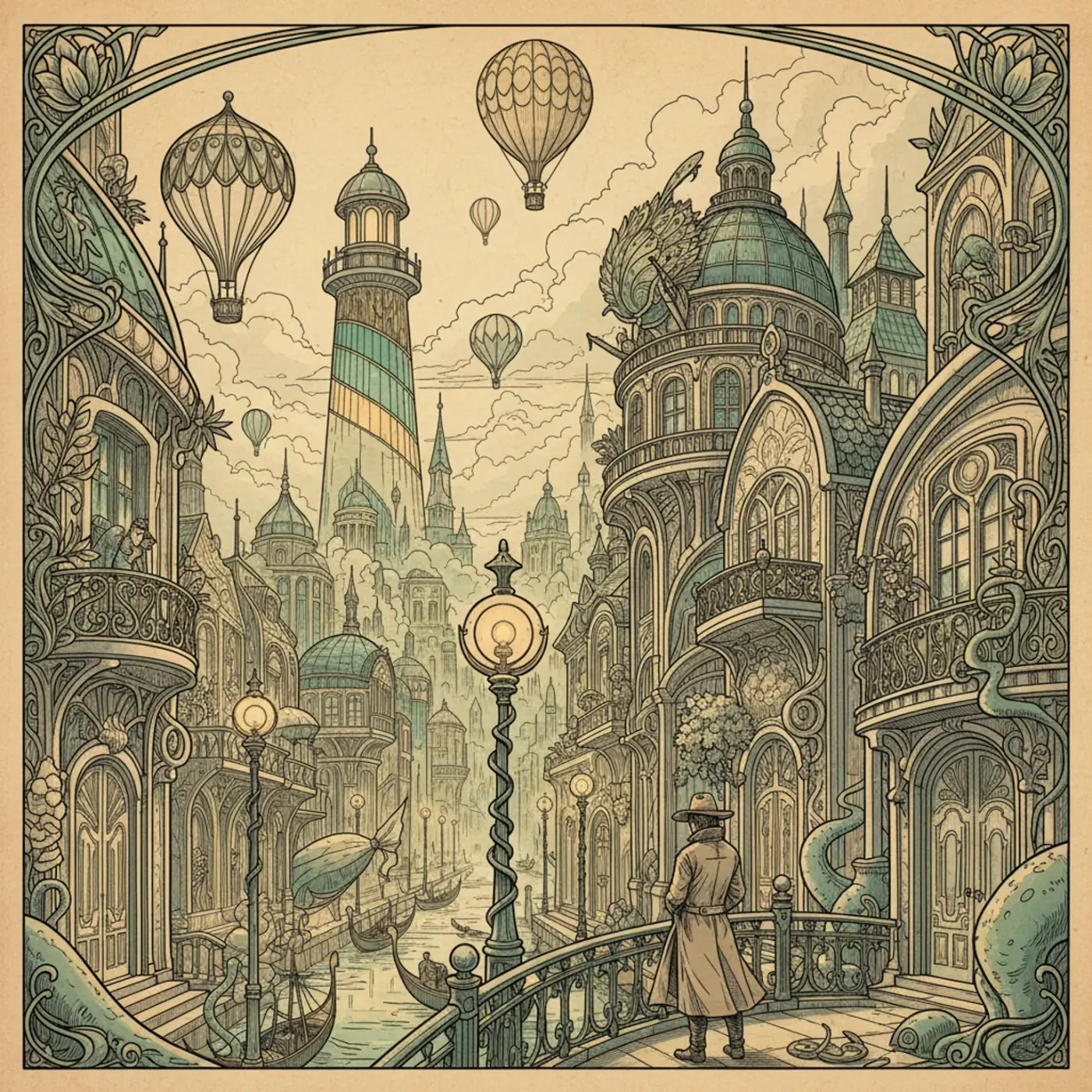
I once missed a whole museum because I couldn't stop staring at a stairwell. That's Art Nouveau for you. These are the best Art Nouveau cities — places where the doorways, the railings, even the lift cages curl and bloom, and you walk around with your neck cricked upward.
The best Art Nouveau cities ruin your walking pace, permanently. You set off to see one thing and arrive two hours late because every doorway, every balcony, every wrought-iron lamp made you stop. Whiplash neck. Phone full of photos of keyholes. That, to me, is the highest praise you can give a city.
Art Nouveau — Jugendstil, Modernisme, Secession, Stile Liberty, it has a dozen names — was the brief, gorgeous moment around 1900 when architects decided buildings should look like growing things. Vines, tendrils, women with flowing hair, ironwork that curls like smoke. It didn’t last long. Which makes the cities that kept theirs precious. Ranked by how much I dawdled.
The cities
1. Brussels, Belgium
Where it all started — Victor Horta basically invented the architectural style here in the 1890s. His own home, now the Horta Museum in Saint-Gilles, is the essential visit: the famous swirling staircase, the light pouring through stained glass, every handle and hinge designed. It’s small and popular so book a timed slot. Then walk the Saint-Gilles and Ixelles streets, where Horta and his rivals left facades on what feel like ordinary corners.
2. Riga, Latvia
The single densest concentration of Art Nouveau in Europe — roughly a third of the central city. Alberta iela is the showpiece street, lined top to bottom with the wildly ornate facades of Mikhail Eisenstein (father of the filmmaker), faces and sphinxes and screaming masks staring down at you. It’s all free to walk, and there’s a dedicated Art Nouveau Museum in a restored apartment if you want the interiors too.
3. Vienna, Austria
The Secession movement, with Otto Wagner as its towering figure. The Secession building itself — white cube topped with a golden filigree dome of laurel leaves (locals call it the golden cabbage) — houses Klimt’s Beethoven Frieze. Wagner’s Majolica House on the Linke Wienzeile is covered in painted floral tiles, and his Karlsplatz Stadtbahn pavilions are little green-and-gold gems. Vienna’s flavor is geometric and gilded rather than curvy.
4. Barcelona, Spain
Modernisme — the Catalan strain, and the most famous of all because of Gaudí. But look past the Sagrada Família queues: the Hospital de Sant Pau by Domènech i Montaner is a whole campus of mosaic-clad pavilions and frankly outshines some of Gaudí’s work, and the Palau de la Música Catalana concert hall is a riot of stained glass and sculpture (book the tour). Casa Batlló and Casa Amatller sitting side by side on the Block of Discord are worth the ticket.
5. Nancy, France
The capital of French Art Nouveau, home to the École de Nancy. Émile Gallé’s glass, Louis Majorelle’s ironwork and furniture, and a whole quarter of villas with sinuous gates and floral facades. The Musée de l’École de Nancy, set in a period villa, recreates the interiors. Less mobbed than Paris and almost entirely dedicated to the movement. A short hop from the German border.
6. Glasgow, Scotland
Charles Rennie Mackintosh’s city — a cooler, more restrained Art Nouveau (the “Glasgow Style”) all elegant verticals and rose motifs. The Glasgow School of Art was tragically gutted by fire, but the Mackintosh at the Willow tearooms (faithfully restored, you can have actual tea there) and the House for an Art Lover let you stand inside his vision. Sharp, geometric, gorgeous.
7. Budapest, Hungary
A lush, eastern take on the style with Ödön Lechner as its star, fusing folk motifs and Zsolnay ceramic tiles. The Museum of Applied Arts (currently under long restoration — check before you go), the Gresham Palace (now a hotel, the lobby is free to admire), and the colorful tiled roofs across the city. Hungarian Art Nouveau has a flavor you won’t find anywhere west.
8. Prague, Czech Republic
Alfons Mucha — the poster artist whose women with flowing hair basically are Art Nouveau in most people’s heads — was Czech, and his stained glass glows inside St Vitus Cathedral. The Municipal House (Obecní dům) is a complete Art Nouveau interior, concert hall and café and all, that you can tour or just have coffee in. The Mucha Museum is small but lovely.
9. Paris, France
Hector Guimard’s swooping green Métro entrances — the ones that look like they grew out of the pavement — are the everyday icons (Porte Dauphine and Abbesses keep the full glass canopies). Beyond the Métro, hunt the residential facades in the 16th, and the department store stained-glass domes at Galeries Lafayette and the old Samaritaine. Free to spot all over the city if you know to look down at the Métro signs.
10. Ljubljana, Slovenia
The earthquake of 1895 leveled much of the center, and the rebuild went full Vienna Secession — so the Miklošičeva street corridor is a parade of pastel Art Nouveau facades, the Cooperative Bank building hand-painted in folk patterns, the Dragon Bridge nearby. Compact, walkable, and far quieter than the big names. A genuine surprise.
11. Aveiro, Portugal
The “Portuguese Venice,” with canals and a cluster of Art Nouveau townhouses built on the wealth of the salt and ceramics trade. The Museu de Arte Nova sits in a beautifully tiled example. Small, sweet, and pairs the azulejo tile tradition with the curving European style in a way that’s wholly Portuguese.
12. Subotica, Serbia
The dark horse, near the Hungarian border — a small city with a startling concentration of Hungarian Secession architecture, the Town Hall and the old Synagogue being jaw-droppers of color and tile. Almost no tourists. If you’ve done the famous ones and want something nobody else has seen, this is it.

Quick comparison
| City | Country | Local name | Must-see | Cost to view |
|---|---|---|---|---|
| Brussels | Belgium | Art Nouveau | Horta Museum | Ticket |
| Riga | Latvia | Jugendstils | Alberta iela | Free (street) |
| Vienna | Austria | Secession | Secession Building | Ticket |
| Barcelona | Spain | Modernisme | Sant Pau, Palau | Ticket |
| Nancy | France | École de Nancy | Villa museum | Ticket |
| Glasgow | Scotland | Glasgow Style | Mackintosh Willow | Tearoom/ticket |
| Prague | Czechia | Secese | Municipal House | Free café |
| Ljubljana | Slovenia | Secession | Miklošičeva | Free (street) |
How to wander them
Slow down. Seriously, halve your usual pace. Look up for the facades, look down for the Métro and door details, and zoom in afterward on everything. Book interiors ahead — the Horta Museum and Barcelona’s big houses sell out — and sit in at least one period café per city. The style was about everyday beauty; let it be everyday.
Art Nouveau didn’t last long because the world got busy and forgot to look at doorknobs. Go to one of these cities, crick your neck, and remember. Every keyhole was somebody’s masterpiece.
This article contains affiliate links marked rel="sponsored". We may earn a commission at no extra cost to you.