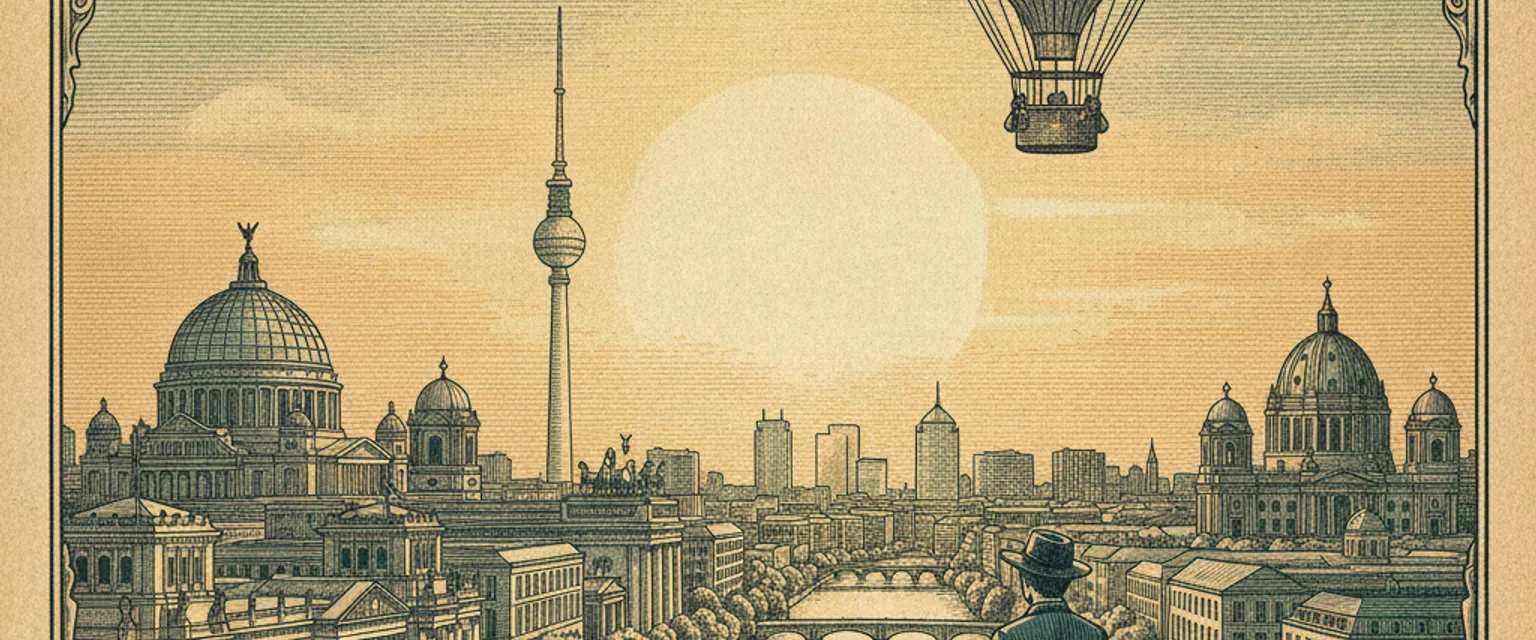
I went to the East Side Gallery expecting a tourist trap and got something closer to a punch in the chest. A man my dad's age was standing in front of the Trabant-bursting-through-the-Wall mural, just staring, not taking a photo. I asked if he was okay. He said he crossed at Bornholmer Strasse the night it opened, thirty-six years ago, and still couldn't quite believe the paint was where the death strip used to be. Berlin does this to you. It refuses to let the past be a museum.
Two days is Cold War Berlin done properly — Brandenburg Gate and the Holocaust Memorial at dawn, the Reichstag dome (book ahead, it's free), Museum Island in the afternoon, and a Kreuzberg döner that ruins all other döner forever. Don't rent a car. The U-Bahn is your friend.
Book the Reichstag dome online at least three days ahead — there is no walk-up line, only disappointment.
72 Hours: Add Kreuzberg and the East Side Gallery
Three days lets Berlin breathe. Day 3 goes east — the East Side Gallery, the Friedrichshain warehouse bars, and Markthalle Neun for the street food. You start to feel the city's two halves rather than just reading about them on plaques.
4 Days: Charlottenburg, Prenzlauer Berg & a Slower Pace
Four days adds the pretty Berlin — Schloss Charlottenburg's gardens, the leafy cafés of Prenzlauer Berg, and a Saturday at the Mauerpark flea market where someone is always doing karaoke to a thousand strangers. This is the Berlin people actually move here for.
7 Days: Berlin Without Rushing
A week means you stop ticking boxes and start having opinions about which Späti sells the coldest beer. Add Potsdam's palaces, a swim at Schlachtensee, the Teufelsberg spy station, and one very late, very sweaty night you will be vague about afterwards. By Day 5 you're not a tourist anymore.
Estimated budget:$320-$520
Estimated budget:$470-$760
Estimated budget:$600-$980
Estimated budget:$1,050-$1,750
Day 1
Brandenburg Gate, Reichstag & Museum Island
Monumental Berlin, walked from west to centre
Brandenburg Gate + Memorial to the Murdered Jews of Europe
Get there before the tour buses and the Gate is yours, the way it almost never is.
Start at the Brandenburg Gate at 8:30 AM, before the selfie crowds and the costumed photo-grifters arrive. Two minutes south is Peter Eisenman's Memorial to the Murdered Jews of Europe — 2,711 concrete slabs you walk into until the ground dips and the city noise vanishes. Go down into the free underground Information Centre. It is quietly devastating and the most important twenty minutes in Berlin.
Reichstag Dome
Norman Foster's glass dome over the German parliament — and it's free if you book.
The Reichstag's glass cupola spirals you up over the debating chamber and out across the rooftops, a deliberate architectural statement that the people sit above their government. Entry is free but requires advance online registration with ID. The audio guide triggers automatically as you climb the ramp. Aim for a late-afternoon or sunset slot if you can rebook it.
Museum Island — Pergamon or Neues Museum
Five world-class museums on one UNESCO island. Pick one; don't pretend you can do all five.
Museum Island holds five museums in the Spree. Don't try to conquer it. The Neues Museum has the bust of Nefertiti, jaw-droppingly intact after 3,400 years. The Pergamon is partly closed for long-running renovation, so check what's open before you go. Buy the timed online ticket and spend two unhurried hours rather than five exhausted ones.
Hackescher Markt & dinner in the Höfe
Interlinked Art Nouveau courtyards full of bars, galleries and street art.
The Hackesche Höfe is a chain of eight restored courtyards in Mitte, tiled in Jugendstil and packed with restaurants, indie cinemas and the Anne Frank Centre. For dinner, walk five minutes to Mogg for a Reuben sandwich in an old Jewish girls' school, or grab a table at one of the buzzy spots on Rosenthaler Strasse. End with a nightcap on Auguststrasse.
Day 2
Checkpoint Charlie, Topography of Terror & Kreuzberg
The divided city, then the city that reinvented itself
Topography of Terror
Free, unflinching, and built on the actual foundations of Gestapo HQ.
The Topography of Terror sits on the rubble of the former SS and Gestapo headquarters, alongside one of the longest surviving stretches of the outer Wall. The outdoor and indoor exhibitions document the Nazi apparatus of terror in clear, unsparing detail. It is free, sobering and essential. Allow at least ninety minutes and read the panels — this is not a place to skim.
Checkpoint Charlie
The most famous Cold War crossing, now the most touristy corner in Berlin. Worth a fast look.
Checkpoint Charlie itself is a replica guardhouse surrounded by souvenir stalls and actors in fake uniforms — frankly a circus. But the open-air gallery panels around it tell the genuine, gripping escape stories, and the nearby Mauermuseum has the homemade hot-air balloon and modified cars people actually used to flee. Look, learn, and move on quickly to lunch.
Kreuzberg — Mustafa's or Tadim döner
Berlin claims to have invented the döner kebab, and around here it's a religion.
Cross into Kreuzberg, the heart of Berlin's Turkish-German culture and its best cheap eating. The legendary Mustafa's Gemüse Kebap near Mehringdamm has queues that border on absurd; Tadim across the road is nearly as good with a fraction of the wait. Either way, the grilled vegetables, garlic sauce and herby seasoning make this the platonic döner. Eat it walking.
Landwehr Canal & Kreuzberg bars
Beer by the water, then the densest run of good bars in the city.
Buy a bottle from a Späti (the corner shops that never close) and join the locals sprawled along the Landwehr Canal near Admiralbrücke as the light goes gold. When it cools, the streets around Görlitzer Park and Oranienstrasse fill up — natural-wine spots, dive bars, and live music. This is Berlin nightlife at its most unforced, no list and no dress code.
Day 3
East Side Gallery, Friedrichshain & Markthalle Neun
The Wall as canvas, and the East that became the new cool
East Side Gallery
1.3 km of the Wall turned into the world's longest open-air gallery.
The East Side Gallery is the longest surviving stretch of the Berlin Wall, painted by artists from around the world in 1990. The Brezhnev and Honecker kiss and the Trabant bursting through the concrete are the famous ones, but walk the whole length along the Spree. Go early — by noon it's wall-to-wall (sorry) with crowds. The Oberbaumbrücke at the end is one of Berlin's prettiest bridges.
Markthalle Neun, Kreuzberg
A 19th-century market hall that anchors Berlin's modern food scene. Hit Street Food Thursday if you can.
Markthalle Neun is a beautifully restored 1891 market hall just over the river in Kreuzberg. On Thursday evenings, Street Food Thursday turns it into a global tasting tour; the rest of the week, butchers, bakers, a great cheese counter and Kumpel & Keule's hamburgers hold the fort. The on-site Heidenpeters craft beer is excellent. Come hungry and graze your way around.
RAW-Gelände, Friedrichshain
A graffiti-covered former rail depot of bars, clubs and climbing walls — Berlin's grungy heart.
The RAW-Gelände is a decommissioned train-repair yard in Friedrichshain reborn as a sprawl of clubs, beach bars, an indoor climbing tower and a Sunday flea market. It's gritty, loud and not for everyone, which is exactly the point. Cassiopeia and Astra Kulturhaus host live shows; the surrounding streets hold late bars. This is where Berlin's club night tends to begin.
Day 4
Charlottenburg, Prenzlauer Berg & Mauerpark
Pretty Berlin — palaces, leafy cafés and a legendary flea market
Schloss Charlottenburg
Berlin's grandest Baroque palace, with gardens made for aimless wandering.
Schloss Charlottenburg is the largest surviving palace in Berlin, a Baroque-and-Rococo confection built for Queen Sophie Charlotte. The Porcelain Cabinet and the Golden Gallery are show-stoppers, but the real gift is the free landscaped garden behind it — formal parterres melting into woodland along a carp pond. Tour the rooms, then bring a coffee out to a bench and do nothing for an hour.
Prenzlauer Berg — Kollwitzplatz cafés
The gentrified East, full of cobbled streets, brunch and a lot of strollers.
Prenzlauer Berg survived the war largely intact, so it has the cobbled, balconied streets that bombed-flat Mitte lost. Around Kollwitzplatz and Helmholtzplatz, leafy squares are ringed with cafés and bakeries; the Saturday Kollwitzplatz farmers' market is excellent. Grab brunch at one of the long-table spots, then climb the old water tower hill for the view. It's relaxed, polished and very pleasant.
Mauerpark
Former death strip, now Berlin's most joyous Sunday — flea market and stadium karaoke.
Mauerpark runs along a former section of the Wall's death strip, which makes its current life as a chaotic, joyful park feel almost like a dare. On Sundays the flea market is one of Europe's best for vintage and junk, and Bearpit Karaoke fills a stone amphitheatre with hundreds of strangers cheering on whoever's brave enough to sing. Even on a quiet weekday it's a fine, scruffy place to sit.
Day 5
Potsdam Day Trip — Sanssouci & the Palaces
Prussian Versailles, a short train ride from the city
Sanssouci Palace & Park
Frederick the Great's vineyard palace, the place he loved more than Berlin.
Potsdam is 40 minutes by S-Bahn and a different world. Sanssouci was Frederick the Great's summer escape — a single-storey Rococo jewel set above terraced vineyards, deliberately intimate rather than grand. The palace interior needs a timed ticket, but the vast park, with the Chinese House, the Orangery and the New Palace, is free to roam. Wear good shoes; it is enormous and entirely walkable.
Dutch Quarter, Potsdam
Red-brick gabled houses built for Dutch craftsmen — now cafés and small shops.
Potsdam's Holländisches Viertel is a tidy grid of red-brick, step-gabled houses built in the 1730s for Dutch artisans. Today it's full of independent cafés, antique shops and small galleries — the prettiest place in town to refuel. Have lunch at one of the courtyard restaurants, then wander to the Brandenburg Gate (Potsdam's own, older than Berlin's) before the train back.
Cecilienhof Palace
The English country house where Truman, Stalin and Churchill carved up postwar Europe.
Schloss Cecilienhof looks like an oversized English Tudor manor dropped into a Prussian park, and it's where the 1945 Potsdam Conference decided the shape of postwar Germany. The conference room is preserved with the round table still in place. It's a strange, quiet bookend to the Cold War story you've been walking through all week. Combine it with a stroll along the Jungfernsee.
Day 6
Tempelhof, Neukölln & the New Berlin
Picnic on a runway, then dinner in the city's most restless district
Tempelhofer Feld
A decommissioned Nazi-era airport whose runways are now the world's most surreal park.
Tempelhof was a vast airport — the hub of the 1948–49 Berlin Airlift — and when it closed, Berliners voted to keep the airfield empty rather than develop it. Now the runways are full of cyclists, kite-surfers, urban gardeners and barbecuers. Rent a bike or just walk a runway to its vanishing point. The hangar tours covering the airlift history are worth booking ahead.
Neukölln — Weserstrasse bars
The district that defines Berlin's churn — Arab bakeries, natural-wine bars and zero pretension.
Neukölln is where Berlin's constant reinvention is most visible: Turkish and Arab grocers and bakeries next to natural-wine bars and tiny galleries. Eat at one of the Sonnenallee falafel and shawarma spots, then drink your way along Weserstrasse, which has the highest bar density in the city. It can feel rough at the edges; that edge is the appeal. Go with an open mind and a cash card.
Day 7
Tiergarten, Bauhaus & a Slow Goodbye
Green Berlin, modernist Berlin, and a last beer in the sun
Tiergarten & the Victory Column
Berlin's huge central park, with a gold-winged column you can actually climb.
The Tiergarten is Berlin's green lung, a former royal hunting ground laced with paths, ponds and beer gardens. Climb the 285 steps of the Siegessäule (Victory Column) for a 360-degree view straight down the Strasse des 17. Juni to the Brandenburg Gate. Then wander to the Café am Neuen See for a lakeside beer. It's the gentle, unstructured morning a final day deserves.
Kulturforum or Bauhaus design stop
The design DNA of the 20th century, depending on what's open.
Berlin's design legacy runs deep. The Bauhaus-Archiv has long been under redevelopment, so check its status, but the Kulturforum nearby is a reliable plan B: the Neue Nationalgalerie is a Mies van der Rohe glass temple of modern art, and the Gemäldegalerie holds an astonishing Old Masters collection. Pick one, go deep, and let the week's intensity settle into something quieter.
Alexanderplatz & the TV Tower
The GDR's pride and Berlin's tallest viewpoint — best with a sunset cocktail.
End where the East centred itself: Alexanderplatz, dominated by the 368-metre Fernsehturm. Book a timed slot and ride to the observation deck or the slowly revolving bar for a last, full-circle look at the city you've spent a week decoding. Toast the Wall that isn't there anymore. Then take the U-Bahn back, because in Berlin you always take the U-Bahn back.
Berlin is the only major European capital that feels unfinished, and that is its superpower. Where Paris and Vienna want you to admire the past, Berlin makes you walk through it — over the cobbled line where the Wall ran, into the death strip that’s now a karaoke amphitheatre, past Gestapo foundations a tram-stop from a techno club. Nothing here is polished into a postcard, and you leave knowing the place rather than just having photographed it.
This itinerary front-loads the heavy history — the Wall, the Holocaust Memorial, the Topography of Terror — because Berlin earns its lighter days only after you’ve reckoned with the dark ones. By the back half you’re swimming, picnicking on a runway, and arguing about which Späti has the coldest beer. That arc is deliberate. It’s how the city itself works.
A practical note: get the U-Bahn and S-Bahn into your bones on day one. Buy a day or weekly travel pass, ignore the temptation to taxi, and you’ll move faster and cheaper than you’d believe. Carry cash — plenty of the best bars and Imbiss stands still wave away cards — and don’t over-plan the evenings. Berlin’s nights are better when you let them find you.
Use the duration filter above to pull up your version, whether that’s a tight 48 hours or a full, sprawling, gloriously exhausting week.
This article contains affiliate links marked with rel="sponsored". We may earn a commission at no extra cost to you.