
[ GUIDE · THE DISPATCH ]
Where to Eat in Chengdu: Hotpot, Mapo Tofu & How Much Spice You Can Handle
An honest, spice-tolerance guide to eating in Chengdu. The hotpot will hurt you in a good way, but I'll also point you at the Sichuan dishes that aren't trying to set your face on fire.
Short on time? The perfect 3-day Chengdu itinerary turns all of this into a route you can actually walk.
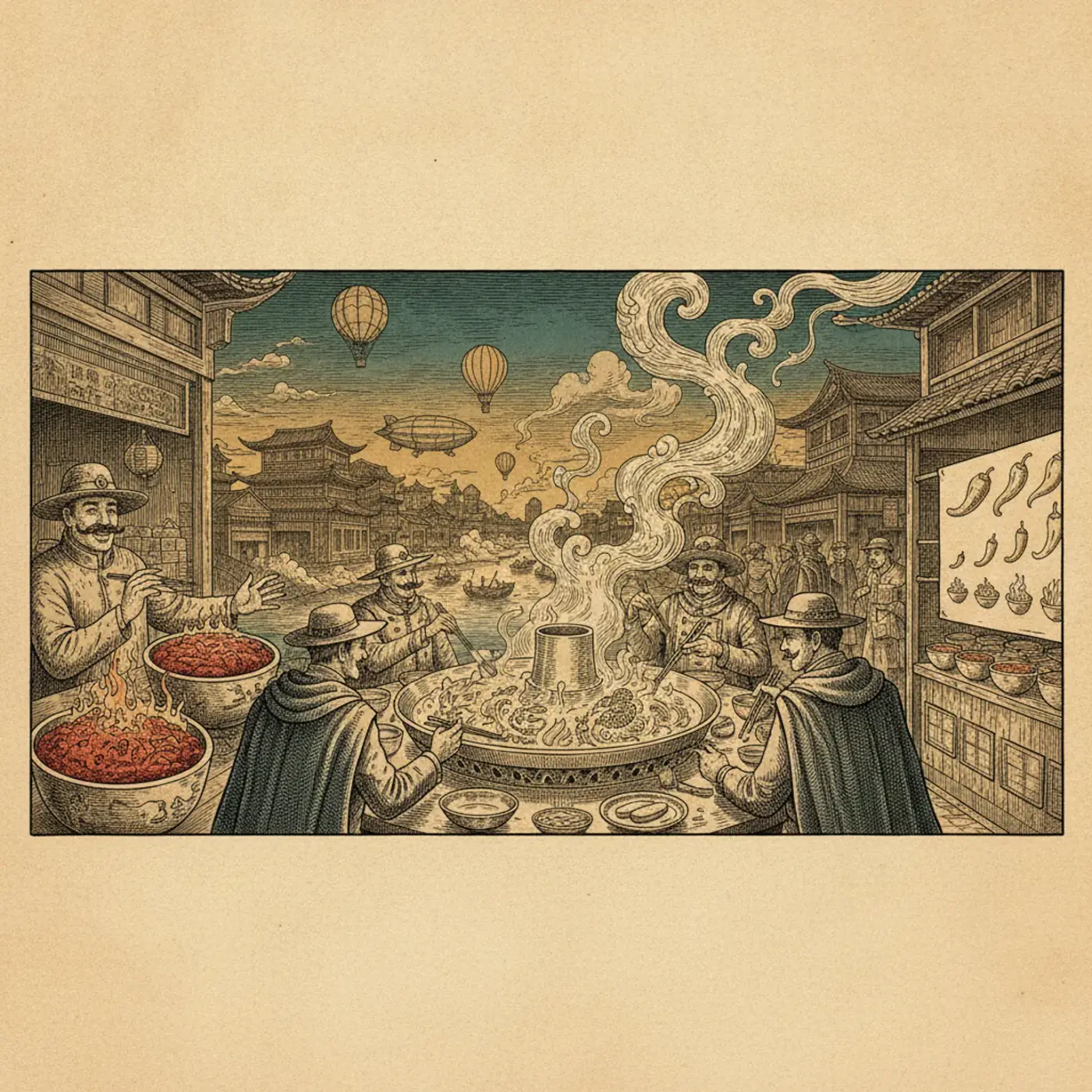
The first time I ate hotpot in Chengdu I made a tactical error that I want to spare you. I told the waiter “make it however the locals have it.” He smiled. A kind smile. A warning smile. What arrived was a cauldron of red oil so deeply, theatrically spicy that I genuinely lost feeling in my lips for about an hour and laughed like an idiot the whole time. Best meal of my life. Also nearly the end of me.
So let’s talk about where to eat in Chengdu, and more importantly, how to survive it.
First, understand the two kinds of pain
This matters more than any restaurant rec. Sichuan food hits you with two separate sensations and people muddle them constantly. There’s là (辣), the chili heat you already know. And then there’s má (麻), the strange tingling, buzzing numbness that comes from huajiao, the Sichuan peppercorn. That fizzy, almost-electric mouth feeling? That’s the má. Together they’re called málà and it’s the whole point of the cuisine.
You can be fine with chili and still get completely ambushed by the numbing. It’s not “hot” exactly. It’s weirder than that.

Hotpot — the main event
Hotpot is Chengdu’s religion. The move is to get a yuanyang pot, the one split down the middle like a yin-yang — one side roaring red broth, one side a mild mushroom or bone broth for when you need to retreat. No shame in retreating. The locals do it.
Shu Jiu Xiang is the chain everyone funnels tourists to and honestly it’s good, reliable, has English-ish menus, expect maybe 100–150 yuan a head once you load up. For something with more soul, ask your hotel for a neighbourhood spot off the main drags — the dingier the plastic stools, the better the broth, generally. Order beef (the thin-sliced fatty stuff cooks in seconds), lotus root, those little quail eggs, and the wide sweet-potato noodles that drink up everything.
Mapo tofu — go to the source
If hotpot is the spectacle, mapo tofu is the soul. Silken tofu, fermented broad-bean paste (doubanjiang), minced pork, and a snowfall of ground peppercorn. Chen Mapo Tofu claims direct lineage from the pockmarked woman (“ma po”) who supposedly invented it in the 1860s, and the original location near the river is touristy but the dish is the real deal — soft, oily, numbing, around 30–40 yuan for a bowl. Eat it over rice. Always over rice.
The dishes that won’t hurt you (much)
Here’s the part nobody tells the spice-shy, and I love you for being honest if that’s you. Not all Sichuan food is a brawl. Plenty of it is sweet, savory, gentle.
Try dan dan noodles — yes there’s chili oil but you control how much you mix in, and the sesame-peanut base is rich and comforting. Kung pao chicken (gongbao jiding) done properly is more sweet-sour with peanuts than scorching. Tea-smoked duck is smoky and rich with zero burn. And zhong shui jiao, those little pork dumplings in sweet garlicky soy oil — find the Long Chao Shou or a Zhong dumpling shop near the Jinli old street — are basically a hug.
Speaking of Jinli and the Kuanzhai Alley area, both are gorgeous restored lanes packed with snack stalls. Touristy, sure, but the chuan chuan (skewers you cook yourself), the spicy rabbit head if you’re brave, the cold “saliva chicken” (kou shui ji, better than it sounds, way better) — it’s a great grazing crawl. Just know prices there run a touch high and the the crowds get thick by evening. Go at 4pm.
I got lost near the Wenshu Monastery one afternoon and stumbled into a tiny vegetarian place attached to it — Buddhist temple food, no chili to speak of, delicate and clean, and it reset my entire palate. If your mouth needs a sabbath, that’s where you go.
Street snacks and the breakfast nobody warns you about
Chengdu is a grazing city as much as a sit-down one, and the snacks are where a lot of the real joy hides. The morning move is dan dan mian or a bowl of tian shui mian — thick chewy noodles in a sweet, garlicky, lightly numbing sauce — from a hole-in-the-wall before 10am. Around 8 to 12 yuan. You eat standing or perched on a stool the size of a dinner plate, and it’s perfect.
Wander the lanes off the main tourist drags and you’ll find long chao shou (those wonton dumplings in chili oil again, never get old), dan hong gao (a little folded griddle pancake stuffed sweet or savory, maybe 3 yuan, sold from carts), and the legendary bing fen — a wobbly clear jelly dessert in brown-sugar syrup with peanuts and little rice balls, the thing you eat to cool your scorched mouth between meals. It’s icy and weird and addictive.
And do not skip the tea. Chengdu’s tea-house culture is a whole institution — go to People’s Park and sit in the Heming Teahouse, get a bottomless cup of jasmine for around 20–30 yuan, let an ear-cleaning guy clatter past offering his services (a real Chengdu thing, harmless, hilarious), and just watch the city move at half speed. It’s the antidote to all the chili. You sit there for hours and nobody rushes you, and that, honestly, is as much the point of Chengdu as the hotpot is.
So how much spice can you actually handle? More than you think, less than you’ll claim after two beers. Start with the split pot, keep the rice coming, respect the peppercorn, and you’ll be fine.
Eat the numbing stuff at least once with your whole chest — and if your lips go tingly and your eyes water and you start laughing, congratulations, you’ve finally understood Chengdu.
This article contains affiliate links marked rel="sponsored". We may earn a commission at no extra cost to you.